 by
by 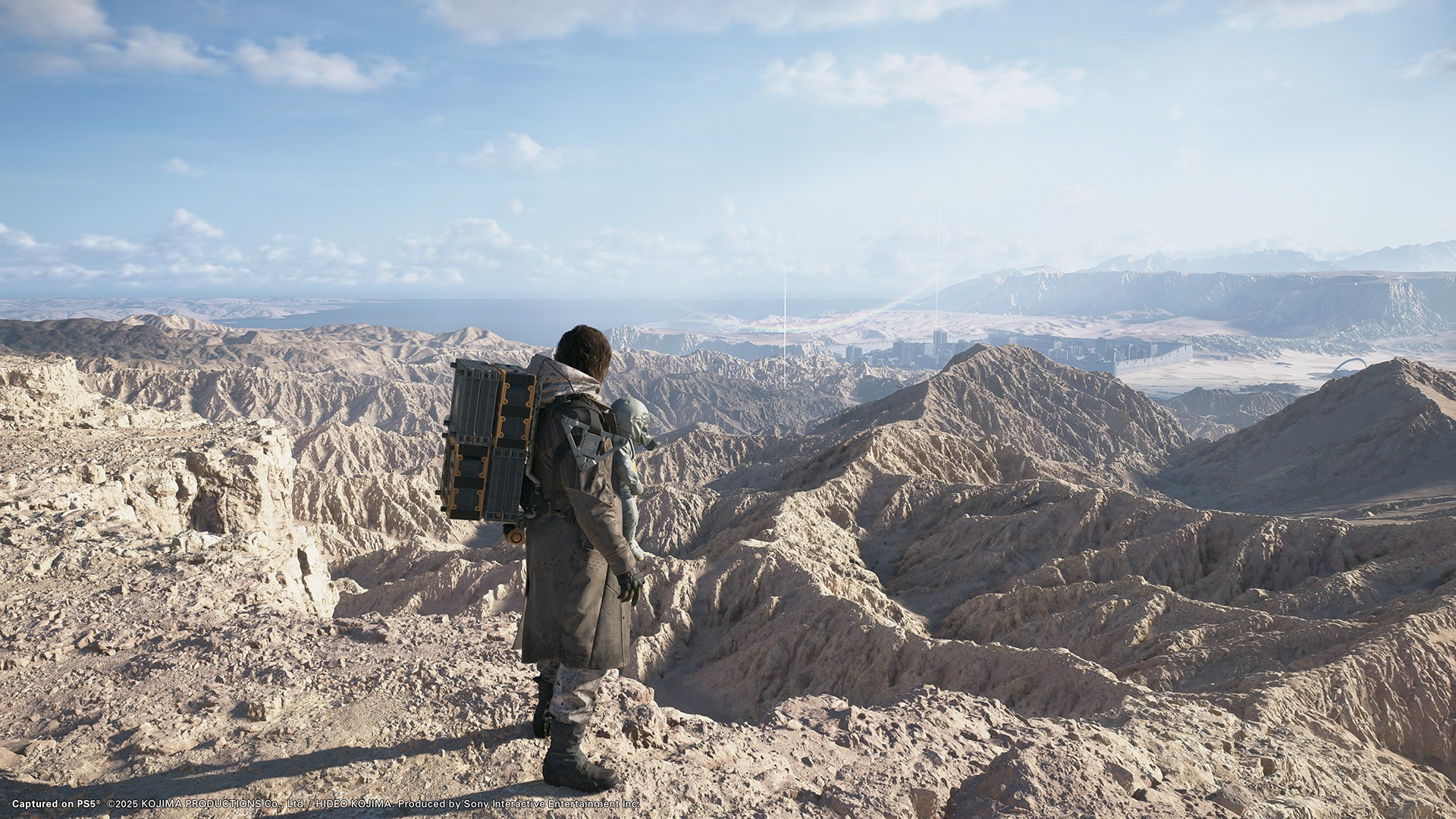
Kojima Productions utilises the Decima game engine to produce the Death Stranding games, and the studio has achieved some astounding results across both titles.
Decima is an engine built by Guerrilla Games and used to develop the Horizon games, which are also notable for their impressive visuals and performance in large open worlds.
As far as we know, Kojima Productions is the only team outside of PlayStation Studios that makes use of the technology, and thanks to a recent interview, we have a better idea of why it was chosen to power Sam Bridges' courier adventures.
Speaking to Automaton, KojiPro's chief technology officer Akio Sakamoto offers some insight on why Decima is the right choice for Death Stranding (and of course, Death Stranding 2: On the Beach).
He explains that the engine isn't necessarily the easiest to use, but its powerful feature set made it an ideal choice for the type of game the studio wanted to make.
"It offered many of the capabilities needed to build an open-world game, and while some aspects are less immediately approachable than commercial engines, its runtime rendering analysis tools stood out," Sakamoto says. "Being able to access such a rich set of data without relying on external tools is incredibly valuable. The development environment – built for large-scale, multi-disciplinary teams – also included features I had long hoped to implement in the engine I worked on previously. With all of that in mind, we decided to adopt Decima."
He says "no engine is the best choice in every scenario", but Decima "enables us to accomplish many things that would be difficult to achieve elsewhere".
Sakamoto then discusses two iconic environments from Death Stranding 2, going into technical detail about how they were achieved. That includes the opening scene in the mountains, and the scene further in depicting hundreds of fireworks going off at once — both with zero performance issues.
"The final polygon count [of the opening landscape] reached approximately 25 million, yet the scene still maintained a stable frame rate," Sakamoto says. "This was something made possible in large part by Decima’s rendering capabilities."
He also talks about KojiPro's working relationship with Guerrilla, saying the studios hold regular meetings and share feedback and updates about the engine.
"When we need functionality specific to our projects, we modify the engine ourselves – and in some cases, develop entirely new features. We share these updates with Guerrilla at the code level," Sakamoto explains.
Candid talk about this kind of thing is pretty rare, so we're pleased to have these new insights. Guerrilla has clearly made a very capable engine that, in the right hands, can produce some incredible results. It'll be interesting to see whether Decima is eventually more widely adopted, and whether Kojima Productions continues to use it for other projects.