 review by
Right, first things first, do not play Trails beyond the Horizon if you haven't already beaten Trails through Daybreak and Trails through Daybreak 2.
Even by Trails standards, Horizon is ridiculously dense; the events of this long-awaited sequel rely heavily on you having intimate knowledge of past titles, and so even if you have played Daybreak and Daybreak 2, it might be a good idea to watch a story recap before you get stuck in.
Of course, the sheer heft of the series' narrative — which now spans 13 (thirteen!) games — is both one of its greatest strengths and one its most off-putting aspects. But this is what makes a title like Horizon so utterly unique; where else are you going to find a game built on over two decades of interconnected storytelling?
Honestly, Falcom's unwavering commitment to the franchise borders on absurd at this point, but you've got to respect just how unapologetically impenetrable this latest instalment is. If ever there was a Trails title created for absolutely no one but existing fans, this is it.
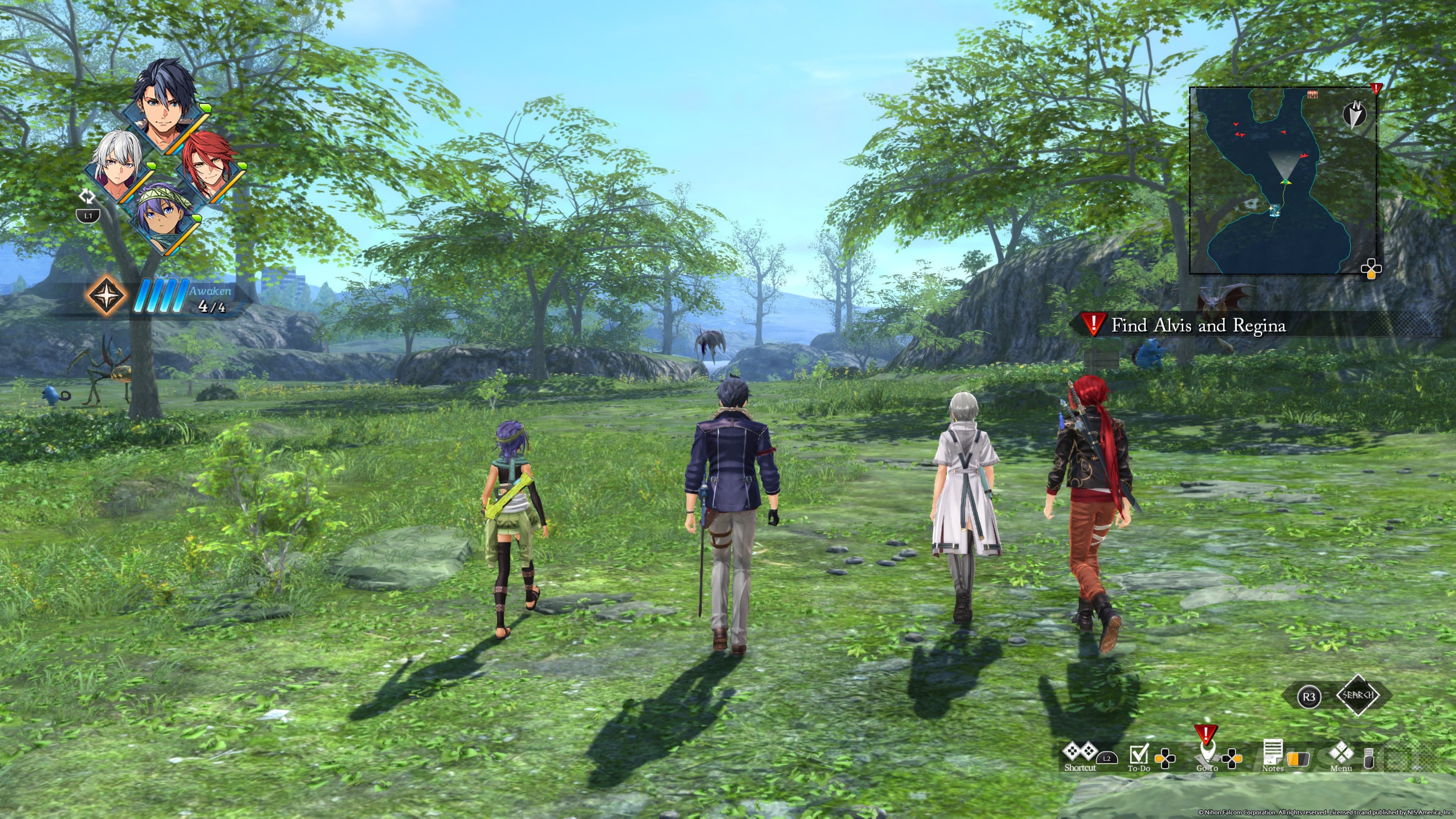
Trails beyond the Horizon represents the culmination of plot lines that have been stewing for several console generations, packed into a roughly 80-hour adventure split across three playable groups of characters.
At its core, Horizon is essentially the third game in the aforementioned Daybreak saga, sporting a continued focus on Van Arkride and his ragtag allies as they investigate all sorts of strange happenings in Calvard's sprawling capital city of Edith.
But at the same time, Horizon incorporates a large number of characters from older Trails titles, namely the Cold Steel games. These well established heroes are brought in to help tie Horizon's high-stakes story to the series' broader, ongoing narratives, resulting in a plot that's tackled from a number of interesting angles.
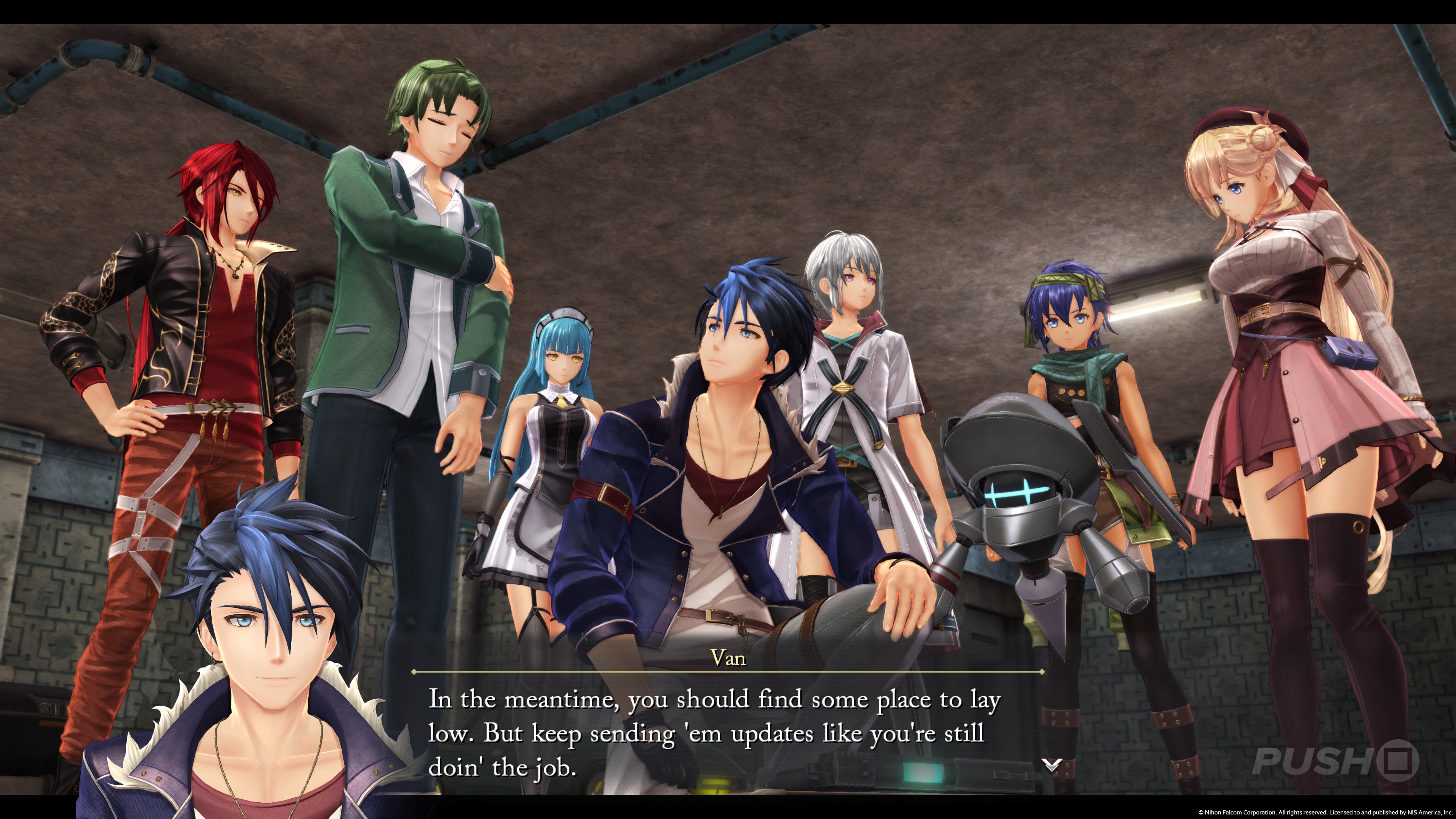
It all gets off to a rather slow start, however. We'd argue that the release's opening act is largely its weakest, as it spends a bit too much time trying to reintroduce a frankly shocking number of returning characters. Seriously, Van and the gang can barely walk five feet without yet another old friend hijacking the scene.
But push through these early pacing issues and Horizon's story really starts to ramp up. In fact, we'd be tempted to say that this is one of Falcom's best efforts with regards to maintaining tension; almost every chapter ends with an impressive bang, always keeping you guessing as to what the next twist might be.
The Japanese developer deserves an awful lot of praise for just how well it manages Horizon's interlocking storylines. Granted, some of the beats can be a touch predictable — especially if you're familiar with the kind of tropes the Trails games tend to fall back on — but Horizon certainly doesn't skimp on reveals and revelations of great significance.
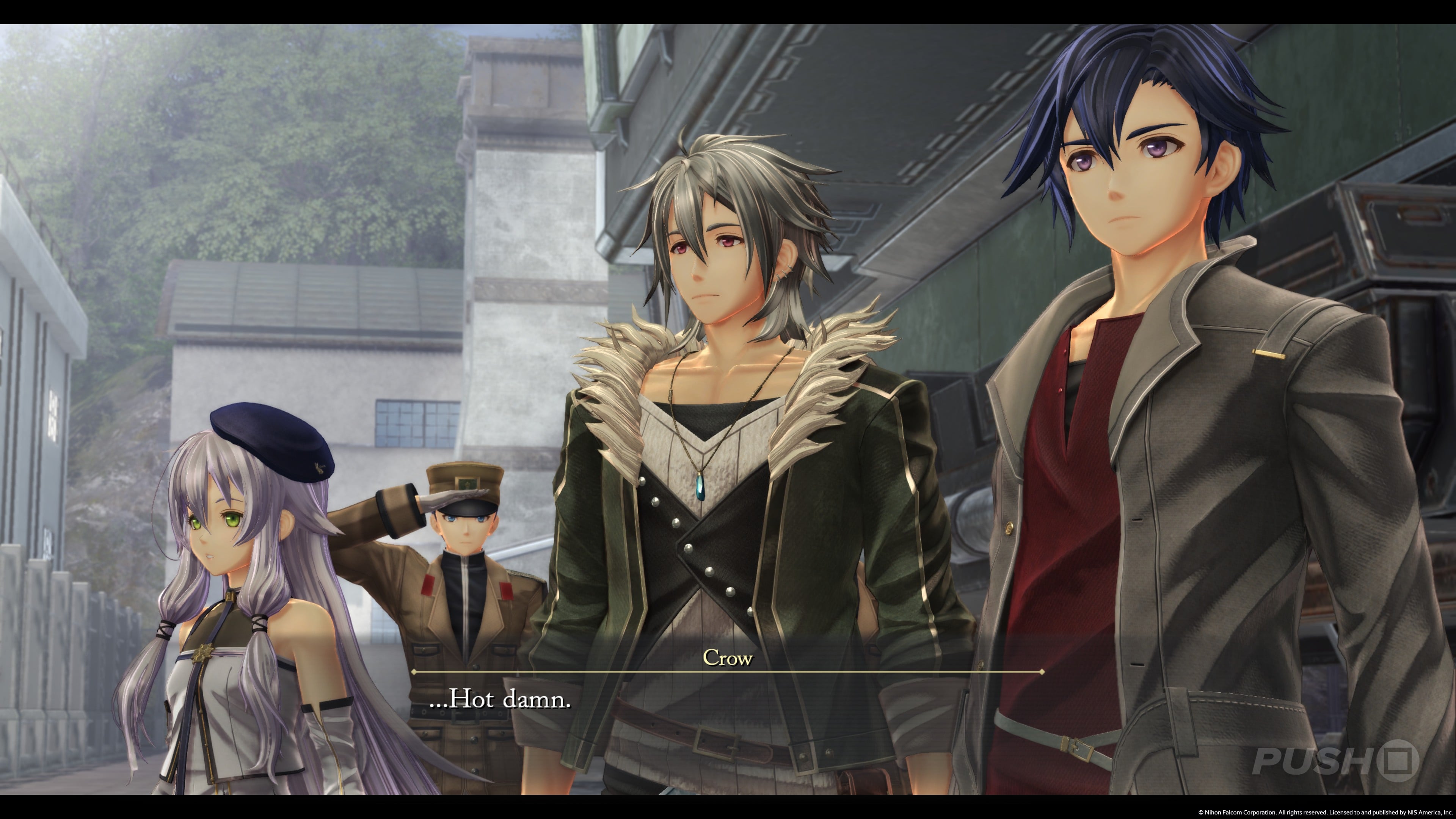
And we don't just mean that from the perspective of this one game — we're talking the entire franchise here.
Indeed, the all-important world building that holds Trails together is expanded upon to a surprising degree, giving welcome insight into matters that fans have been arguing over for ages. And in that sense, this is a particularly exciting title compared to past entries, which have — at times — been accused of treading water on a wider narrative scale.
But don't get your hopes up too much. While Horizon does feel like a definite point of no return for various story elements, it's also keen to reinforce the fact that things are far from over, posing plenty of questions that the next game(s) will attempt to answer. The end is in sight, but only kind of.
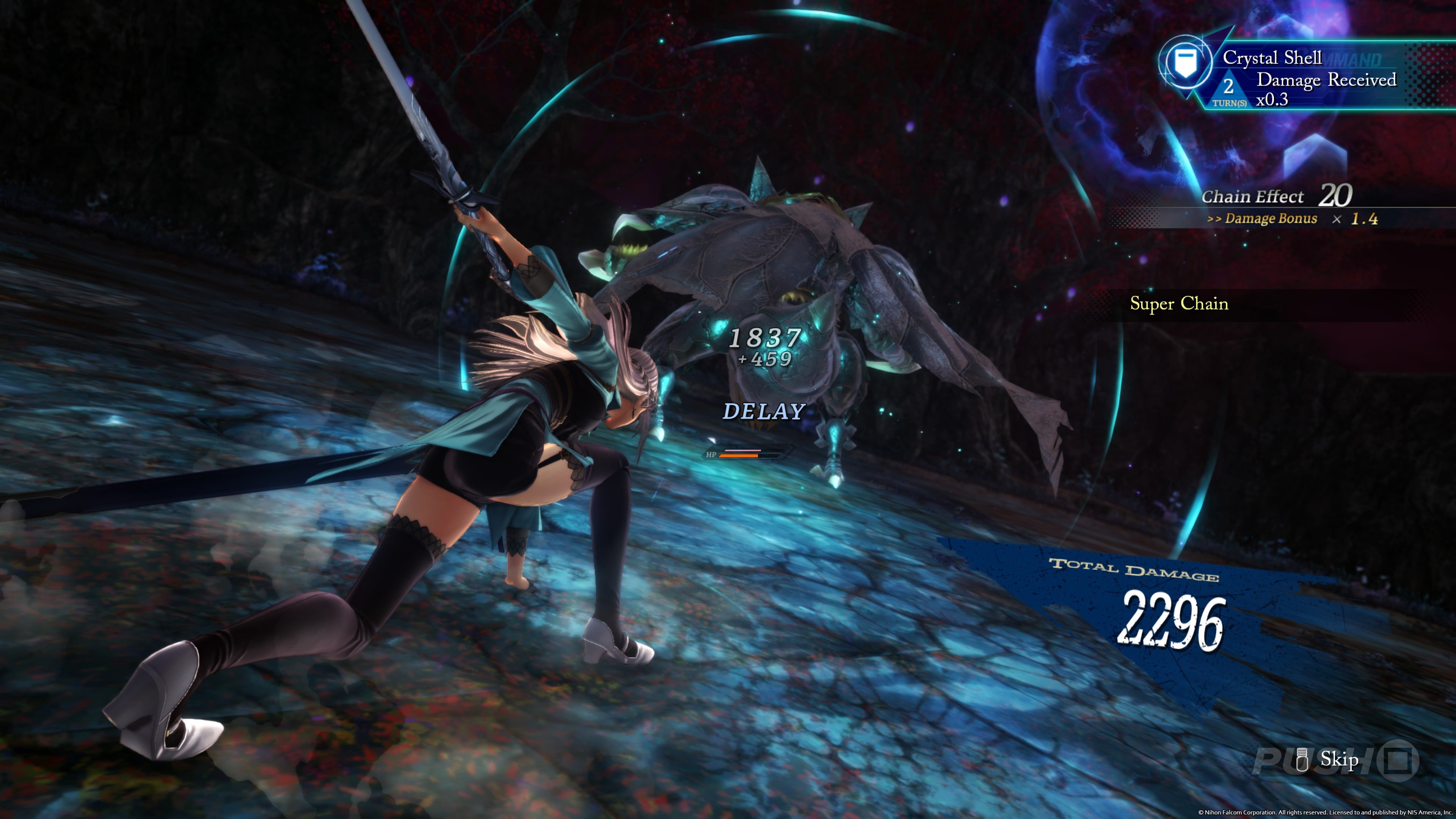
It's about time we moved onto the gameplay side of Horizon, but to be honest, not a whole lot has changed since Daybreak 2. The overall structure of the game remains in place, with defined story chapters being broken up between main and side objectives, a healthy chunk of exploration, and a smattering of increasingly intense combat encounters.
Even the Marchen Garten — a somewhat randomised, mostly optional dungeon designed to be conquered over the course of the game — returns, albeit with a new name. The refreshed Grim Garten has deeper connections to the actual plot, but its purpose is the same: this is where you go when you want to explore new party combinations, level up your characters, and grind for useful equipment.
While a little repetitive, the Grim Garten provides what we think is a necessary, combat-driven diversion, away from the hours upon hours of dialogue that you'll be sitting through outside.
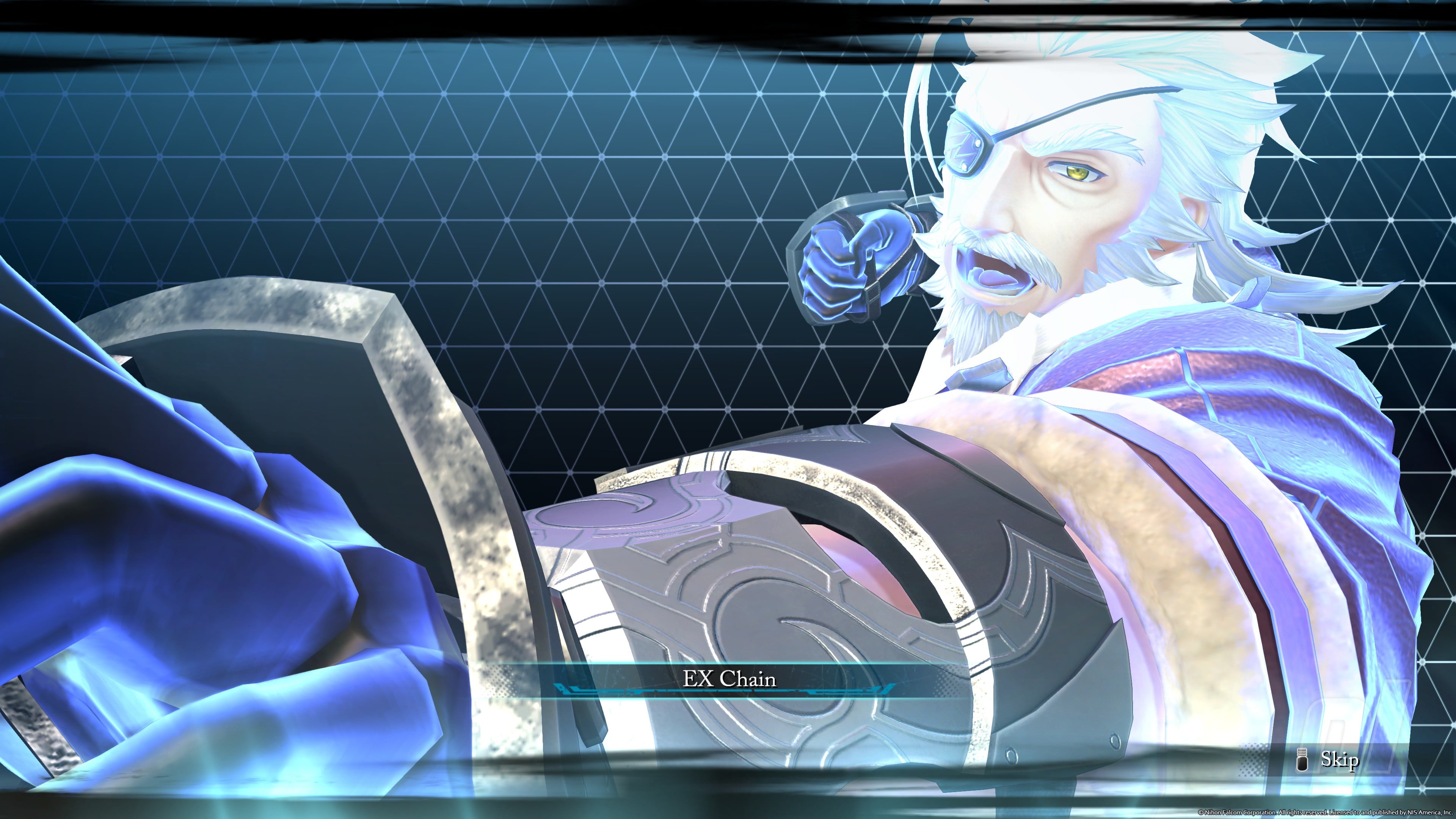
Horizon can get so bogged down in character churn and exposition that the balance between yapping and actual gameplay can feel way too one-sided. But thankfully, the Garten is always on hand to keep you invested in all of those addictive RPG elements.
Just like in Daybreak 2, you're given a large number of party members to develop and customise. Character builds can still range from simplistic to incredibly specialised, and there are so many unlockable magic arts and passive perks to consider.
There are some really engaging systems at play here — a typical Trails trait at this point — and they all reward the effort that you're willing to put in.
But when we say that Horizon is dense, we also mean that from a gameplay perspective. Again, Daybreak-ers will feel right at home, but in particular, new battle mechanics somehow bring even more options to the table.
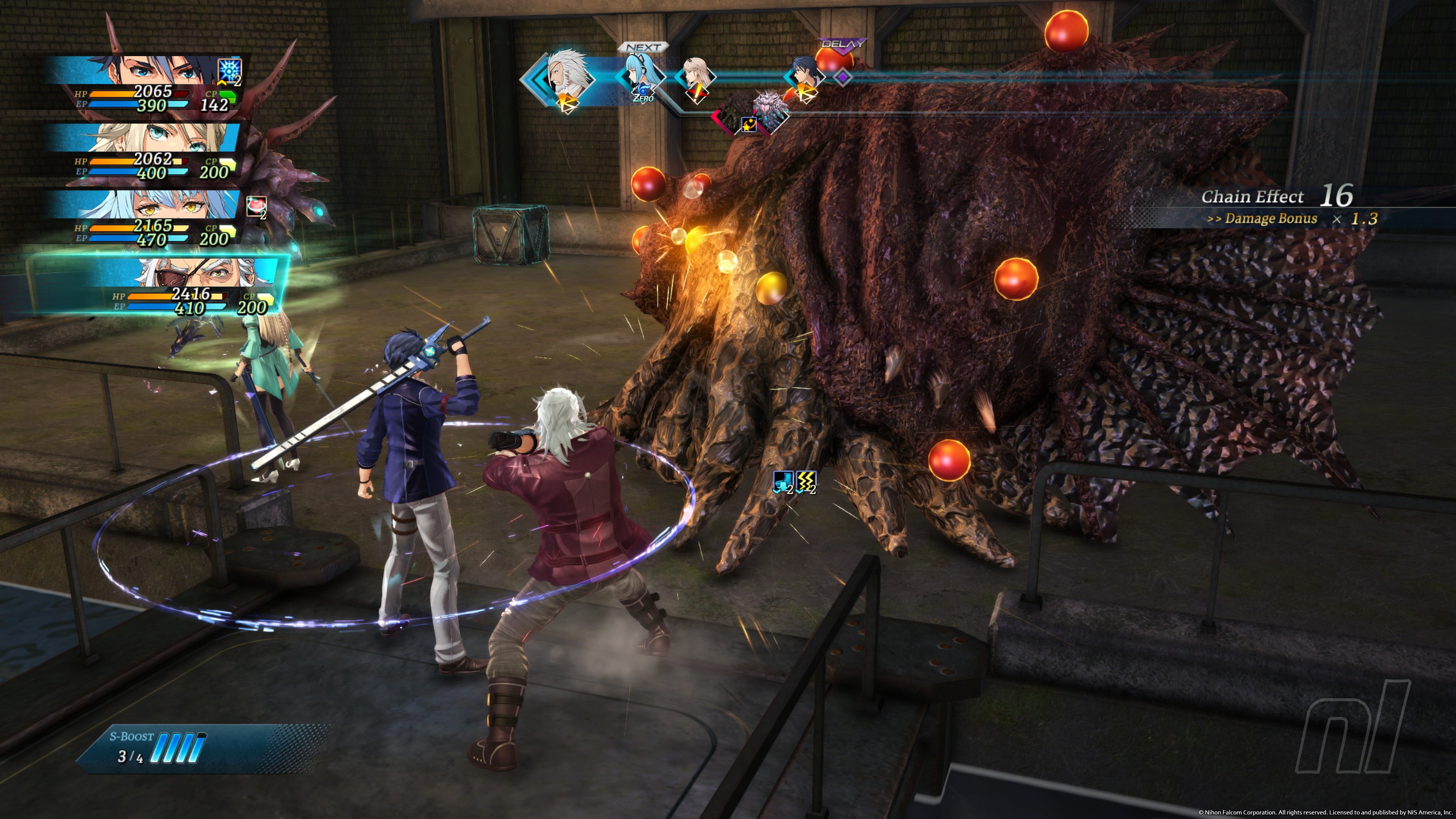
For example, 'S-Boosts' — a resource that builds up as you fight — can now be spent on party-wide buffs, which are like an evolution of the Brave Orders from the Cold Steel saga. Or, you can fuel new high-damage team attacks with your S-Boost bars instead.
In a nutshell, there's an even greater emphasis on resource management — especially in the game's tougher brawls. It doesn't feel like the underlying balance of combat has been rewired too much, but there's a fresh tactical flexibility in Horizon that's bound to entice returning players.
Having said all of that, we still find ourselves preferring the scaled-back, but brilliantly refined approach of Trails in the Sky 1st Chapter's combat system. Horizon's complexity is a strength once you've wrapped your head around its inner workings, but it's teetering on the edge of being needlessly convoluted.
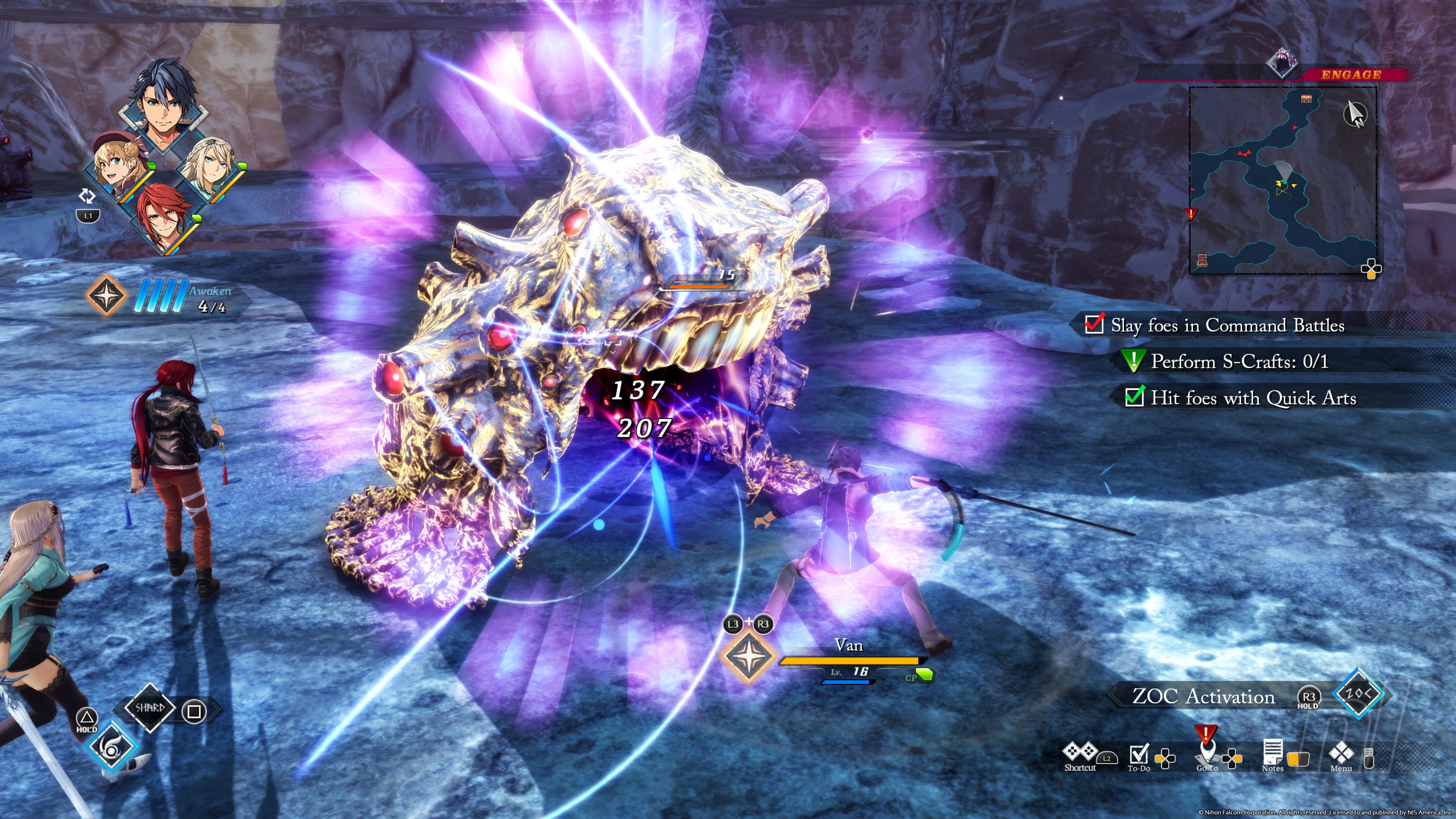
And we won't lie, we're also missing 1st Chapter's immaculate presentation. Now, this isn't necessarily Falcom's fault since Horizon released in Japan back in 2024 — a full year before the Sky remake — but the simple truth is that it can't hold a candle to what's offered by the latest engine upgrade.
Environments continue to look rather rough, and the NPCs that inhabit them can be ugly. But at least Horizon's got a bunch of new combat and cutscene animations that rival those found in 1st Chapter. We're hoping that Horizon's sequel will give Calvard the glow up that it deserves.
Conclusion
Trails beyond the Horizon is one of the most impactful games in Falcom's series to date, dealing in world-altering revelations and truly dramatic story developments. For Trails fans who have come this far, Horizon has the potential to blow you away — but you need to be ready for hours of character recaps and exposition before things really start to ramp up.


Comments 35
If anyone's got any questions about the game or the review, let me know and I'll try to answer them.
Personally I think Horizon is probably the best game in the Daybreak saga (so far) but as the review says, it relies very, very heavily on the games that came before it — perhaps more so than any other Trails title (including Cold Steel 4 and Reverie, in some ways).
Falcom's done it again, then, but I do think Horizon's sequel needs to bring something fresh to the table, especially with how well 1st Chapter has been received in the meantime.
Thanks for reading!
Daybreak II’s story was one of the worst things I’ve ever experienced. Almost killed my enjoyment of this series. Really hope this is better.
The beginning of the game as you described it actually sounds GREAT. I can't wait to see everyone again!
Yeah, the Trails in the Sky remake looks so good that it embarrasses even recent Trails games. Honestly wouldn't mind if they remade the entire series in this engine.
Can't wait to play it! I'm still working on Sky remake though. I might put it on hold for a bit since I already know the story. Very excited for Horizon!
So far, I've only played through Chapter 1 in the Trails series. I'm currently playing the original Legend of Heroes: Trails in the Sky on Steam Deck OLED.
Would I be able to play this game without missing any major content? Or should I start somewhere else?
Chapter 1 has a high frame rate (HFR) mode that ran up to 120fps on PS5/Pro. Is it also available for this game?
I friggin' love Kiseki sers so of course I'll be there day one. I just wish they finish the whole story before starting remakes.
@Fluberuper Why?
I have been collecting trails games, but i have actually been stalled in cold steel 3 for years. I know i will enjoy them. Just need to decide to commit to playing them again. In the meanwhiile, i collect the entries.
The remakes have posed a conundrum too because i couldn't get myself to play the old chi-bi games and the remakes are perfect to catch up on sky and crossbell, so i kind of want to wait to play them first and go on this epic trails run. 😅
@ShogunRok I bought Daybreak 2 in release date and gave tried multiple times to go through it but it is so boring. All this world building is seemingly going to waste.
What I understand from the review is that the overall narrative seems to actually go somewhere?
@samueljoshua I don’t want to go into too much detail about why I hated the story due to possible spoiler concerns, but largely because of how much it was useless filler that relied on characters behaving like complete imbeciles, including several of Van’s closest friend’s actively attempting to murder him because of something someone else told them he did. Not to mention the ridiculous time-travel shenanigans that imposed useless “choices” that always resulted in the same result.
Honestly, the story has been going downhill for several games now and I don’t have any particularly high expectations that it’ll get better.
@belmont Yes, especially compared to Daybreak 2. Horizon's story actually moves the overarching narrative along quite a bit, although like the review says, it's held back slightly by a very slow start.
Big improvement in the story department, in my opinion, but it also builds on a lot of stuff that Daybreak 2 introduced. So I'd still recommend playing Daybreak 2 before this, but if you can't stomach it, it'd be worth watching a recap.
@ShogunRok Thanks for getting back to me. I will try to give Daybreak 2 another shot. I don't mind a slow start if I know that there will be some sort of payback.
@Meowmixes98 Lol I see some spam bots on twitter have your profile pic as their profile pic too
@belmont Just don't expect everything to be answered in this game, either. A lot of storylines get moved along, but there's still stuff that Falcom's clearly leaving unanswered for now.
There really does need to be a lot of answers in this game - so I'm glad to hear there are at least some! Daybreak 2 really left me cold as it provided essentially no new information at all. I love this series, and nothing else can really compare to it, but I do think it's beyond time to get some answers now.
Glad to see it being another fantastic entry.
Also kinda wild to think we are finally all caught up with the games. We went from Falcom not really trusting in the western market, to going full in. It's beautiful.
@ShogunRok 3 Games in How are you enjoying Calvard as a Setting compared to previous Locations like Liberl and Erebonia.
I've played them all but Daybreak II broke me. I'm done, unless they wrap this ***** up soon. The first games + the Crossbell games are awesome. The rest.. eh not really. But the high stakes in this game... damnit.
@Areus It'll probably be contentious with some fans but Erebonia is still my favourite setting. I felt like it was the most fleshed out and it made the most thematic sense (but it also had four whole games to nail things down).
I like Calvard but it feels a little... messy at times. A lot of diverse locations that don't quite feel like they're part of the same country. I like Edith as the central city but even then, it's starting to feel quite boring after three games.
Like I said in the first comment, I do think Horizon 2 (or whatever it ends up being called) needs to freshen things up. The setting is definitely part of that.
@ShogunRok My problem with Calvard is that unlike previous arcs you don't really visit much of the country outside of a few big locations.
Over the years I have asked about this series, having played the original legend of heroes games and more recently the remake they did of a trails game, and I always hear about how dialogue and lore heavy they are.
While this is true, I have been able to jump in and enjoy without issue essentially any of the games. I bought and played through Daybreak 2 without playing Daybreak 1 and never felt lost.
My point here is for those who read these who were like me and were put off by all the people saying you have to play all of them in order to enjoy them, don't be. You absolutely do not need to play every title, nor even the titles in order. You will benefit from playing them sequentially, and perhaps enjoy them more, but it is not by any means necessary.
To make an analogy, it's a bit like the original Star Wars trilogy. Say you watched The Empire Strikes Back first before watching A New Hope. You would still enjoy ESB, but would miss some of the added connections until you played them all. If anything, it would pique your curiosity and make you want to go back and play/watch the prior.
I cant comment on this most recent edition for Trails, but I do plan on playing it and enjoying it when its available, regardless of the fact I never played part 1. (or most of the previous titles in the series)
Can't wait to get started on this next Thursday
Yes, yes, YES!
Thank you for this. Horizon is clearly designed as ultimate love letter to all the fans that has been following the stories for 10+ years, with all the heartbreak and the uncertainty that comes with it when we didn't even know if we'll ever get to see the continuation in the west.
I absolutely can't wait to start this next week!
Looks like another solid JPRG! Now I just need to start playing the Trails series when I finally find the time for it 😅.
@Runex2121 Interesting take. I am glad to hear that it's not as terrible on newcomers as I have built up in my mind (after playing everything over 2.5 years).
@Areus I agree, and I think part of it is because in the Daybreak games, Van just drives everywhere and then the chapter takes place in a set space.
It just doesn't have that same sense of adventure that the Sky games or Cold Steel games had, where you'd have stretches of countryside to explore outside of the town / city you were in.
@Nem Why is that out of interest? I’ve just finished Trails in the Sky FC (75 hours) and Trails in the Sky SC (111 hours) and they were two of the best RPGs I have ever played in my life.
@Fluberuper I understand, it's a shame the latest games have been like this. I'm still playing Trails of Azure, and I'm loving the storyline.
@Angelus3K I tried before and i got bored. I don't like the combat mix with tactics gameplay nor am i enthused by portraits talking to each other. I'm not a great fan of the chi-bi sprites either.
I am sure the games are great if you're willing to look past that. It made me lose interest though.
@Nem ah fair enough. I take it you didn’t grow up in the 90s, it’s all we had back then lol
@Angelus3K I did. But i have a lot on my backlog and i must triage. Besides, the remakes are here. I can allocate that time for the remakes instead.
"where else are you going to find a game built on over two decades of interconnected storytelling?"
Yakuza?
@samueljoshua It's not a horrible story but a very obvious middle of a series game that solves almost no mysteries. I loved it but I can see someone saying it was middling, but that's the point..
Only 11 hours into daybreak 2 so won't be playing this for some time. Hopefully it'll be on sale by then.
Show Comments
Leave A Comment
Hold on there, you need to login to post a comment...