 by
by 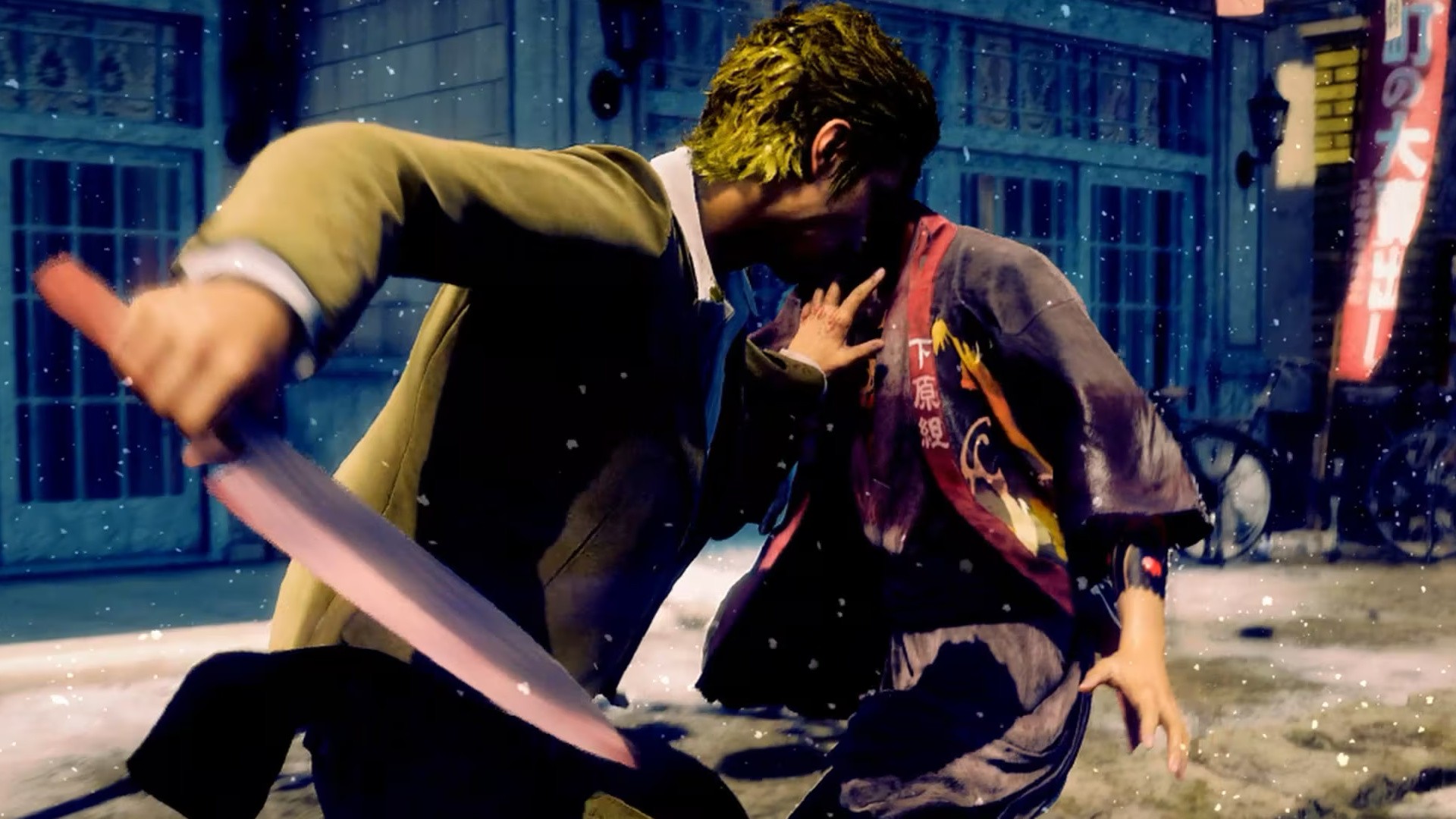
SEGA and developer RGG Studio are taking some pretty wild swings with Stranger Than Heaven, an upcoming action adventure coming to PS5 early next year.
You'll probably have heard about recent additions to the cast; this crime thriller, set in Japan across five decades, will feature not only Snoop Dogg but also the late Tupac Shakur.
Based on recent previews, that's not the only way the game is making some interesting moves.
Certain publications have released their hands-on impressions of the game, and the one thing that stands out across all of them is that the combat is very different from the Yakuza/Like a Dragon titles.
Essentially, you control protagonist Makoto's left and right sides independently with the left and right bumpers and triggers.
L1 and R1 are used for faster, lighter attacks, while the triggers are more for heavier strikes. You can also hold down these inputs to charge up punches and kicks before letting them fly.
It sounds like there's surprising depth to this system, especially when you work in dodges, blocks, parries, and a variety of handheld weaponry.
Some previews sing the combat's praises, while others are less convinced, but at least Stranger Than Heaven is attempting something out of the ordinary.
Game Informer: "The mechanics were singing"
"It sounds complex, but I played through three encounters across three eras, and by the time I finished the fights, the mechanics were singing. The first fight saw Makoto unarmed against a group of standard men in Kokura in 1915, while subsequent encounters took me to 1929 Kure and 1943 Osaka with weapons in tow. Using a large crowbar for crowd control was enthralling, and my final challenge was a one-on-one knife fight against a brutal swordsman. Though the earlier battles allowed me some degree of brute-force success, the Osaka fight against the swordsman required me to be patient and precise with my parries; one false move could cost me the vast majority of my health bar."
GamesRadar: "I'm not totally sold on the execution"
"I found the entire thing to be a little staid and static, complicated further by a floating camera which seems hell-bent on losing track of the action or getting caught in elements of the environment – particularly troublesome, given how challenging encounters can prove to be when balancing multiple enemies at once."
Polygon: "The most promising feature of the project"
"Once I got into the rhythm, I could hold my own much better by switching up my swings. I learned another nuance when a foe intercepted one of my punches and hung on to my arm, forcing me to use my other fist to punch myself free. When I got knocked down, I had to roll left and right to evade my enemies stomping down on me. And when I knocked an enemy off their feet and inflicted enough damage, I could press both triggers to pull off a brutal finisher. While Yakuza’s fights feel larger than life, Stranger Than Heaven’s are scrappy and grounded. It feels like you’re in an ugly bar fight at all times."
Are you intrigued by Stranger Than Heaven's novel fighting system? Tell us in the comments section below.