
Enhance has been on a real winning streak.
Led by legendary designer Tetsuya Mizuguchi, the team has brought us the likes of Rez Infinite, Lumines Remastered, Tetris Effect, and Humanity — all brilliant, memorable audiovisual experiences.
The latest in this line of wonderful games is Lumines Arise, the first all-new entry in the puzzle franchise in over a decade.
As big fans of the musical block-dropping series, we wanted to find out more about the upcoming game, and managed to talk to some of the top talent behind it.
 Watch on YouTube
Subscribe to Push Square on YouTube166k
What follows is our bumper interview with Tetsuya Mizuguchi himself, who serves as creative producer on the game, alongside fellow creative producer Mark MacDonald and game/art director Takashi Ishihara. A big thank you also to Kyoko Yamashita, who interpreted for us during the interview.
The below has been edited for clarity.
How We Got Here
Push Square: For anyone who might not know, we'll start at the start: What is Lumines Arise?
Tetsuya Mizuguchi: In 2004, as a PSP launch title, we made a game called Lumines.
I had come out of releasing a game called Rez. In that game, there's a mechanic where the player's input creates sound effects, which makes you feel like you're creating music as you play. Combining that methodology with simple, basic rules in a puzzle game is where the original idea came from.
In Lumines, you have these 2x2 blocks; you drop them, and there's a timeline that moves at the pace of the music and it clears the blocks. I'd say it was a newly invented mechanic where, it's a puzzle game at its core, but it has sound and music elements that make it quite unique to play.
Fast-forward 20 years later, the technology has advanced. Everything from the visuals to the audio, we can push the limits. Even just from a music perspective, it's so rich what we can [now] do.
We want to use every ounce of technology to make the best possible version of Lumines. With Ishihara at the core of the team, the Tetris Effect team has come back together and challenged themselves to make the best version of Lumines we can put out today.
This is a music-based puzzle game that generates a feel-good feeling as you play, and that's all due to the visuals and audio and haptics technology that's very important in all our games. It's what we believe is a synesthesia experience; it's not just about playing, there's a deeper emotional element that's born as you experience the game.
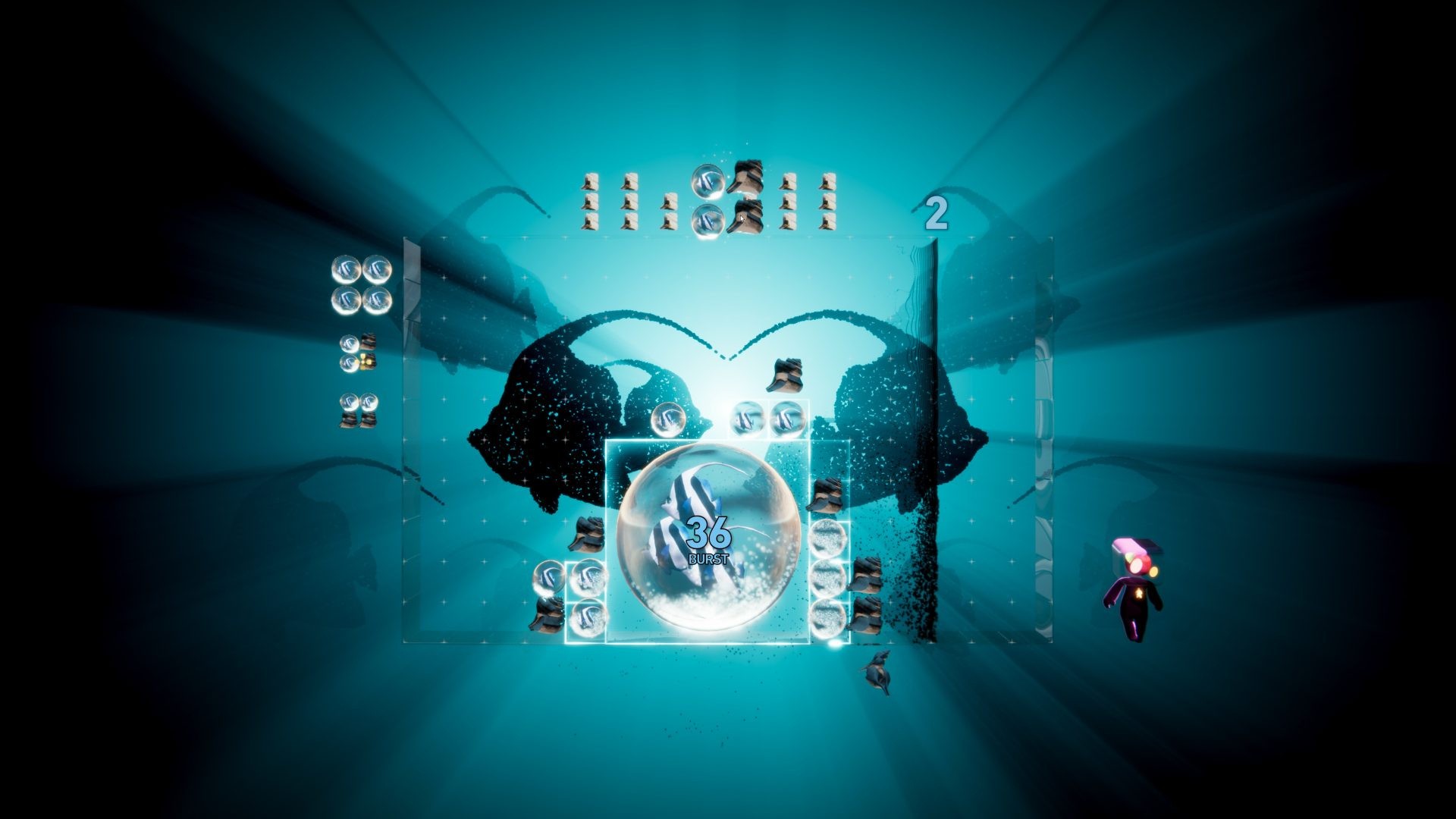
The original Lumines was created because, at the time, you were unable to get the licence for Tetris, but you eventually got to make Tetris Effect, which inherited many elements from Lumines. Now, things have come full circle with Lumines Arise. What are your thoughts on this path, and how the two series are intertwined?
Mizuguchi: The PSP arrived, and as you mention, the [Tetris licence] was unavailable, and that's that. But you know, when something new is created, there's always a backstory or a reason why this new thing came to exist, and so that was due to not being able to work on Tetris back then.
Thanks to that instance, Lumines was born. Because we went through that process, we were able to work on our own synesthesia-based game design, honing our own skills and carving out a niche for ourselves.
Why I say that is because, if we actually were able to land a deal with the PSP to work on a Tetris game, I'll be honest, I don't know if I have the confidence to say we would've made the best PSP Tetris game at that time.
It's only due to the fact we went through our own path and made Lumines, and almost proved to people you can make a feel-good game on a handheld by just dropping blocks and it's synchronised to the music.
Taking that experience and injecting it back into Tetris Effect, it's only thanks to our experience making Lumines.
So after Lumines, years later, when I reconnect with Henk Rogers of the Tetris Company, it's due to having built that foundation that we could have a higher conversation about, "How can we evolve Tetris? What about making it more of a synesthesia experience?"
Making the Journey to PS5
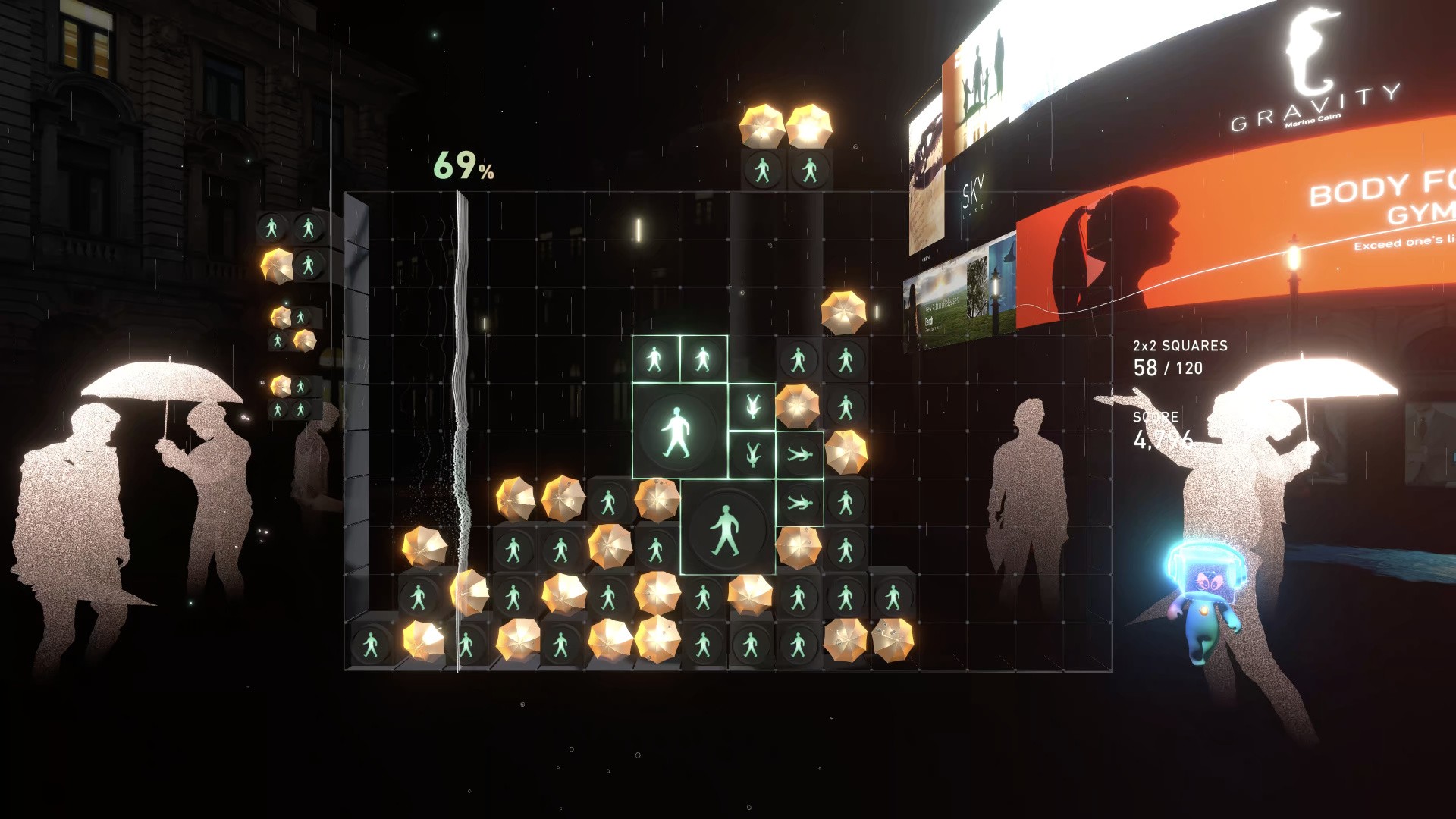
What do PS5 and PSVR2 bring to Lumines that couldn't be achieved before? Are you making use of features like haptic feedback and so on?
Takashi Ishihara: Overall, everything we're trying to do [with Lumines Arise] is high-end. Not just from a visual perspective, but it has to do with, as you said, haptics and the sound experience.
One thing you'll hopefully see as you play is we've put a lot of very detailed, sophisticated touches on the blocks. The approach we took is to make you feel [the blocks] as if you're touching them when you control them.
It's very much a physics-based calculation. It's not just about blocks dropping; it's when they come together and split apart and when they fall. It's more of a natural, organic feel, and it comes down to the sound waves, how that's analysed in real time, and reflected in the visuals.
By doing that, the sounds become richer, but it's also applied to the haptics, so you really feel like you're holding [the blocks] or feeling what they're doing. That helps you feel like you're making the music as well.
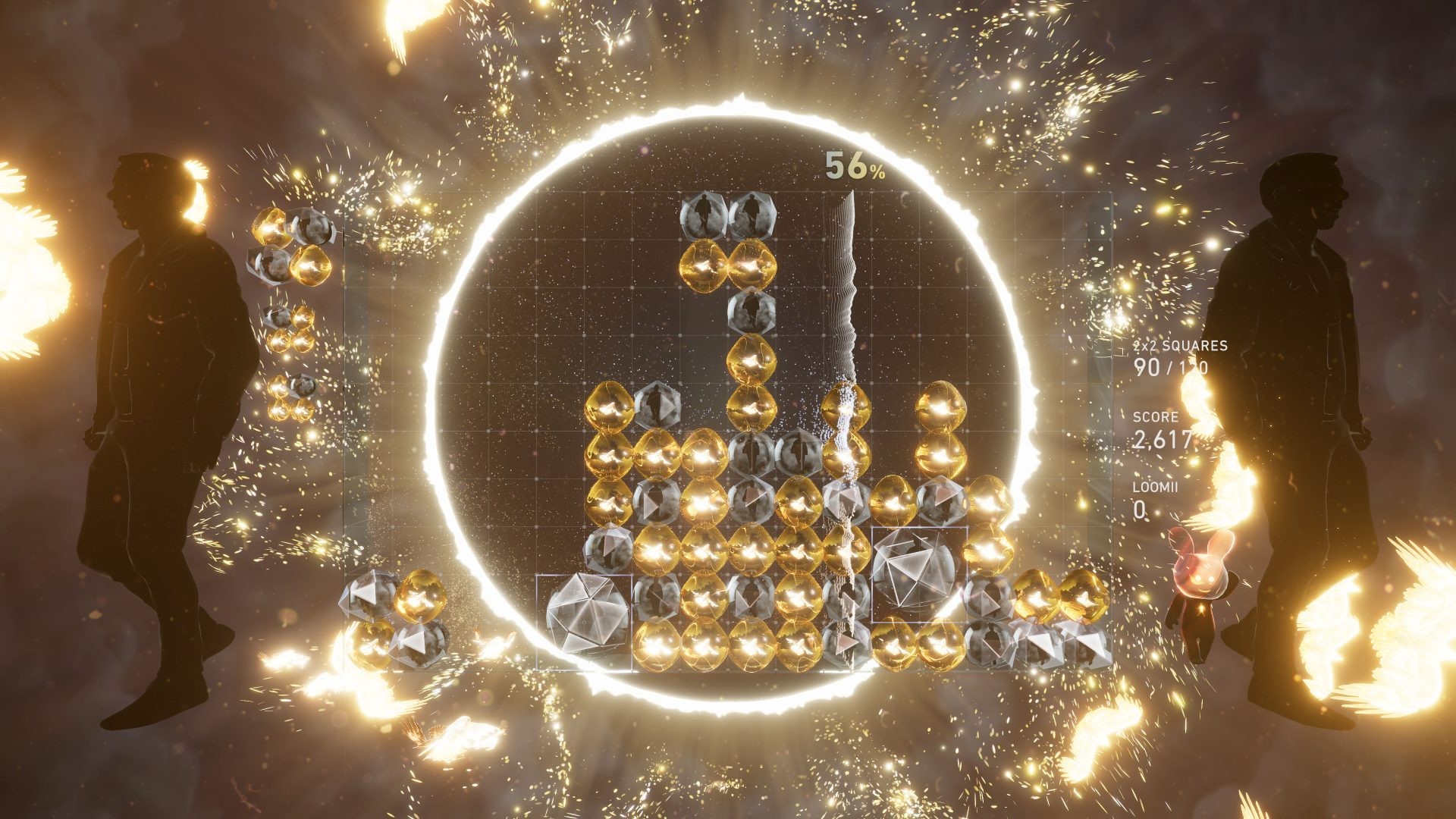
In Tetris Effect, the main Journey mode told an abstracted story, generating an emotional response from players. Lumines Arise also has a Journey mode; what are you hoping to evoke in players this time around?
Ishihara: Mizuguchi-san mentioned earlier that we're bringing the Tetris Effect team back together for Lumines Arise. With Tetris, it's a very simple puzzle game, but in Journey mode, from start to end, we were able to [take players on a journey] without words or dialogue, and it went really well.
It resonated with a lot of people and many were moved in their own ways. We really felt their response and the reception was great. That's a huge strength, we believe, in that game, and we're carrying over our learnings and the high points of how we design that.
Up to now, each instalment of Lumines, all the skins (as they were called before), they're more or less independent, their own thing. While that was great, it may not have been a very connected experience, so it wasn't really telling a story in a connected way.
In Lumines Arise, we want to bring in the storytelling tricks we learned from Tetris Effect and meld it with what's great about Lumines from before, and telling a more moving, flowing storytelling experience.
Mizuguchi: This Journey mode in Lumines Arise and Tetris Effect has sort of become our signature flavour and style.
It depends on the person, but a good amount of people will say, when they see the 'Puzzle' tag or label, they may not be that excited. "Oh, a puzzle game, I know what that is, it's just solving puzzles."
Yes, there are many simple puzzle games that are fun and provide entertaining experiences, but the genre itself hasn't really evolved, or been given the space to evolve. We take that kind of seriously. We want to take the puzzle game and make it greater and let it evolve.
The Journey mode narrative aspect, the way we integrate it allows us to take puzzle game experiences to a new level; we want for you to discover something new, that there's an emotional aspect and a response to it. Just as if you're listening to music, or maybe watching a film.
We feel this is the sort of newly added multiplier that makes a puzzle game that much more exciting and enjoyable and deeper.
Whereas Tetris Effect provided more of an inner, "discovering yourself" journey, Lumines Arise is more like expressing outwardly. Like you're releasing energy, or imagine yourself going to a concert and you really feel the music through your body. So that's a big differentiation on how we approach the Journey mode between the two games.
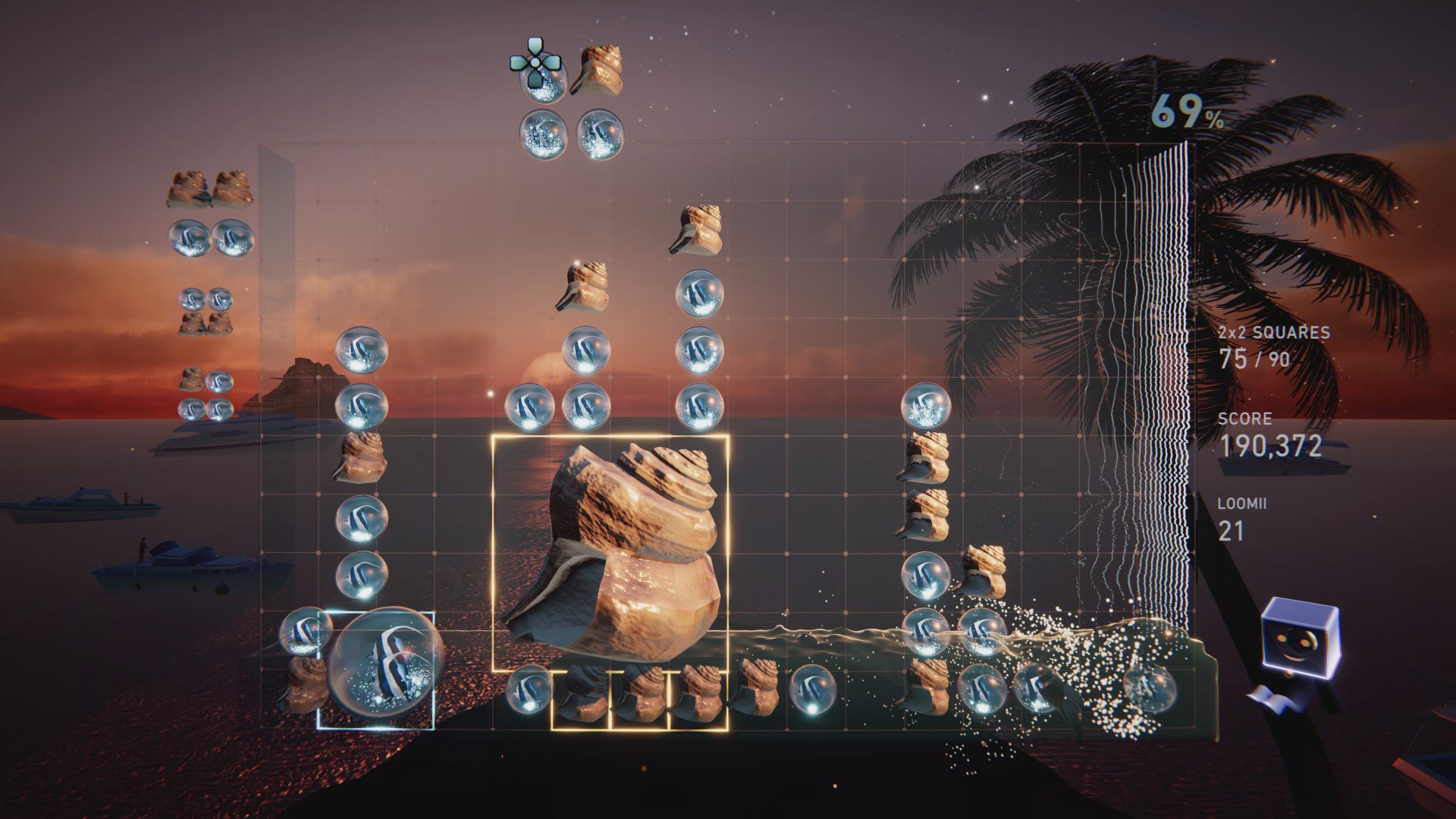
Lumines Arise has all-new, original stages, and from what's been shown so far, they all look so unique and bold. Where did you find inspiration for the stages in the game?
Ishihara: A quick step back to Tetris Effect. The Journey mode is this connected story we built, and it's based on this journey we wanted to write and tell in a very grand scale, epic way.
With Lumines Arise, the word "emotion" is really at its core the same, but we're really focusing on the senses and each individual emotion a person will have. For example, anger, sadness, fear, or surprise. These are more detailed, and you can break them down into specific examples, almost.
We'd written out all these emotions a human can have, and we try to find a motif or an environment where you may feel these emotions. That was our approach to finding what kind of stages would be most appropriate to evoke these emotions.
Speaking of Tetris Effect, when I said epic scale, like we take you to outer space, deep down in the ocean, and they're very worldly environmental stages. With Lumines Arise, the stages are based on things or places that are much closer to you and kind of within reach.
For example, animals and creatures, or things that are maybe even lying around in your household — those are the things that inspired us to come up with these stages.
Accessible to All
It's funny, you talk about the stages being inspired by everyday things, but if anything, the stages themselves are even more elaborate than the ones in Tetris Effect. I was wondering, how do you find the balance between creating these visually arresting stages and not making them overwhelming for players?
Ishihara: It's a very good question. Probably one of the most challenging aspects of creating this game is refining and tuning to the point where we can really strike that balance between not going overboard, but giving the player just enough so that we're maximising that impact and impression.
When we're balancing each stage, what we keep in mind is A) what is happening in the game, and B) in this moment, what is a player doing and thinking, and what is coming through their eyes and ears? There are other senses we can't read into, so we're assuming and taking guesses.
However, we feel there's a moment where it's the peak, where we need to maximise that impact, and then there's also the opposite, where we need to minimise. In between that, it's almost like adjusting a volume, going between those lines.
It all comes down to, in this given moment, where is the player, what is the player doing, and really reading through the senses. That's why it's this multi-sensory experience, and how we trigger those emotions and how we deliver that.
It's one of the most difficult tasks we have in trying to find that balance.
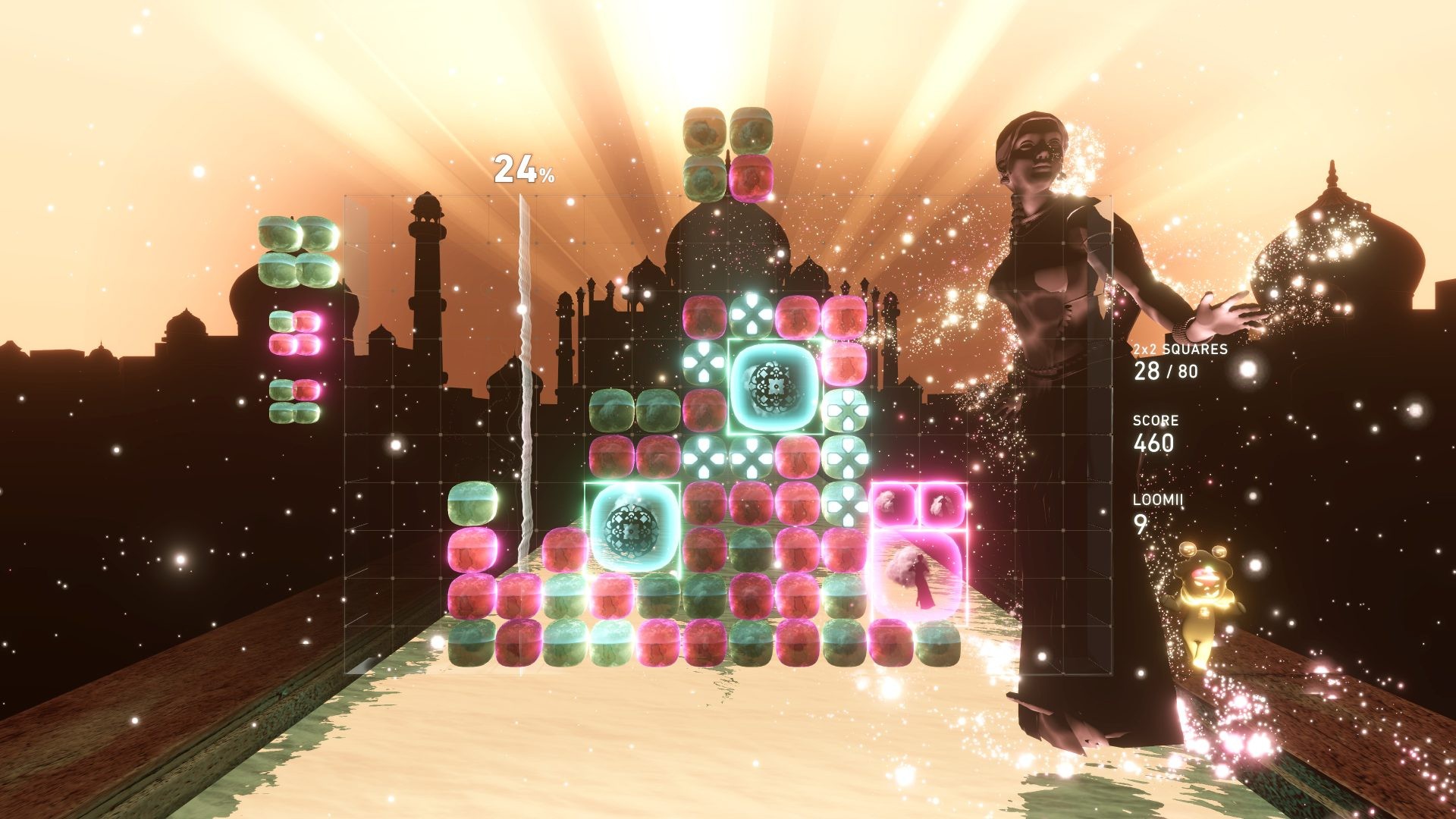
On a related note, you held a limited time demo of the game earlier this year — actually, it's returned and is playable now until launch. What feedback have you received from players of the demo that's been implemented into the final game?
Mark MacDonald: So a lot of the feedback from the users — you touched on the readability issues in the game, and how much is too much, and that's something the team has been dialling in. Ishihara-san talked about what a difficult process that is.
Also, you can have cool effects without having them be too distracting, and sometimes the difference between those two things is, like, a shade of pink. Like one shade over and now it fades into the background quicker. These subtle things make a really big difference.
But that's something we got feedback on from different users, so we've been tuning that.
And we're also really sweating the [accessibility] options. So we want to give players a lot of options to like, oh, "The screen zooming and shaking is distracting to me." Okay, you can turn that on or off. "Hey, the grid, it's hard for me to see where I'm dropping the blocks." That's something I really pay attention to. It's like, okay, there's an option here for you too.
We really want to surface that and make sure players notice that. Being able to tune the level of experience to where you want is a really big priority. If you go into the options, there's a lot of them. You can zoom the grid in, make the text bigger, and so forth.
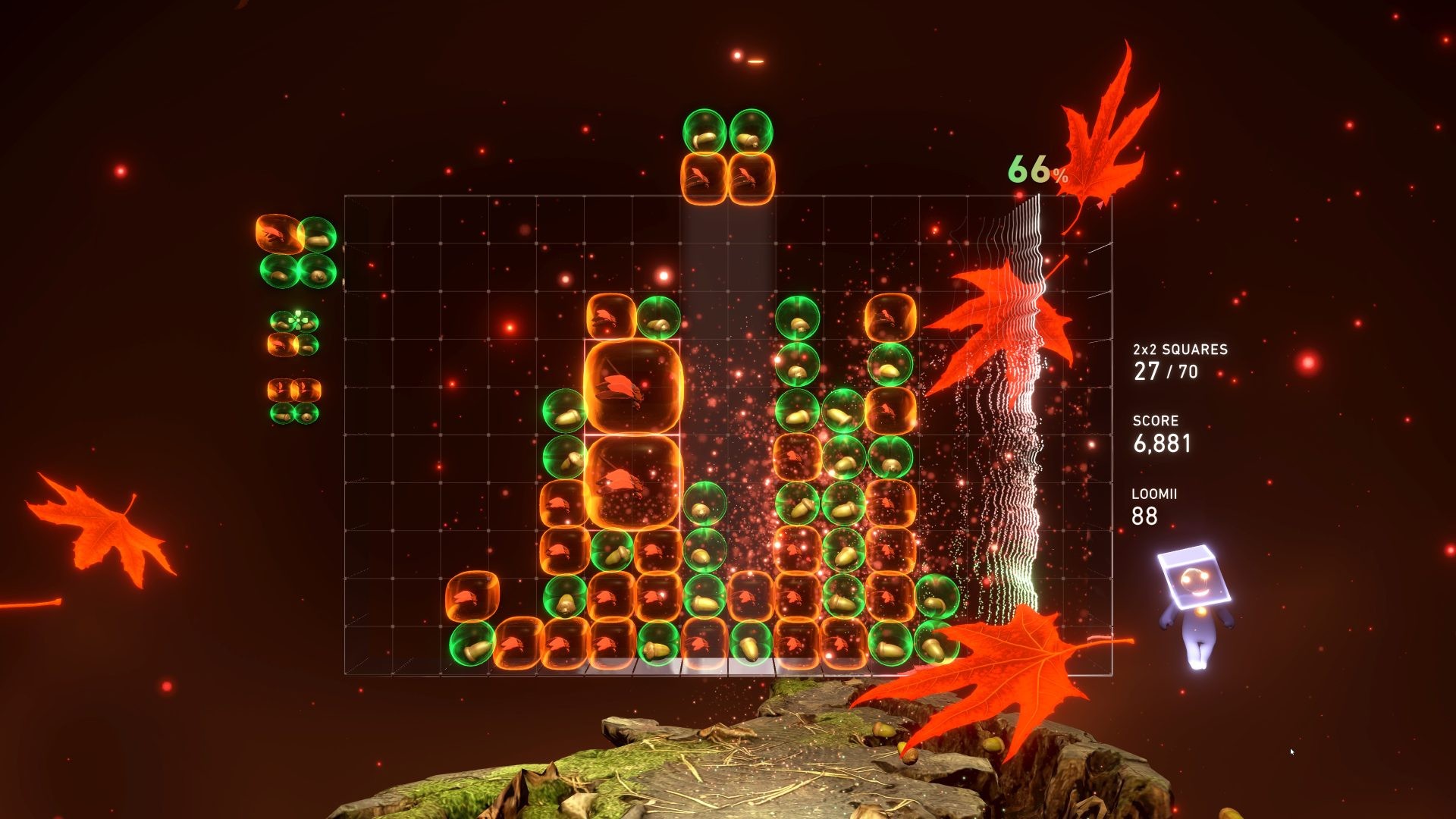
Plumbing the Depths
Moving away from Journey mode, I wanted to talk about the other modes on offer. There's a lot of single player features for example, like Mission mode which has all these training modules as well as lots of fun challenges that really change the gameplay. How do you come up with these and what do they bring to the game?
Ishihara: For the last decade, the Lumines series has sort of been on hiatus, let's say. A brand new Lumines game hasn't been released.
So for Enhance to release a brand new Lumines game, it's really important to us to present the game in full, in its complete form. We can't assume assume people know how to play Lumines, so it's a means of onboarding, and letting the game be accessible to a wider audience.
Of course, we have training, we have other modes as well. It's very simple to play this puzzle game, but it's quite deep. For one to really find the fun and to really get into the rhythm, get to its core, we do think it takes a bit of time.
Maybe that's a style Enhance isn't known for, but there's a path we take where the deeper, the more knowledgeable, the more understanding you have of the game, the more you get it. In order for us to really maximise the depth and the full range of what we want you to know as Lumines Arise, we feel it's important to give the player access to different ways of getting to know the game, from the fundamental basics to finding your own groove.
MacDonald: I do see the challenges as one of the big differentiating factors [from past Lumines games].
Like previous games have had [Puzzle mode], where it was like, "Can you make this specific shape?" and things like that.
Lumines actually has a pretty deep system, or it can be. What we identified early on is that it's pretty easy to get a surface level understanding of Lumines, but the gap between beginner and advanced player is a tough road to walk.
One of the things we really wanted to do with this game was to see how we could bridge that gap and help people along in a very friendly, step-by-step fashion. I think that's something the training section makes a little more interesting and fun.
Then the challenges, similar to the Effect modes in Tetris Effect, we wanted to have more for people to do in single player that's not just the standard Lumines gameplay. That's what you'll play the most, but all the rule changes that happen in those challenges, it adds a lot of good variety. That's something I'm super excited for people to get their hands on.
A big part of Lumines Arise is its new Burst mechanic, and it's so key that you've built a whole new multiplayer mode around it with Burst Battle. How does Burst affect the game and how did it influence the new multiplayer mode?
MacDonald: We wanted to bring something new and important to the table, and Burst is that thing, both in Journey mode and multiplayer.
[Ed: Burst is a mechanic similar to Zone in Tetris Effect, whereby you can temporarily stop blocks from being cleared in order to build up a large combo. This helps you crank up your score as well as get you out of sticky situations by clearing a lot of the playfield at once.]
Lumines has never really had a good, robust competitive multiplayer mode in my opinion, so we kind of embraced the "garbage block" meta that a lot of other puzzle games like Puyo Puyo and Tetris have kinda pioneered. And it's the gold standard for good reason; it's a very understandable competitive system.
So being able to have a multiplayer mode with that back-and-forth, and that kind of, pull yourself up from the ashes, last ditch effort that Burst allows is really great.
Then of course in single player mode, having a mechanic where, if you're down on your luck or about to top out, you can try to come back. It's not an immediate clear-the-screen, you might still be screwed depending on how your stuff is set up and how you react, but at least it gives you a good shot at it.
We're seeing now like, when you get really advanced, using it to just max out your score. And we're seeing people literally fill up the whole screen with their Burst, and different strategies for how you set up your grid before you activate it.
Time will tell, but I'm happy from early testing that people are showing that there's depth to it and as you become an advanced player, Burst has something for you still.
Avatars and Astro Bot
In past Lumines games, you had an avatar you could choose, which would show up next to the playfield. In Lumines Arise, you're building on that idea with Loomii, a more fleshed out, customisable version of that idea. How did you go about escalating the avatar concept?
Ishihara: Yes, avatars have evolved in Lumines Arise, and now we call them Loomii.
Similar to what I was saying about how we come up with the stages, a similar thought process took place in our team. We want the player to feel like they're one with their avatar and have a connection. So we said, we should really make this into a lively character, characterisation is going to be key.
If it's not going to be this 2D icon, we need some arms and legs. As soon as we did that and it had a body, walking isn't going to be enough. We're gonna have to give it more action and motion, and so the dancing happened naturally.
Everything started from a very simple idea, but the more we expanded, the more fun it became for us to expand on these ideas.
Another aspect is, from the very beginning when Lumines Arise became a project, we knew we really wanted to work on multiplayer. Lumines is not known for having a really robust multiplayer element to it.
So thinking about multiplayer, and your players walking in the multiplayer lobby, you want to either play against or gather around for community events — we want you to feel you actually exist and are seeing the other players.
In order to feel that, just having floating icons wasn't going to cut it. We felt we needed to make it into a fuller form, something you'd want to spend time with and do the customisation. That's really how it started.
Lumines fans will recognise, the eyes and mouths, there are expressions that are very consistent, or a throwback to the original game. So there are small things we've carried over and tried to keep as that iconic Lumines avatar look, but we've given avatars a whole makeover.
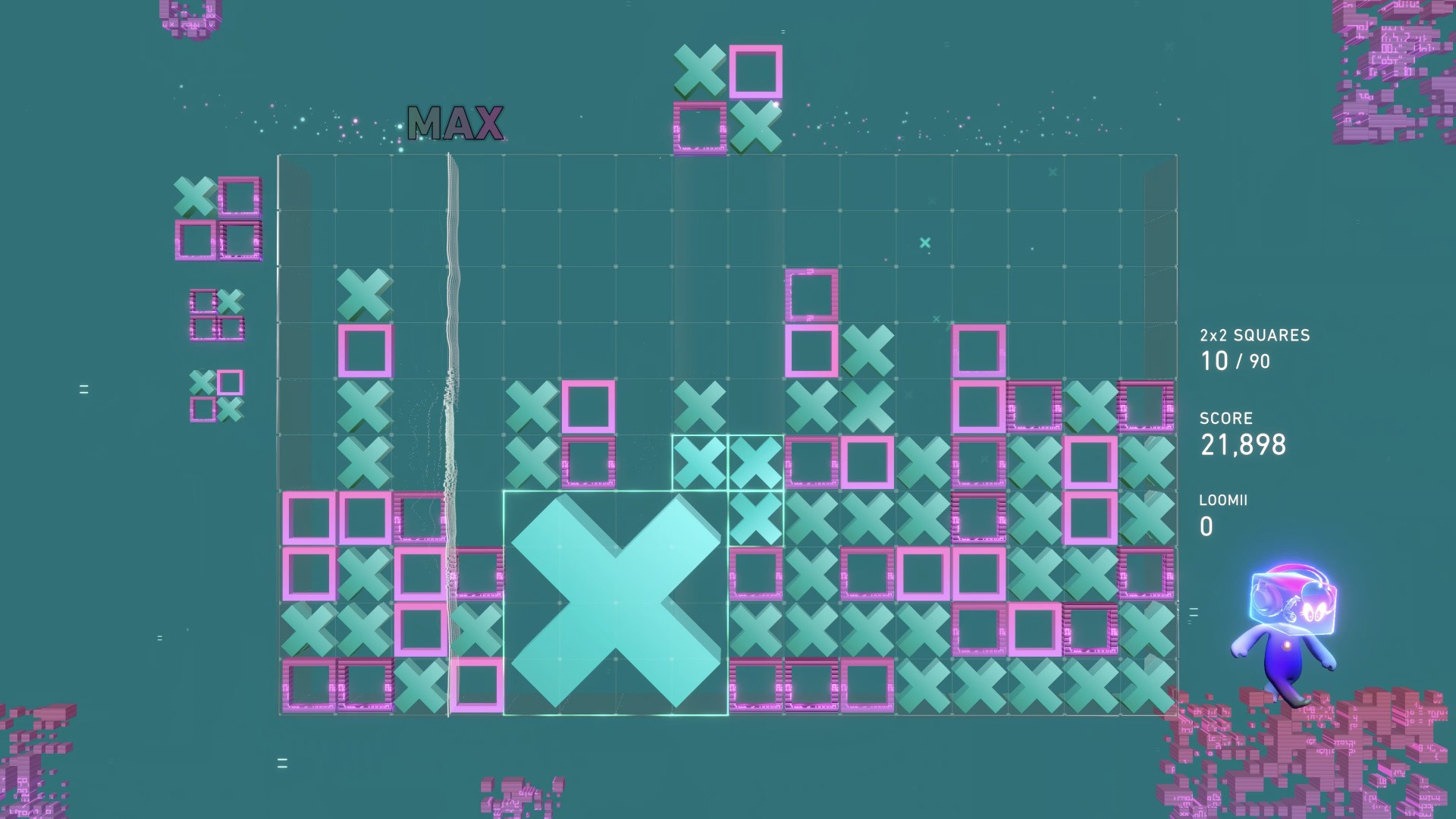
Speaking of Loomii, one of the Loomii skins in the PS5 Digital Deluxe edition of the game is Astro Bot. Obviously there was some Enhance representation in that game, and now he's appearing in Lumines Arise. How did this collaboration come to be?
MacDonald: With Astro Bot, it goes back to both being early PSVR supporters. So I think we really had a mutual admiration with [Team Asobi]. I know the creative director, Nicolas [Doucet] has said his favourite VR game was Tetris Effect — we were super flattered.
We just super respect what they're doing, love what they're doing there. And as you mentioned, we had a couple of [Special Bots] in Astro Bot. We're super flattered by that, like, very few studios even got two, and to be asked for our new game at the time, Humanity, which wasn't out yet, that was a really cool show of confidence from them.
We had our Loomii avatar system we were creating, and we wanted something cool that PlayStation owners specifically would be excited by. What would make sense [to represent as an avatar in Lumines Arise], and Astro Bot was the best candidate, and we identified that as the goal, that would be the best.
It just so happened while we were thinking this through, Mizuguchi-san and Nicolas were both on the same panel at a Sony industry event. So I was like, "Miz, you have to mention it to Nicolas! See if you can get him as our way in!"
Of course we could go through Sony and all the official channels, but it was just cosmic coincidence it was happening that week just as we were talking about it.
I have to say, they've been so amazing to work with; super professional but like really easy to work with, they made it as easy as possible.
We'd like to thank everyone once again for setting aside some time to talk to us about Lumines Arise. The game is due for release on 11th November 2025, and it's available to pre-order now on PS Store. As mentioned, the digital deluxe content includes an Astro Bot Loomii skin and name plate, as well as items based on other Enhance titles.
Are you planning to play Lumines Arise when it launches next week? Clear some space in the comments section below.