
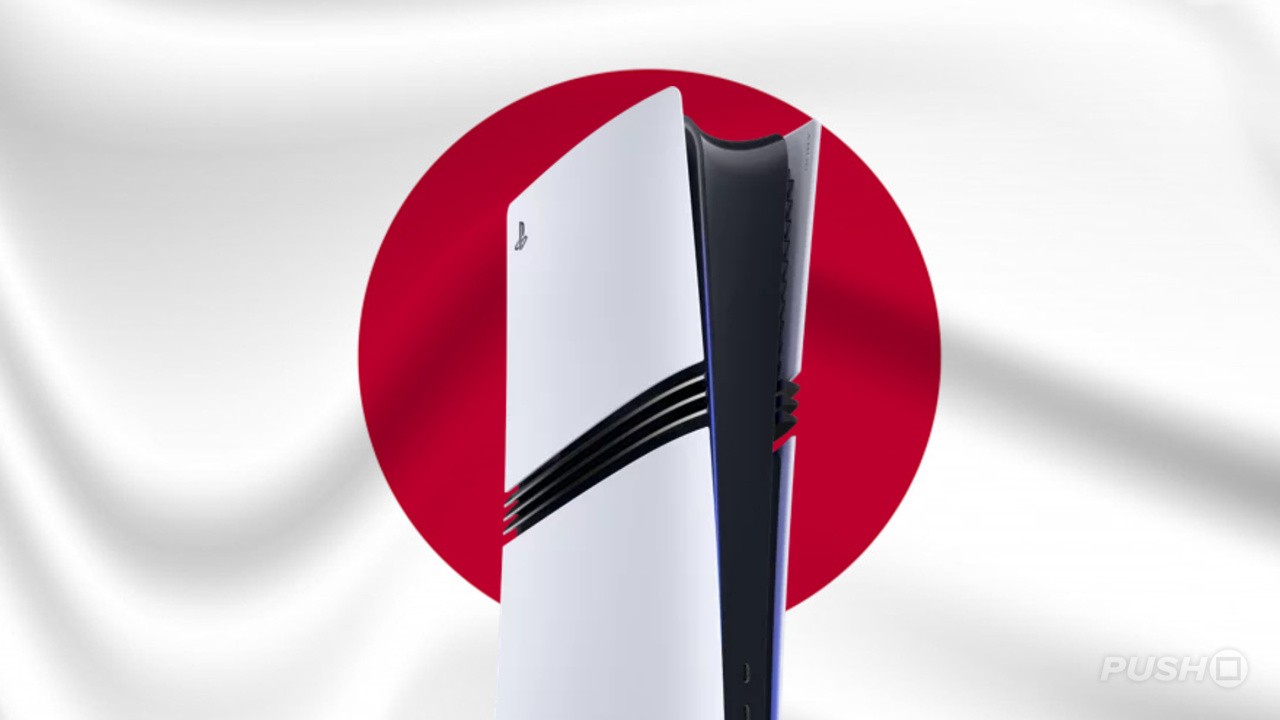
Reports suggest new PlayStation CEO Hideaki Nishino couldn’t stand to see Sony’s floundering status in its native Japan, and so rushed through approval of a cut-price language locked model in order to stimulate sales domestically.
Under previous management, the manufacturer had purportedly accepted its status in its home territory, and wasn’t willing to fight tooth and nail with Nintendo to claw back market share.
Nishino, however – who’s Japanese – felt differently, and introduced the new cut-price, language locked model on 21st November.
Subscribe to Push Square on YouTube168k
In the case of the standard Digital Edition model, it reduced the overall price of the hardware from ¥72,980 (~$473) to ¥55,000 (~$350), putting it at parity with the MSRP of the machine prior to its sharp increases in 2024.
But the impact, alongside a surging Switch 2, has been minimal so far.
According to Famitsu sales data, for the two weeks immediately after the new model’s introduction, it sold a combined 36,983 and 35,786 units respectively – a decent increase on the months prior.
But in the magazine’s latest report, it pegs total PS5 hardware sales at 18,912 units, slightly lower than the same period last year, when it sold 21,574 units. PS5 Pro was still relatively new at that time, but it only contributed 5,504 units to the total that particular week, so didn’t have a meaningful impact.
In other words, what we’re seeing is fairly static PS5 performance in Japan, despite the introduction of the much cheaper model.
Now it could be that without the language locked console, the numbers would be even worse this year. So, in that sense, Sony may have at least stemmed the bleeding.
But it’s hard to see what else the company can do here.
Tentpole domestic titles like Resident Evil Requiem, Final Fantasy 7 Remake Intergrade, and Yakuza Kiwami 3 & Dark Ties – once exclusive to PlayStation by default due to hardware differences – are now beginning to ship in a competent format on the Switch 2, so Sony has lost that advantage.
Moreover, the bulky, stationary nature of the PS5 doesn’t really appeal to the Japanese lifestyle. And the platform holder is lacking first-party brands which come anywhere close to touching the cultural relevance of releases like Mario and Pokémon.
Nishino, it seems, will keep trying. We know Sony is plotting a handheld of its own, likely to release alongside the PS6, which may prove popular in Japan.
But without any real exclusives of note, and with Japanese third-parties increasingly turning to Switch 2 as a viable release destination, it looks like the platform holder’s got its work cut out.
One thing’s for sure: price alone doesn’t appear to be PlayStation’s only problem in its native Japan.