 by
by 
The packed halls of Taipei’s Nangang Exhibition Center play host to one of the lower-profile conventions of the gaming calendar every year.
But while the Taipei Game Show may not be on your radar quite like Gamescom or Tokyo Game Show, where major announcements flow in droves, it still represents an exciting four days for all those who attend.
As you’d expect of Taiwan – and other Asian nations like Korea and China – there’s a particular emphasis on mobile, where gacha rules supreme.
This year it was more evident than ever, with huge clusters of fans collecting around juggernauts like Zenless Zone Zero, Wuthering Waves, and the newly released Arknights: Endfield.
While the primary audience for these games exists on PC and smartphones, Sony deserves particular credit for securing all three of them on PS5 – two of which are currently console exclusives.
Subscribe to Push Square on YouTube172k
But it’s not all free-to-play: two of the Taipei Game Show’s defining features are its focus on indies – both local to Taiwan and beyond – as well as board games.
This year the show’s layout was adjusted accordingly, allowing both the board games and indie games to bookend the main attractions.
These quieter, more personal areas – where you’re able to interact directly with creators or challenge strangers to rounds of Yu-Gi-Oh – provide some much-needed respite from the hustle and bustle of the main booths.
But it’s worth talking a little bit about some of the headline booths themselves, because many of them represented havens for their associated games.
Zenless Zone Zero, for example, had a giant stage setup with the tower of televisions from the gacha component of the title. Here, fans were invited onto the podium to complete quizzes, combat challenges, and more in return for merchandise.
There was also a full-blown shop selling tons of exclusive items from the game, including many we’ve never seen in stores before.
Arknights: Endfield, meanwhile, was running an extremely popular stamp challenge, where you had to queue up to complete four different tasks, which involved everything from following the game on social media to fulfilling simple gameplay challenges.
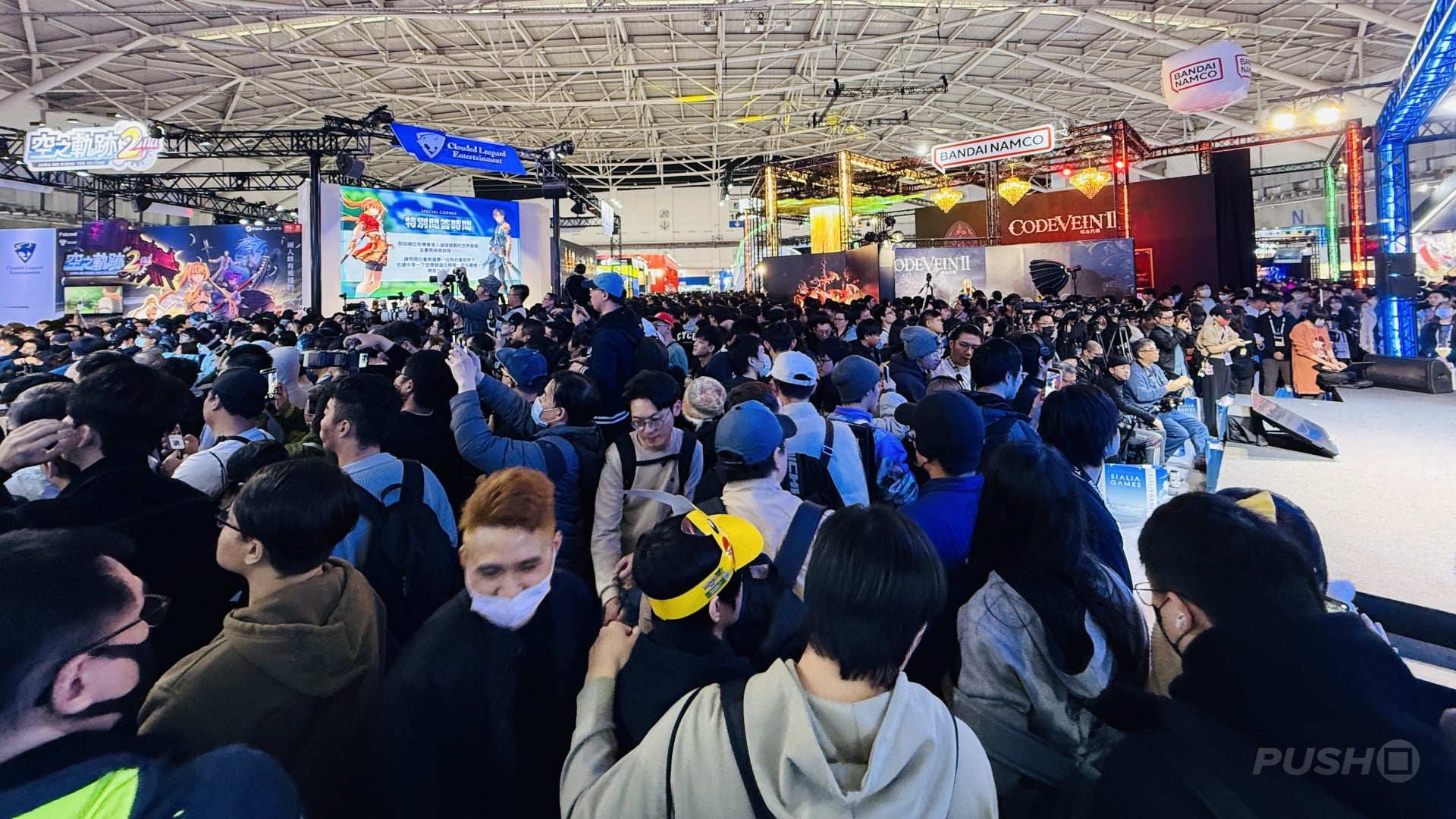
Many of the games had professional cosplayers dressed as characters, including several semi-famous models from Korea and beyond. As you’d expect, with all of these activities taking place, crowding around certain chokepoints was remarkable.
But we fulfilled our duty and worked our way through the sizeable crowds, ensuring we were able to go hands-on with a half-dozen or so different games. We’ve compiled our thoughts below.
The Seven Deadly Sins: Origin
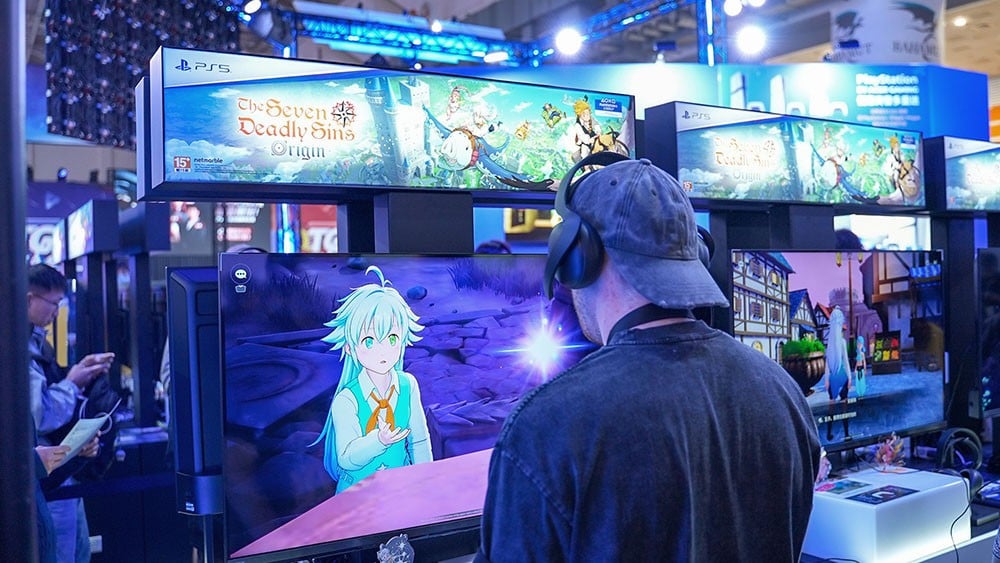
When Korean company Netmarble invited us to check out The Seven Deadly Sins: Origin in Sony’s small PlayStation booth, we were initially sceptical; the game previously had a release date of 28th January, after all.
But that date got delayed into March just days ago, so we decided to give this Genshin Impact-inspired adventure another go.
This open world outing is based on the manga by Nakaba Suzuki, and so its colourful cast and Britannia backdrop feel well established from the off. That’s a nice perk of the project, as its existing universe means it relies a lot less on the heavy (and often terribly written) exposition of similar games.
While we only got to play around 30 minutes or so, we found an action RPG that’s clearly learned a lot from its forebears.
Combat, while still built around MMO-style cooldowns and elemental effects, feels much more responsive than in Genshin Impact. And set-piece moments – like one sequence where you’re riding a dragon through a tunnel, dodging obstacles – feels exciting, rather than scrappy.
But licensed games like this always raise questions: are there truly enough characters in The Seven Deadly Sins to keep a live service like this alive for long?
We simply can’t answer that kind of question during a demo at a convention, but with a vibrant visual style and some truly excellent Japanese voice acting, we’re certainly compelled to give the final product a go.
Rain 98
While Rain 98’s not been announced for PS5 yet, we’re led to believe Sony’s third-party outreach team is very aware of this project. And it’s hardly a surprise, as this visual-novel-cum-minigame-compilation harbours immense promise.
It’s carried by an outstanding analogue anime aesthetic, which reminds us of, say, Lofi Girl. (It’s got that dreamy, ethereal soundscape to it, too.)
But the mystery here is that you’ve ended up in a suicidal stranger’s apartment – and you also happen to have turned back time to 1998.
Some of the writing is a bit on the nose – as you inspect a Tamagotchi, you’re reminded that “digital pets were popular once” – but there’s an intriguing kind of suspense to everything.
Reina, as she later introduces herself, instructs you that you must complete 100 different puzzles in a passport-like book to escape your late 90s purgatory, and these all will entail completely unique interactions.
You’ll also need to work part-time jobs while taking your vacation in the past, so we spent a few minutes packaging up toy capsules and even making bead decorations in a similar-ish style to Picross.
While the interactions are simple, the minigames seem fun and the visual novel aspects really are dripping in atmosphere. There’s one moment – a late title card – where the aspect ratio temporarily switches to 4:3, and it’s a real chef’s kiss sequence.
Keep your eyes on this.
Tokyo Xtreme Racer
Genki’s Tokyo Xtreme Racer, also known as Shutoko Battle, may have technically got its start as Highway 2000 on the SEGA Saturn – but it was on the Dreamcast and later PS2 where it really made its name.
While the Nakano-based dev has continued making games, this is its first Tokyo Xtreme Racer since 2007’s Tokyo Xtreme Racer: Drift 2, so it’s been almost 20 years.
Engaged fans will know this title originally released on Steam last year, initially in Early Access, but Genki has been quietly improving it and responding to fan feedback.
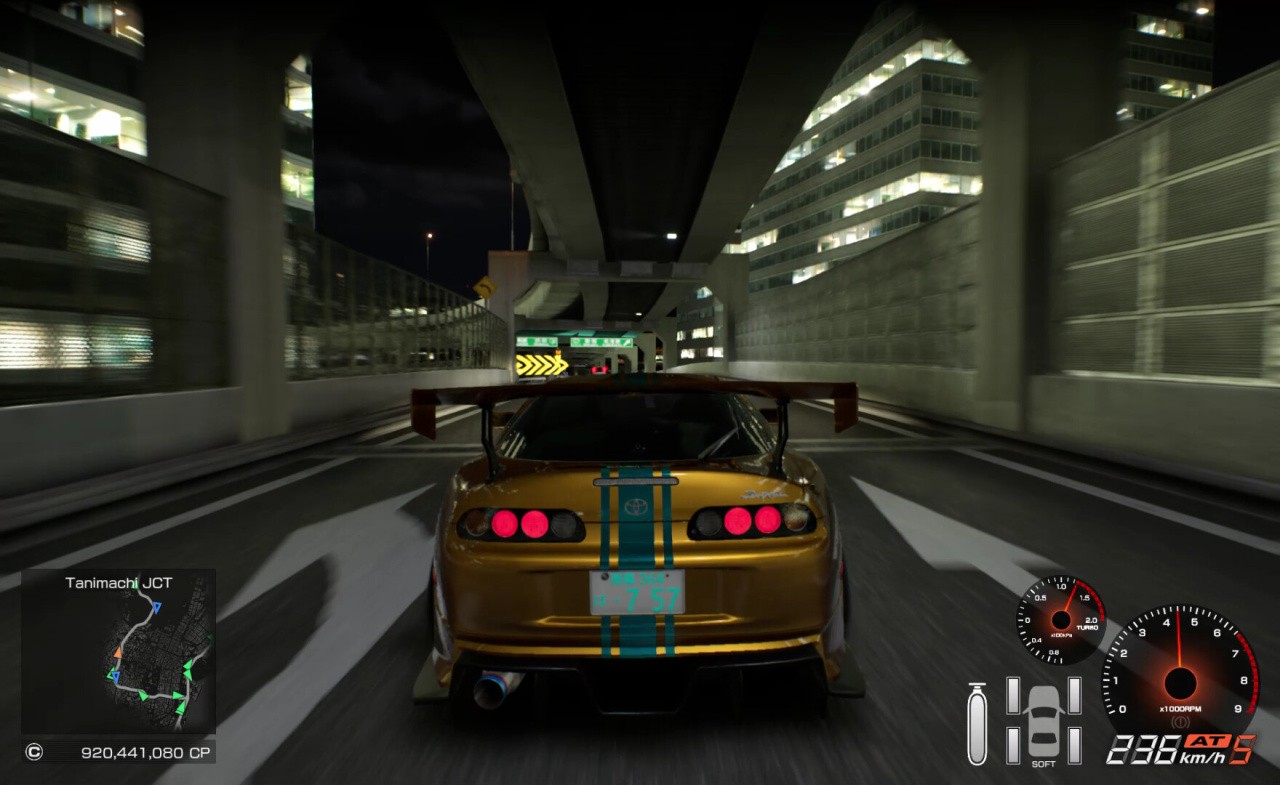
That means this PS5 version, due out worldwide on 25th February, represents a milestone moment for the studio – and a homecoming of sorts for the franchise.
Our demo was limited to a single sprint on Tokyo’s expressway, where we were able to “flash” other drivers on the road and engage in Initial D-style sprint races.
Commandeering a Nissan Skyline – with a full setup featuring a steering wheel and pedals – the handling felt largely arcade with a touch of sim, and we enjoyed seeing iconic scenery, like Tokyo Tower, whizz by.
It’s worth noting this game does not have the budget of a Gran Turismo or Forza Horizon – it almost looks like a throwback to the PS3, although it’s obviously running at a much higher resolution than Sony’s last-last-gen system could handle, and we didn’t spot any blips to the frame rate.
We’d also stress that this was the PS5 build we were playing, on base hardware, so it was good to get a measure of how the port is stacking up.
If you’re a fan of old SEGA arcade games, like the Initial D series for instance, then you’ll definitely get a kick out of this throwback racer.
City Hunter
Originally released for the PC Engine in 1990, we got our hands on the updated re-release of City Hunter, coming to PS5 later this month, on 26th February.
The game, based on Tsukasa Hojo’s iconic James Bond-esque 80s manga, sees you taking on contracts as handsome protagonist, Ryo Saeba.
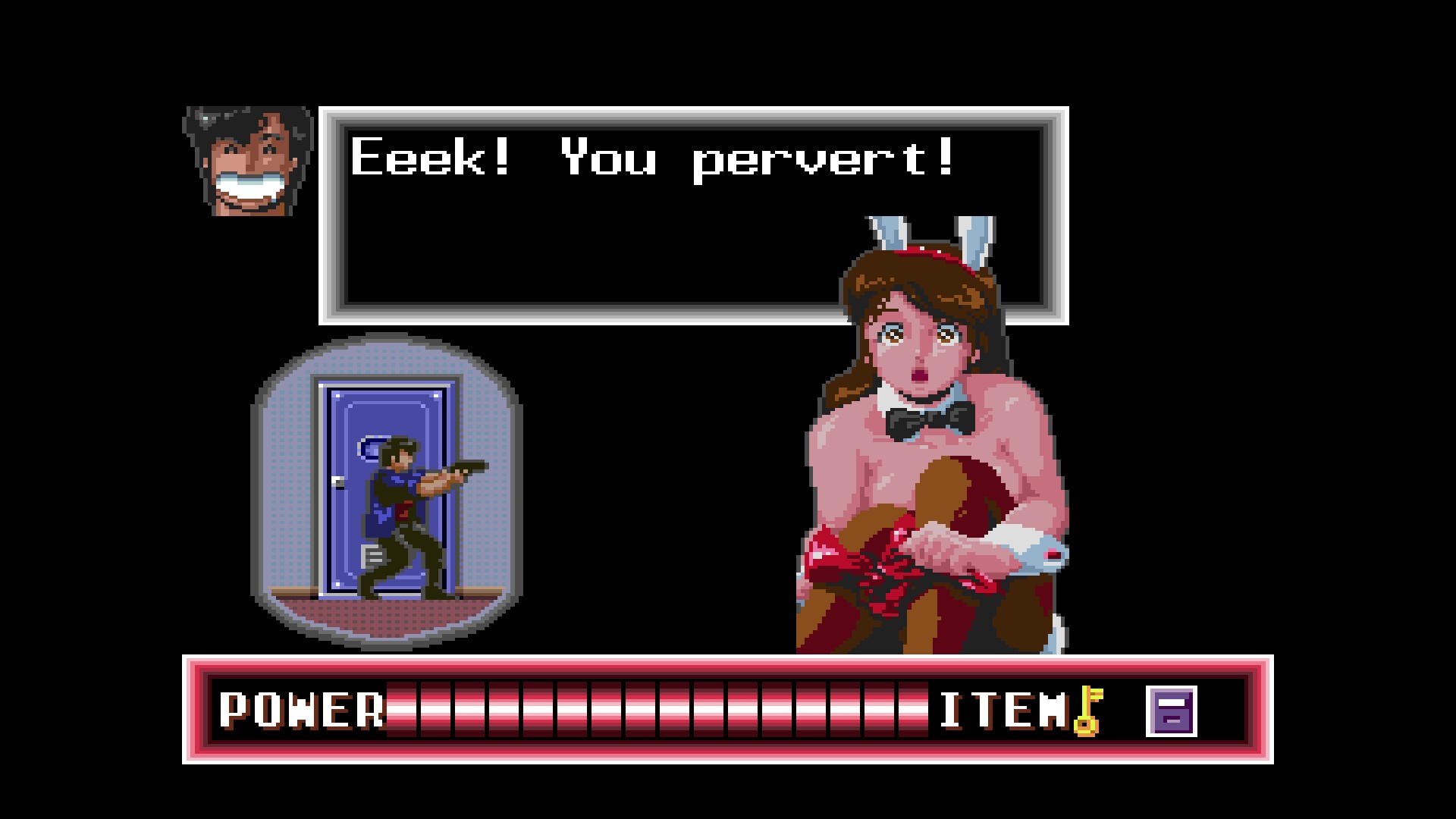
The level we got to try in our 10-ish minute demo saw us gunning our way through a series of corridors, each peppered with doors, many of which could be entered.
As we explored further, we gathered key items that would allow us to unlock more of the area: an ID card, for example, after we informed employees we were here to take out the company’s notoriously nefarious CEO.
This game was originally made by Sunsoft in the early 90s, and so it has all the hallmarks of a Famicom-era release. From what we can tell, some of the gameplay has been rebalanced for this re-release – although the original version is preserved if you prefer, which is a nice touch.
Quality-of-life improvements include the ability to rewind at will, while the English translation is completely new.
It’s a timely release, considering the manga is enjoying something of a renaissance in the West right now, on the back of publisher Kana’s long overdue reprint, which debuted in omnibus format in the UK and North America late last year.
Kyouran Makaism
Available this week in Asia, the best way to describe Kyouran Makaism is basically Disgaea Musou.
With no localisation confirmed for this title just yet, there was no English language option in the demo we played, so we had to make do with Mandarin, which limited our overall understanding of the demo.
However, after a brief period wandering around in a castle-like hub world – where it appears you can invest in skills, weapon upgrades, and other performance improving buffs – we headed out into the field to smack up some Prinnys.
There are few real surprises here: playing on PS5, we don’t feel like the world map was as populated as in the likes of Dynasty Warriors Origins or even the recent PS5 re-release of One Piece: Pirate Warriors 4.
But it was obvious from the demo we were effectively playing the opening moments of the game, and so it’s possible things get more complicated.
You can dash, dodge, and perform special moves – although the challenge we faced was minimal in these early exchanges, and we easily fulfilled the win conditions on each of the three or four stages we played.
The only real obstacle we encountered was a group of butterflies which inflicted poisoning status upon us, which we were able to deal with using a potion mapped to a hot key.
So, relatively straightforward stuff, then, with pretty rudimentary – but admittedly vibrant – visuals. It all feels a bit low budget, but Disgaea fans may enjoy seeing the franchise presented in this different format.
We’ll update you if and when a Western release date gets announced.
Never Grave: The Witch and the Curse
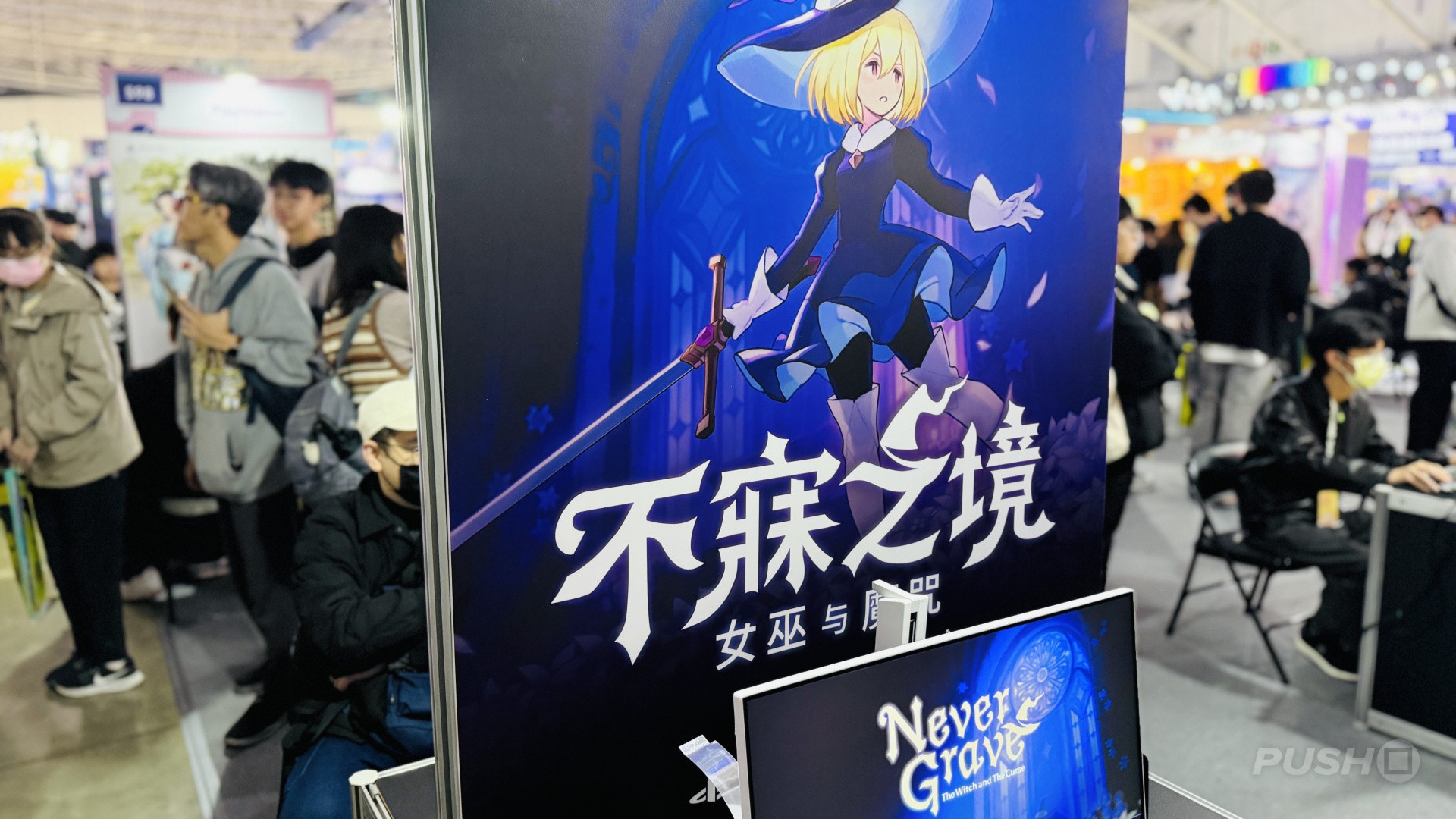
Originally announced at a State of Play last November, we’ll be honest when we admit that Never Grave: The Witch and the Curse wasn’t on our radar at all.
But going hands-on with the final product, published by Palworld’s PocketPair, reveals a likeable roguelite with some interesting ideas.
While this game is apparently tooled around co-op, we played our entire demo solo and didn’t feel disadvantaged at all.
The unique trick here is that you control a witch’s hat, but you can use it to possess different things, similar to Super Mario Odyssey. On several occasions, we had to toss the hat to hard-to-reach areas and then summon our body to continue to progress.
The combat feels really good, aided by some strong use of the DualSense’s haptic feedback, as well as great animations and liberal use of hit-stop.
There also appears to be a village building element, where you can craft different facilities to aid your progress in future runs.
So, while this was a game we weren’t really paying attention to – and we do still think it looks a little generic, despite its inoffensive art style – we reckon this one will be pretty compelling when it releases on 5th March.