
An infamously long RPG, Dragon Quest 7 has never quite been held up alongside the series' most revered instalments, but it's always been deserving of a second — or technically third — chance.
Dragon Quest 7 Reimagined sets out to rework the adventure for a modern audience; many of its biggest alterations to the original formula come in the form of streamlined gameplay and accessibility options.
And the good news is that this remake does wonders for what was once a tediously paced title. Crafted with a clear adoration for the source material, Reimagined is both a fantastic revival, and a top tier Dragon Quest game.
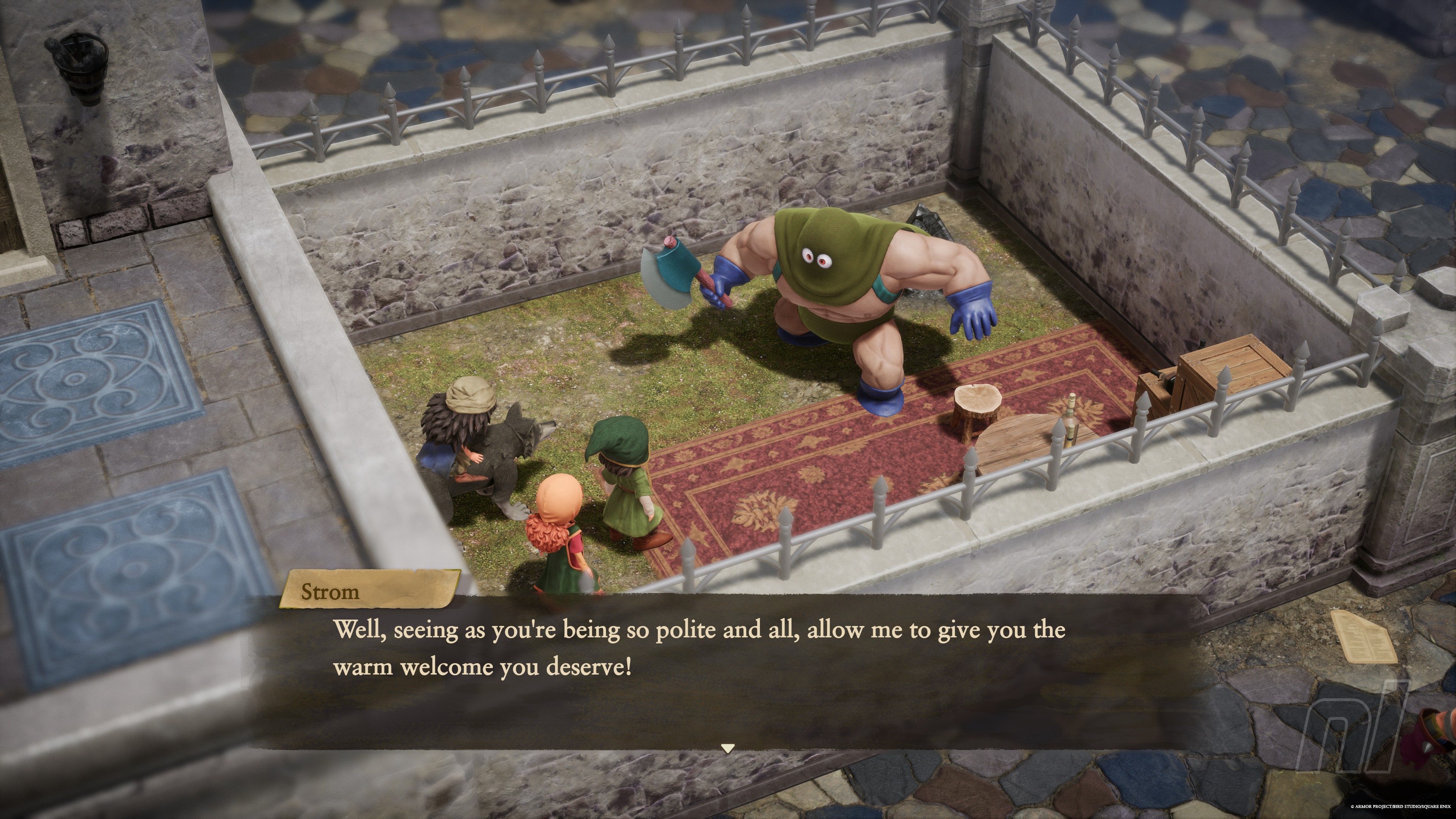
With a focus on time travel and an episodic story structure, Dragon Quest 7 sees a ragtag group of youngsters attempt to repair their world by righting the wrongs of the past.
You'll jump between blighted histories, thwarting malicious powers across a series of island kingdoms, with each landmass offering up its own narrative and central characters.
While the structure's undeniably predictable — visit a town, learn of a problem, go to a dungeon, slay some monsters — that quintessential Dragon Quest charm is rampant throughout, with each island 'episode' playing out like a fairy tale.
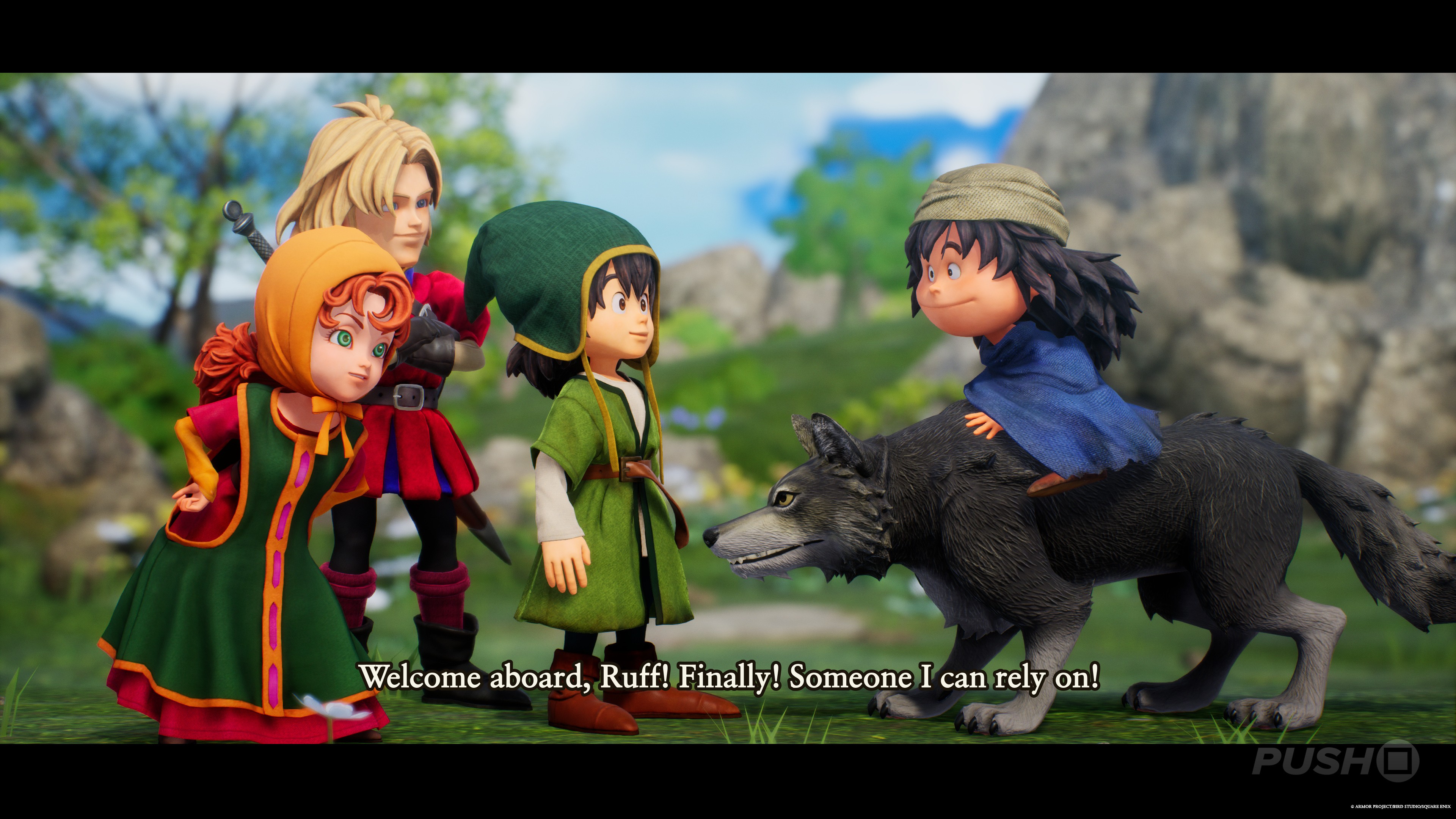
It's hard not to get reeled in by the sheer cosiness of the experience, which is emphasised by the remake's incredibly well realised diorama-esque art direction. It's one of those games that's just a joy to plod through at a nice, steady pace.
But even though Reimagined does its best to push its plot along, opting to shorten certain sequences and even cut some lesser storylines that were present in 7's previous incarnations, it remains a slow burn.
Our own playthrough for the purposes of this review clocked in at around 75 hours, and it's fair to say that you'll still need a decent amount of patience to get through the story's more ponderous moments.
Indeed, not all 'episodes' are created equal. Although rare, a few of 7's storylines amount to little more than trekking between locations in order to converse with a handful of NPCs. They're so glacial that we're left wondering why the development team didn't do more to truncate them.
And on top of that, the backtracking that haunted the game on PS1 and 3DS still mostly exists.
Having repaired the troubles of an island back in the past, you'll usually be prompted to return to that island in the present, in order to behold the fruits of your labour. This can often result in exploring the same towns and dungeons all over again, with only new dialogue and loot to coax you along.
It just feels a bit clunky by today's standards, but again, this kind of repetition is relatively rare across the adventure as a whole. In most circumstances there are meaningful discoveries to be made, and it's always interesting to see just how your actions in the past have impacted the land and its people in the present.
Besides, the whole process of hopping between time is made much more agreeable thanks to the addition of helpful maps and objective markers. Where the original 7 could frustrate with its invisible checklist of ongoing quests, Reimagined is happy to point you in the general direction of progress.
Even your party members will offer hints and tips if you take the time to consult them with a push of the circle button. Streamlining isn't always a good thing, but Square Enix has done well to soften 7's sometimes convoluted pacing problems.
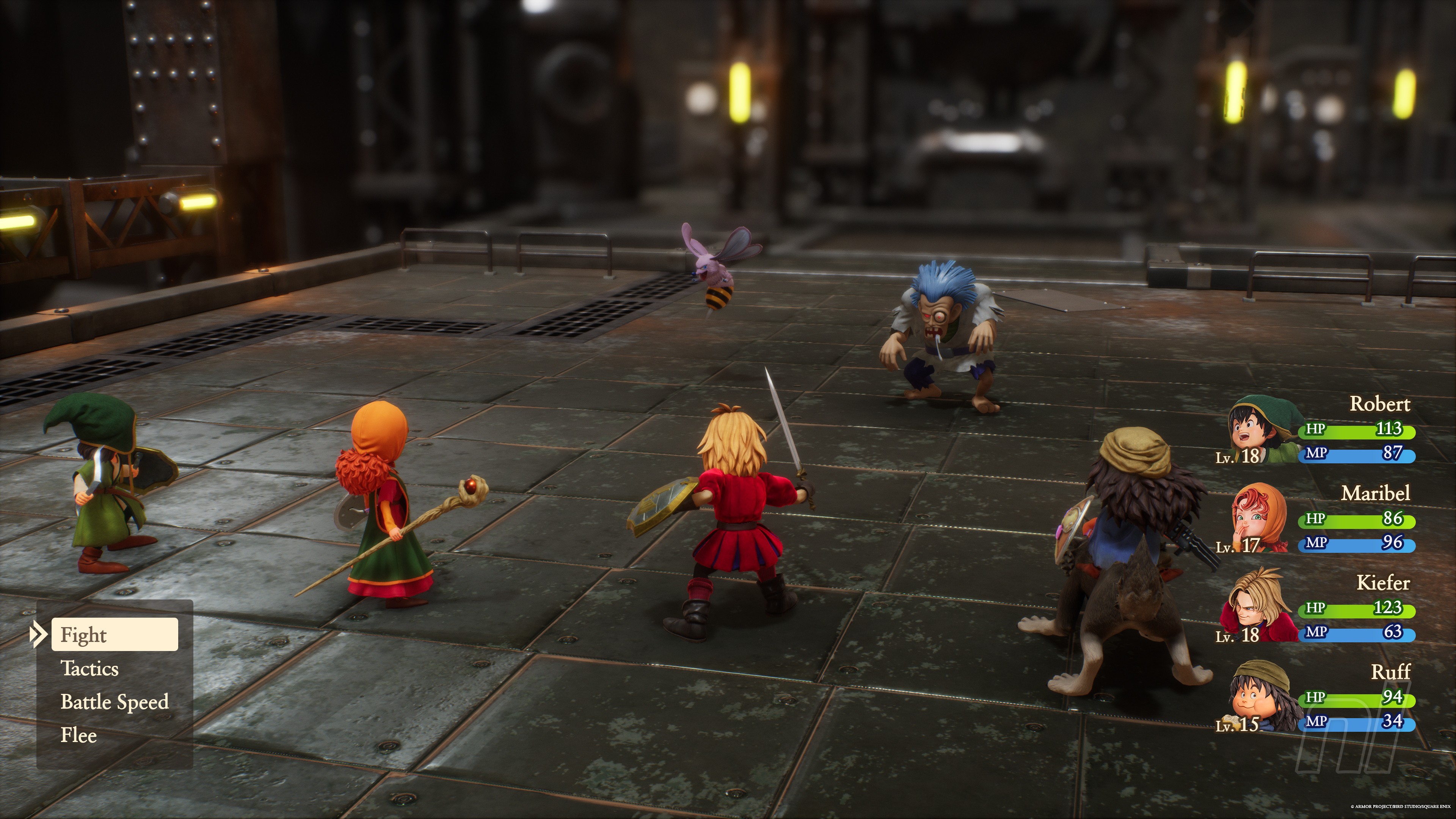
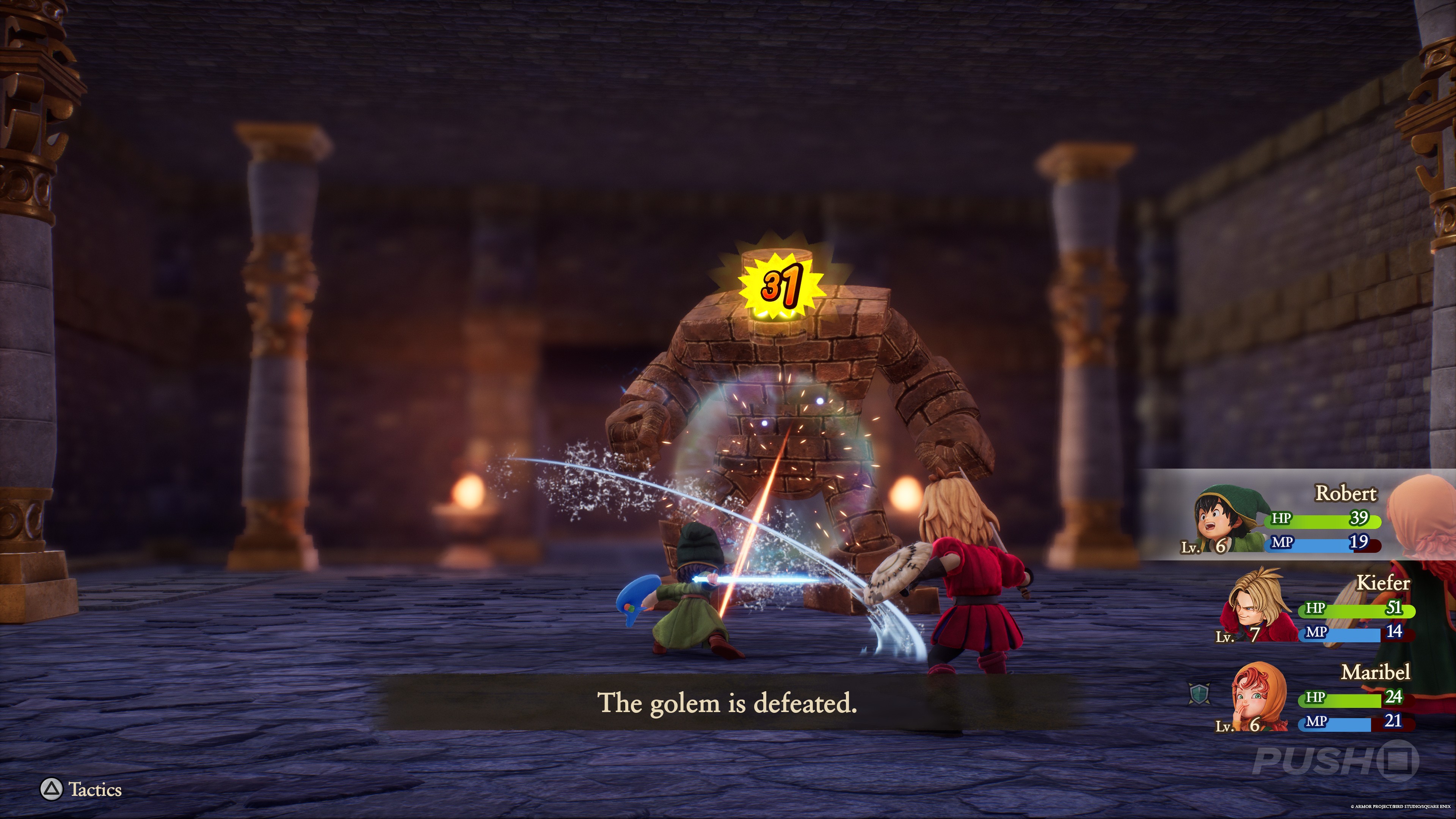
Other improvements include monsters being present in the field, eliminating the need for random encounters, the ability to speed up combat, and the addition of difficulty modifiers.
That latter inclusion is one of the most important, we'd argue. Plenty of you reading this will have played Dragon Quest 7 before, and so being able to increase experience point and money gains will all but eliminate the character-levelling grind — something that might have been putting you off a replay.
You can also tweak enemy damage, your damage, and full recovery after each fight. This means that you're free to craft your own challenge, and we think that can be a big plus for a game that's built on old school ideals.
Which brings us to the turn-based combat itself, which is... well, it's classic Dragon Quest, but Reimagined does boast a very neat and tidy user interface that makes navigating commands impressively pleasant. The ability to 'favourite' specific spells and abilities for easy access is welcome, too.
That's because you can end up with a massive list of techniques depending on your chosen jobs — or vocations, as the series likes to call them. This is where 7 attempts to do things a little differently, allowing you to customise each party member's toolkit by assigning them a class.
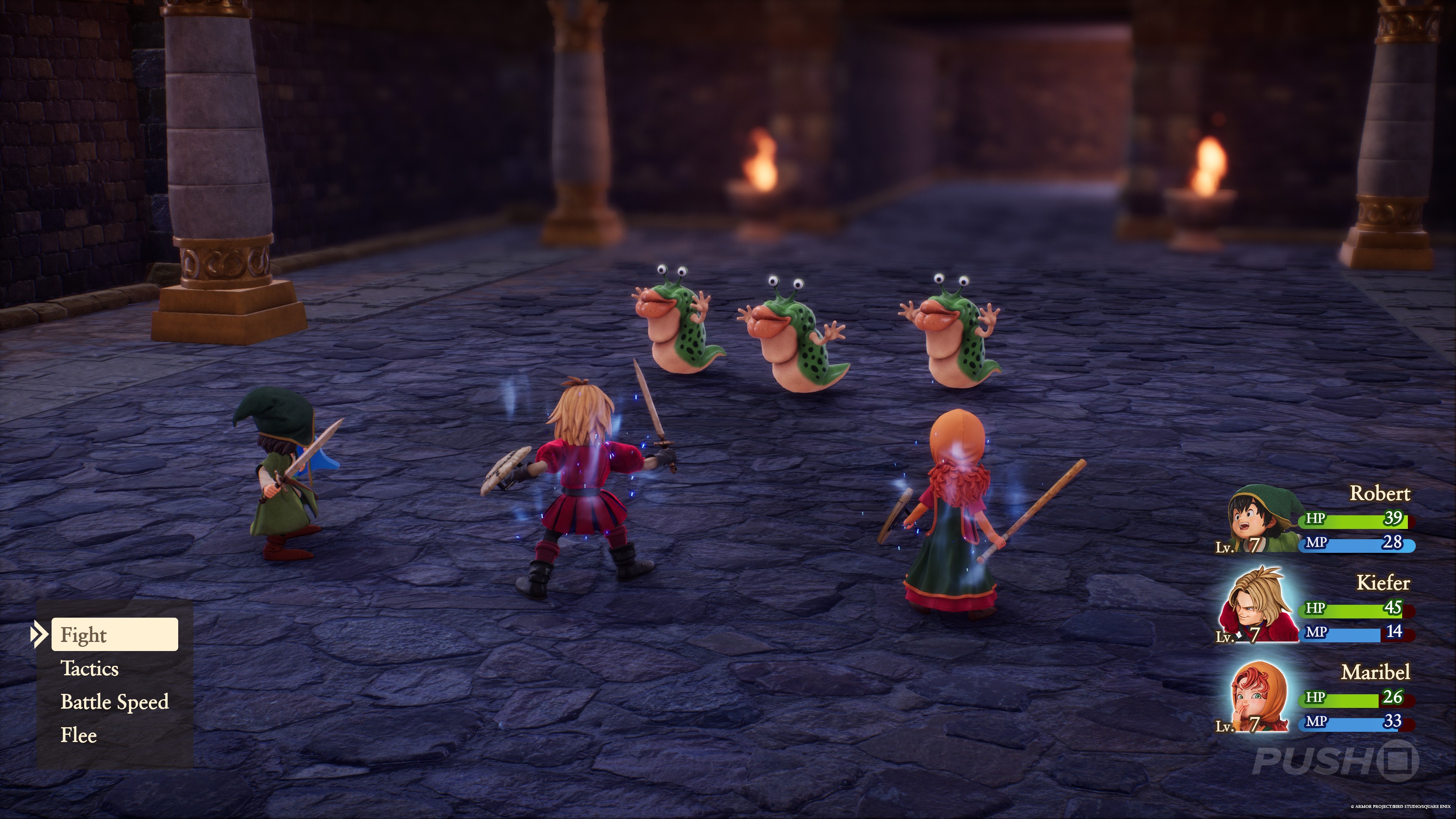
It's a simple system all told; your base stats change based on your vocation, but other factors, like equipment, are determined by the character — so you're really just deciding on what spells and abilities you want at your disposal.
There's still room for experimentation, though, and that's mostly because Reimagined (eventually) lets you assign not one, but two jobs to each hero, effectively giving you the freedom to make your own classes.
A spell-wielding sage who's also a dab hand with a sword? What about a brutish gladiator who also has the capacity to summon allied monsters? As mentioned, there's not a huge amount of depth here — primarily because the number of available vocations is fairly limited — but finding a niche for each character is still one of the title's best gameplay hooks.
Conclusion
Dragon Quest 7 Reimagined is a very high quality remake and a potent reminder of just how endlessly charming the longstanding series can be. While the story does still drag its feet at times, sweeping gameplay improvements and some welcome streamlining make Reimagined a must for anyone with a hankering for old school JRPGs.


Comments 15
If anyone's got any questions about the game or the review let me know and I'll try to answer them.
It was nice to play a 3D Dragon Quest again!
I do like the original despite the tedium, the 3DS version sort of streamlines the character out of it. Plus the character arcs have room to grow. I look forward to playing this and comparing it to both other versions.
I am going to pick it up now. I just finished the demo last night and this review just closed the door for me.
Very excited to get back in and play to conclusion.
Thank you for an excellent review.
@nessisonett i enjoyed the ps1 version and the long challenge to finish..
I CAN’T WAIT TO PLAY!!
I’m SO EXCITED!
@ShogunRok any mini games ? And does a change of armour, costume and weapon change your characters appearance , also are the side quests just the usually get egg take it chef variety, or is there more depth.
@lazarus11 There are a couple of minigames but nothing you'll spend time actually mastering or anything like that, just brief distractions.
Your equipped weapons and shields actually show on the characters, but armour doesn't.
And there are technically side quests, but they're not the busywork stuff you find in other RPGs. They're basically optional side stories, and there are only a few of them.
Picked it up and looking forward to jumping back in tomorrow!
@ShogunRok Alright, Robert, give it straight to me here: if you felt that original was arduous and overlong in length, does this remake still retain that feel? I’d argue the original is maybe my least favorite in the series (of the mainline games anyway).
I’m torn on this one. Your review makes me feel like this one’s got a lot more charm than the original and I’m a sucker for Dragon Quest. It’s just so darn cozy. I’m not in a rush to get it or anything (some may scoff at this, but Mario Tennis and Resident Evil right before a packed March makes me feel like I’m quite content to wait for the inevitable lull that will no doubt occur if GTA6 does indeed launch this year), but would you recommend it to someone that feels totally torn?
@ShogunRok
I played through the demo and plan to continue under the full game. Will I miss out on the trophies achievement in the section covered by the demo?
Just a heads up, if you don't have a tolerance for long games this remake isn't going to remedy that. It's still very slow compared to other modern games.
I've been playing through the PS1 original in preparation for Reimagined and for reference I'm around 75hrs and close to the end of the main story, and that includes several hours of job class grinding (which isn't necessary to beat it, I'm just going above and beyond cause I love the game).
There isn't anything notably tedious about the original, that's just something that's been parroted on the internet, widely by people who only heard that secondhand. This remake cuts the job grinding down by a lot by letting you have two jobs at a time... But it also cuts more than half the jobs out of the game (Monster Hearts being used for unlocking new jobs have been replaced with Monster Hearts as equipment, which is neat but not really as interesting).
This remake cuts a lot of content in fact, and sands down much of the prologue into something that fails to capture the same tone and development the original did, you can expect much the same for the rest of the game. Basically, it's going to be too slow paced for most people in general but too fast paced for people who enjoyed the original. Worst of both worlds.
This isn't me saying this remake is bad, it will still be good if it's using DQVII as a base.
But much like the 3DS remake, Square Enix is too insecure with its online reputation and ends up expediting the soul out of it. Many scenarios, characters and mechanics are watered down for the sake of saving just a little bit of time, and as a result both remakes suffer where the original doesn't.
It remains the definitive way to experience Dragon Quest VII, and probably will forever.
Just something to consider before buying. I'll still be picking up the remake, and I'll probably enjoy it for what it is, but you're not getting DQVII at its best, of course other than best looking.
Great review, Rob. Not sure when I'll get to this one but I can't wait.
@somnambulance That's a tough one, because I almost think you need to be in the right mindset to properly immerse yourself in a Dragon Quest game. Or at least that's how it is for me.
They're always quite special games but they can be surprisingly easy to bounce off if you're not in the mood for the typical DQ whimsy and charm.
And like the review says, DQ7 still feels slow at times, despite the streamlining. It takes a while to get going and there are definitely times when the pacing sags.
I think this is a great remake overall. but I probably wouldn't recommend it right off the bat if you're really divided on the original.
So, in your case, I'd maybe leave it for now since you're in no rush. You might really feel like some DQ cosiness in the future, and then you can jump in with less concern.
@Don Unfortunately I think you'll miss one or two story-related Trophies, yes.
Unless they automatically pop when you import your save, but that doesn't happen in most games, in my experience.
@somnambulance It's notably less charming. Much of the flavor text from your party has been replaced by repeated tutorial dialogue unfortunately. If you didn't like the original, this probably won't do much better for you.
Prologue went from 3 hours to 2 hours, as an example, that's not a major difference in time.
Show Comments
Leave A Comment
Hold on there, you need to login to post a comment...