 by
by 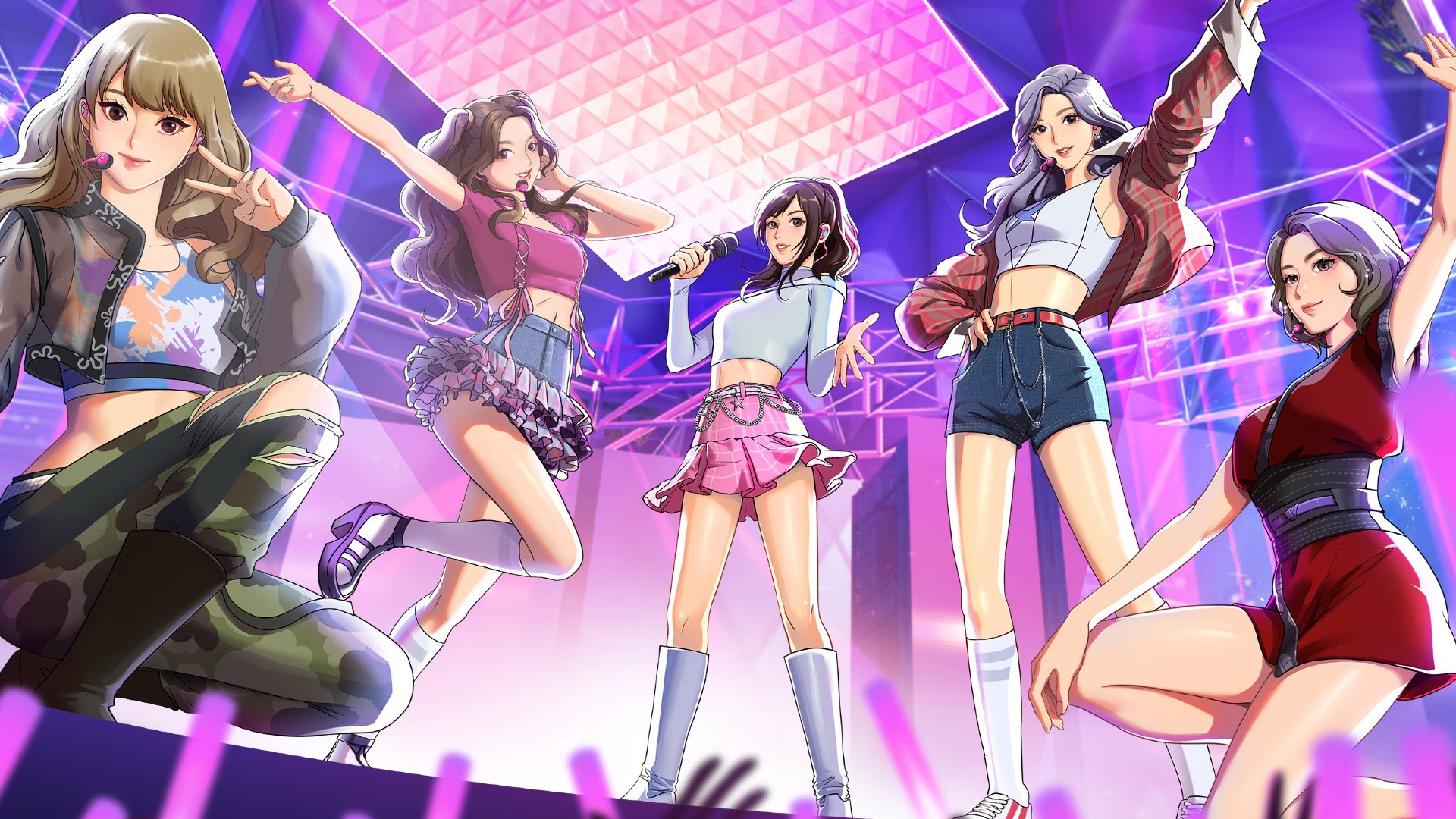
With Lisa performing at the World Cup this week and K-pop Demon Hunters cementing itself as Netflix’s biggest ever movie release, K-culture is at an all-time global high.
It’s a different world to 2010, when I was gliding my way around university listening to Girls’ Generation’s ‘Gee’ – and even I was a late-comer to K-pop really. The true fans among you may have been listening to SM Entertainment’s S.E.S. as far back as 1997.
Whenever you got on board, though, whether you’re a ONCE or a GLLIT, the upcoming K-pop Idol Stories sounds like a bit of a dream game. It’s a fusion of music, business management, tycoon, and more – all genres which are like catnip to me.
 Watch on YouTube
Subscribe to Push Square on YouTube171k
Ahead of its release on 16th July, I caught up with Indonesian studio Wisageni Studio to learn a little bit more about its approach to this title, from its work with real-life songwriters through to its manhwa-inspired art style.
The team was brilliant at tackling all of my questions, so I hope you’ll enjoy the read if you’re interested in the game.
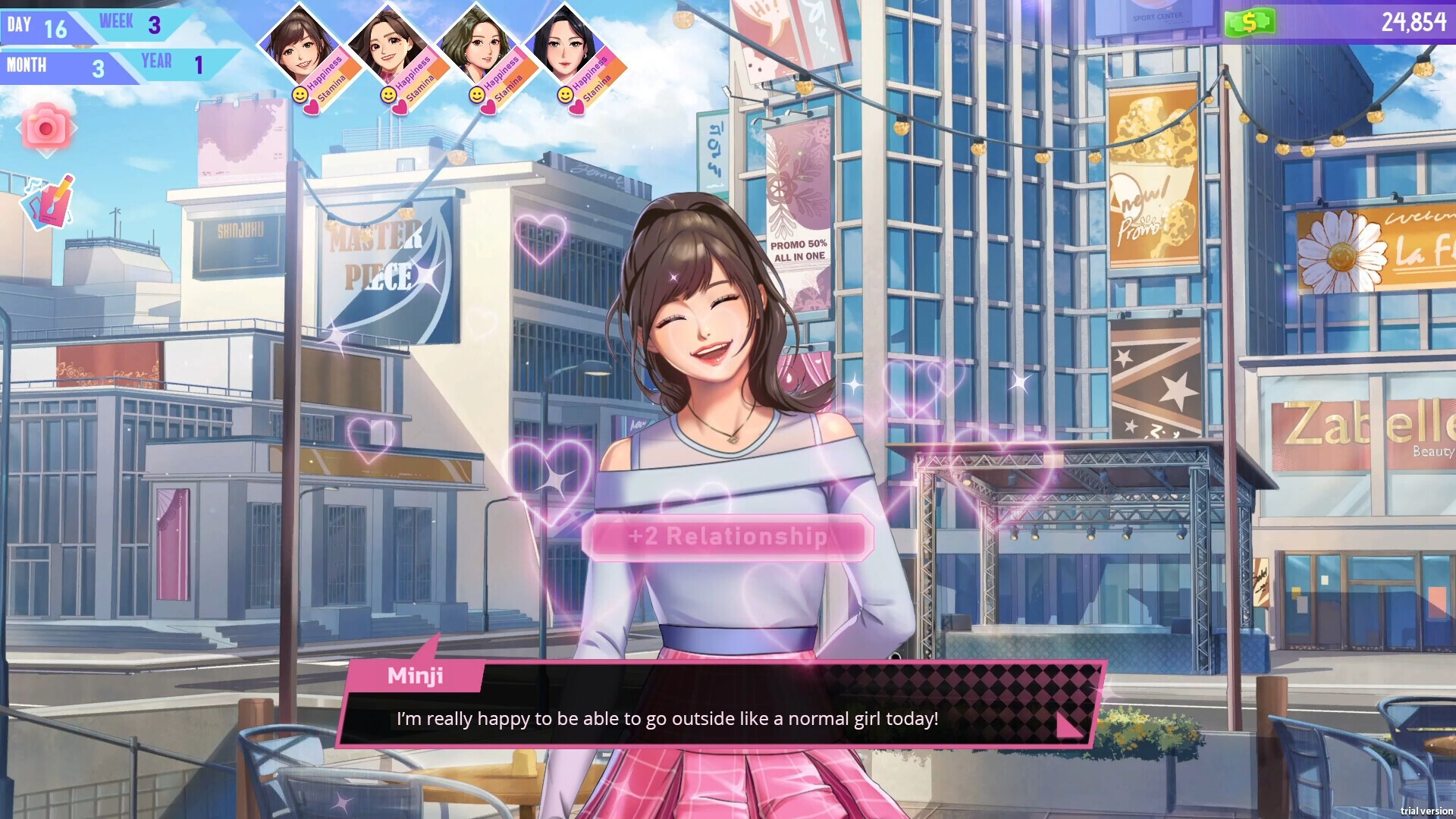
Can you talk a little bit about what an average gameplay session entails? What's the goal? Are you managing your group through to debut, or do you continue to oversee them beyond that?
The entire game builds toward debut because that's the moment when all of your decisions are finally judged.
A typical gameplay session is a constant balancing act between scouting talent, managing schedules, improving skills, and making tough business decisions. Every trainee has their own strengths, weaknesses, and ambitions, so players are constantly deciding where to invest their limited time and resources.
But we also view debut as the industry's ultimate test. The interesting question isn't, "Can you launch a group?" Instead, it's "What kind of group did you create, and was the journey worth the outcome?"
When the game ends, players may discover they didn't actually build the group they originally intended to create. Those unexpected outcomes often spark the most interesting reflections, revealing that the journey changed both the group and the player's ambitions along the way.
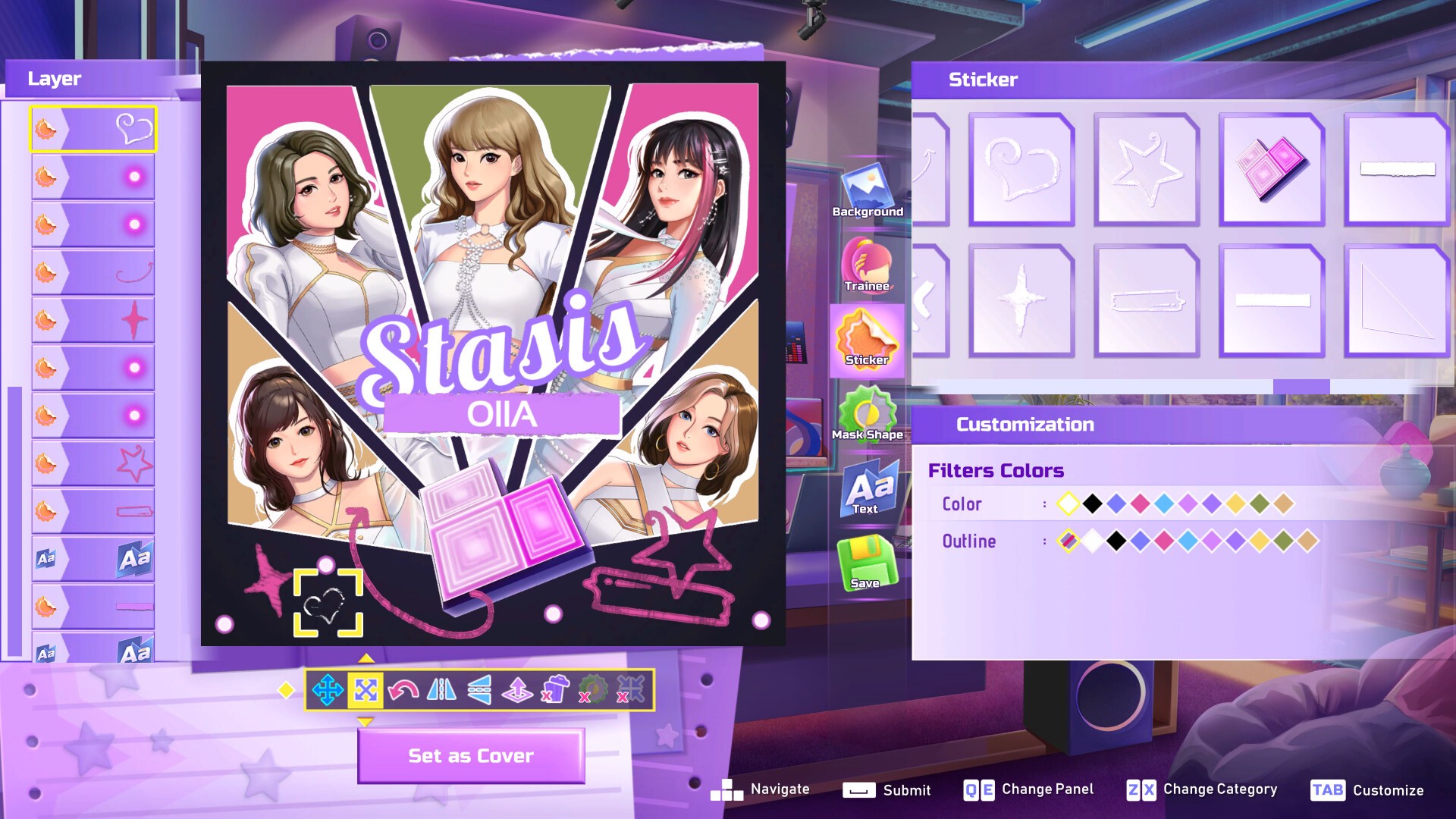
What's the incentive to keep playing and creating new groups? How many different recruitable trainees are there in the game? Do they all have unique personalities and how does that change the way you manage them?
There are eight recruitable trainees in the game. That may not sound like a huge number at first, but that's actually intentional. K-pop Idol Stories is set within a K-pop group incubation and survival show environment, where the hardest part isn't finding talent, it's deciding who gets the opportunity to debut.
Most K-pop labels debut new groups every one to five years, with smaller agencies focusing on a three to five-year cycle to maximize resources. While the big labels typically introduce groups every one to two years. This is why debuting trainees isn't easy.
Each trainee has their own backstory and different base status. As players progress through the game, they'll make choices that shape not only how they manage the group, but also the future those trainees will achieve.
Sometimes the most difficult decision isn't who to recruit, it's who to leave behind.
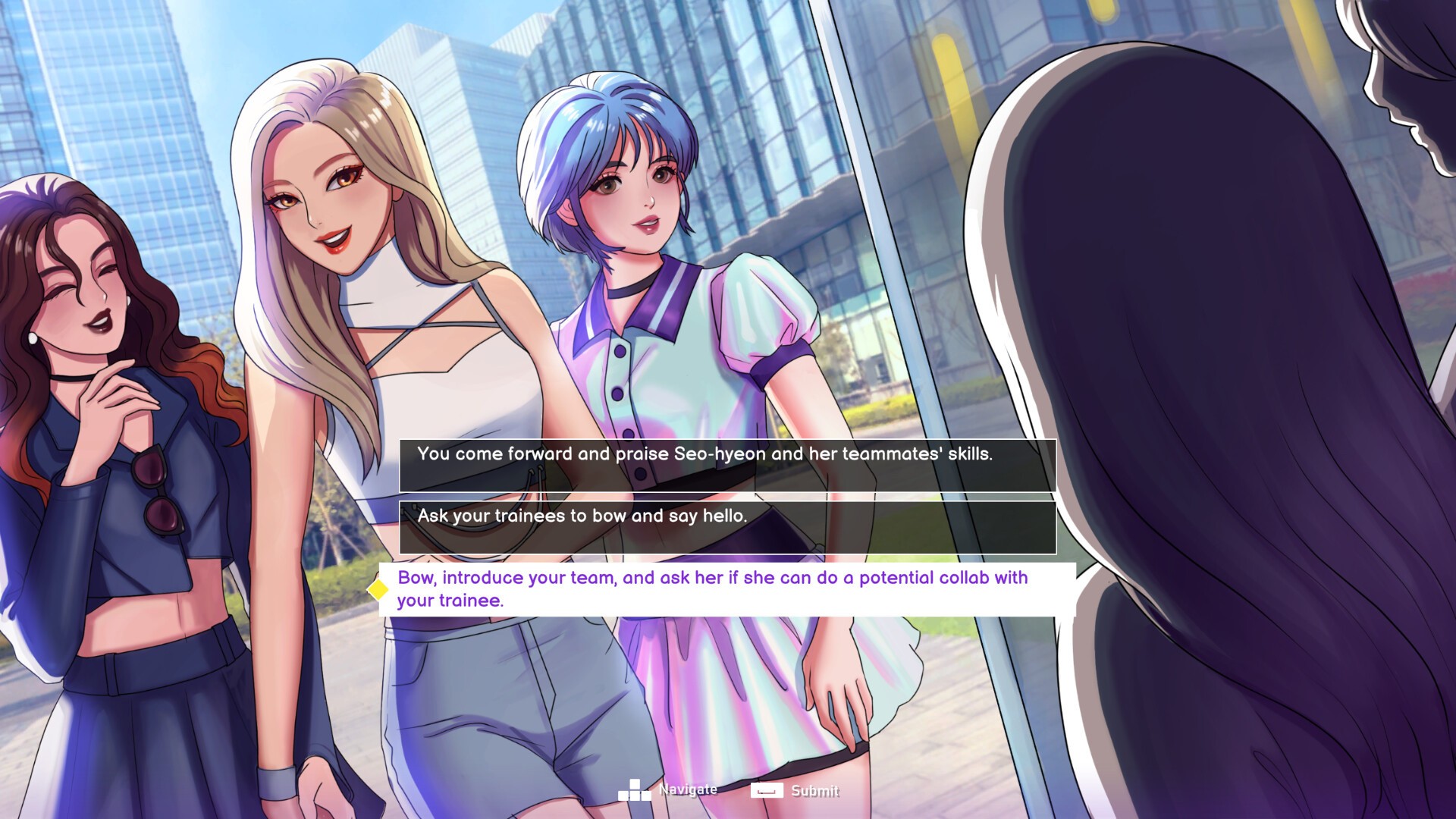
What sort of research did you do when designing the game? The K-pop industry is so unique with its scouts and workshops and so on. I'm curious about the kind of work you did to ensure you gave players an accurate rendition of what it's like launching a new group?
While our entire team has been gamers since childhood, we have also been longtime K-pop fans since the first and second generations. We've watched the industry evolve over the years, and today it's easier than ever to follow a group's journey long before debut through survival shows, documentaries, interviews, and online communities.
That said, we never wanted to create a documentary disguised as a game. Because games and music are both forms of entertainment, we wanted to capture not just how K-pop works, but how K-pop feels in a game as an interactive experience.
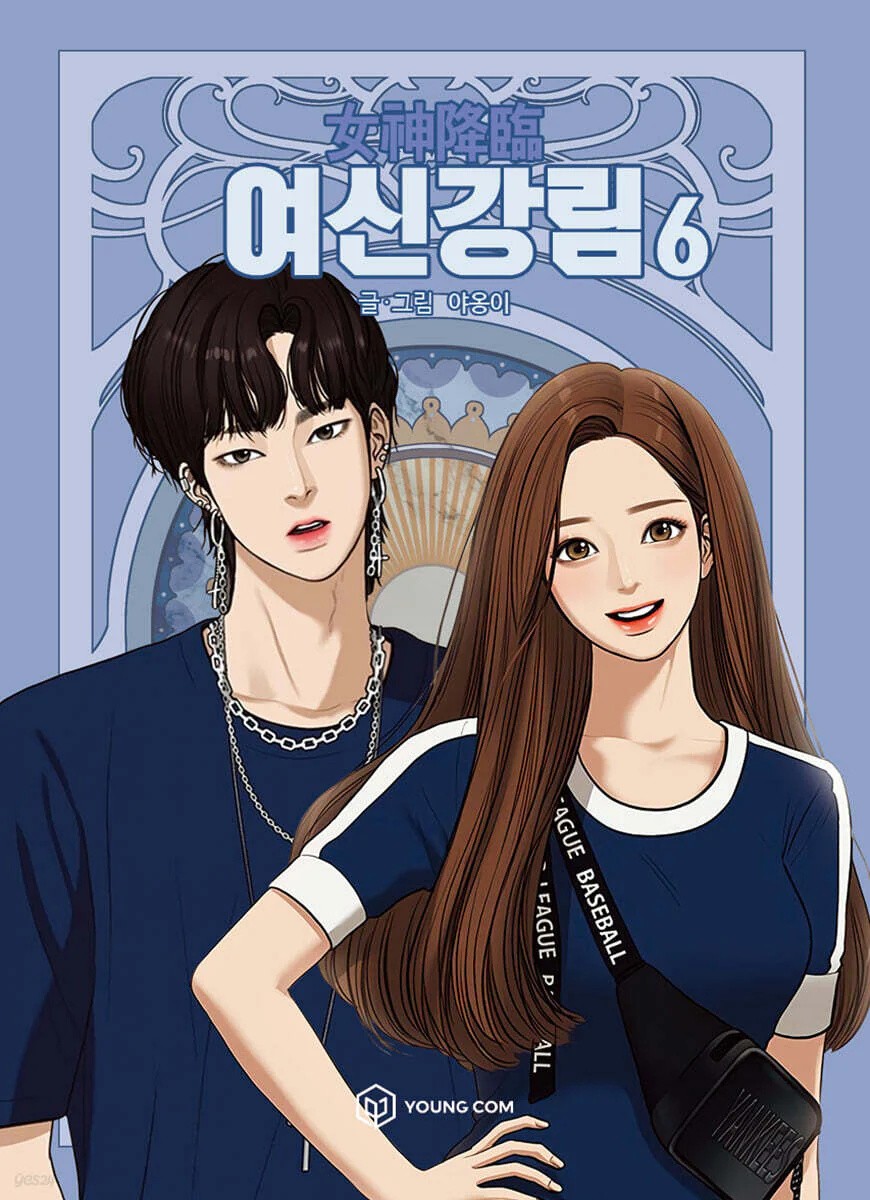
Can you talk to me a little bit about the art style you selected? I've been reading the K-pop manga Girl Crush so at first I was a bit disappointed you didn't go for a more Japanese style. But the more I look at the game, the more I can see elements of Korean manhwa titles, like True Beauty. Was that the look you were trying to emulate?
That's a comparison we're genuinely pleased to hear, and we're glad you picked up on influences from manhwa titles like True Beauty. Our goal was never to make the characters look like anime idols. We wanted them to feel a bit more mature and authentic, like idols you might actually see in today's K-pop industry.
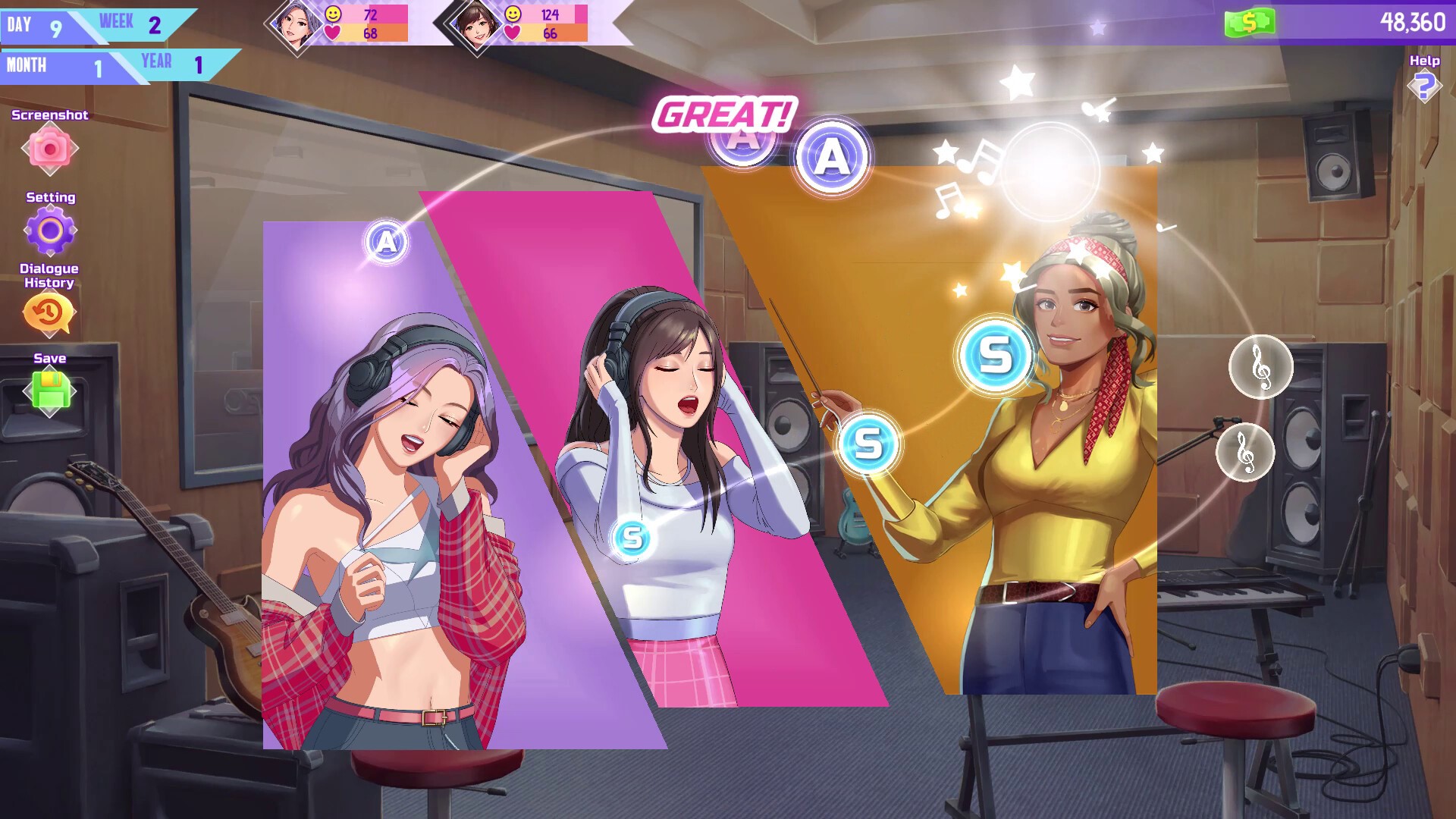
Obviously I'm not expecting licensed songs from Blackpink and TWICE, but this being a game about music, can you talk to me a little bit about the soundtrack? I'm assuming the game will have original music in it, so who did you work with to create that and why? Can we expect a variety of different genres? (And the flexibility to create different groups who all have different vibes and flavours).
It was quite a challenge to find the right people to work on the soundtrack.We were fortunate to discover Shorelle and Honi Studios, both of whom have extensive experience in the K-pop industry. Although they are international talents currently working and based in South Korea, Shorelle has contributed songs for artists such as BTS's Jin, Seventeen, TXT, NCT WISH, TWICE, Nayeon, ITZY, and LE SSERAFIM.
We also collaborated with several vocalists, including both trainees and already-debuted artists, such as Aylah. In total, we created five original tracks specifically for the game, and we hope each of them showcases a distinct vibe and flavor to the players.
There are no boy bands here, right? Why did you decide to focus on girl groups?
We actually see that as a creative constraint rather than a limitation. By focusing on girl groups first, we could go much deeper into the personalities, stories, group concept and costume creativity instead of spreading ourselves too thin. K-pop fans are incredibly knowledgeable, and we'd rather do one side of the industry really well than try to represent everything at once and do none of it justice.
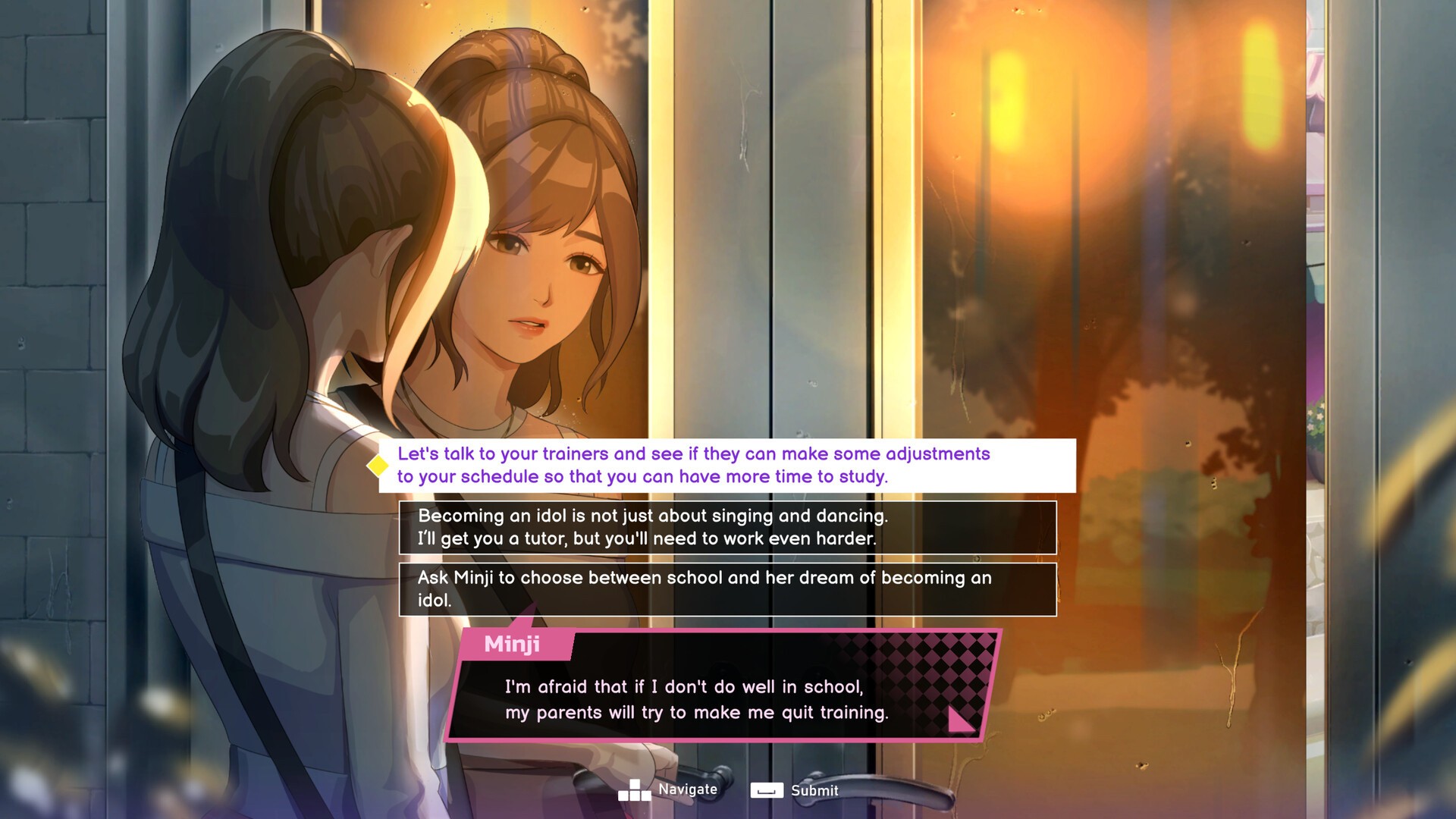
K-pop is awesome but there is a dark side to it, like allegations of child exploitation, bullying, intense dieting, etc. Will the game attempt to explore any of those aspects, or is this more intended as a lighthearted experience for fans of the genre?
One thing we wanted to avoid was pretending the industry is perfect. At the same time, we didn't want to turn real-world issues into entertainment. At the end of the day, this is still a game, so we chose to focus on a more lighthearted experience, a love letter to the excitement, hope, and wonder of discovering K-pop for the first time.
We wanted players to reconnect with the excitement of discovering a new group, the anticipation leading up to a debut, and the belief that dreams can come true through hard work and determination.
You're based in Indonesia, not Korea, so I'm curious how you think that's affected your approach to developing this game?
Being outside Korea is actually one of our biggest advantages. We approach K-pop from the same perspective as many global fans. Close enough to understand why people around the world fell in love with it, but distant enough to ask questions that insiders might take for granted.
In many ways, the game is a love letter to K-pop written from the perspective of an international audience. The industry itself is no longer defined solely by geography.
Today's K-pop is shaped by international artists, producers, writers, and fans from all around the world.
After all, K-pop may have originated in Korea, but music itself is a universal form of communication that transcends languages, background, and cultures.
Thank you to the team at Wisageni Studio for taking the time to answer all of my questions so thoroughly ahead of launch. K-pop Idol Stories: Road to Debut releases on 16th July and will be available both physically and digitally on the PS5. I’m actually planning to buy both versions and display the boxed copy on my shelf!


Comments 14
NewJeans is five! Bring back Danielle!
@BoredOfEverything

@BoredOfEverything 🧐🧐🧐
@get2sammyb No way I ever play this but I enjoyed the read. They seemed as enthusiastic about being interviewed as you seemed interviewing them. 👍
Thanks for teaching me a new word today, manhwa. My wife knew what it was as she publishes Korean books in the US, but she couldn't describe it other than "a Korean art style."
I'm surprised you have to buy 2 copies and they didn't gift you 1 for reading True Beauty, you're probably the whitest guy they've ever met. 😂 (I almost called you a middle-aged white guy but I refused. If you ever reach middle-aged I'm already dead. 😩)
@rjejr That's cool about your wife's work. If I may, can I ask which publisher she works for? Does she publish physical manhwa/webtoons or mainly novels?
I didn't even know anything about this game. Sounds like exactly the kind of nonsense I like.
@get2sammyb Very based and true.
@get2sammyb Yen Press. And they have an imprint called Ize (pronounced eyes). Ize is the Korean manhwa stuff, Yen is mostly manga and "light novels". They don't make their own stuff, they get licensing rights to publish in the US. They do "ebooks" on a website as well which is probably US locked. They're like 51% owned by Kadokawa, whom I know you know, and 49% by Hachette, which is a US publisher which always sounds French to me. 😂
https://yenpress.com/
@rjejr I have loads of Yen Press books actually. That's really cool!
Bocchi the Rock is Yen I think.
@Yor-sama Seconded on the Oshi no Ko recommendation. Very good.
@get2sammyb NewJeans will be 5 again, even if we have to wait until 2029💪🐰🤞
F*** Hybe
@Yor-sama Are you telling us some idols are reincarnations? I really thought that part was pure fiction.
@get2sammyb That's not really cool.
As soon as I read the headline I knew who had written the article.
Show Comments
Leave A Comment
Hold on there, you need to login to post a comment...