
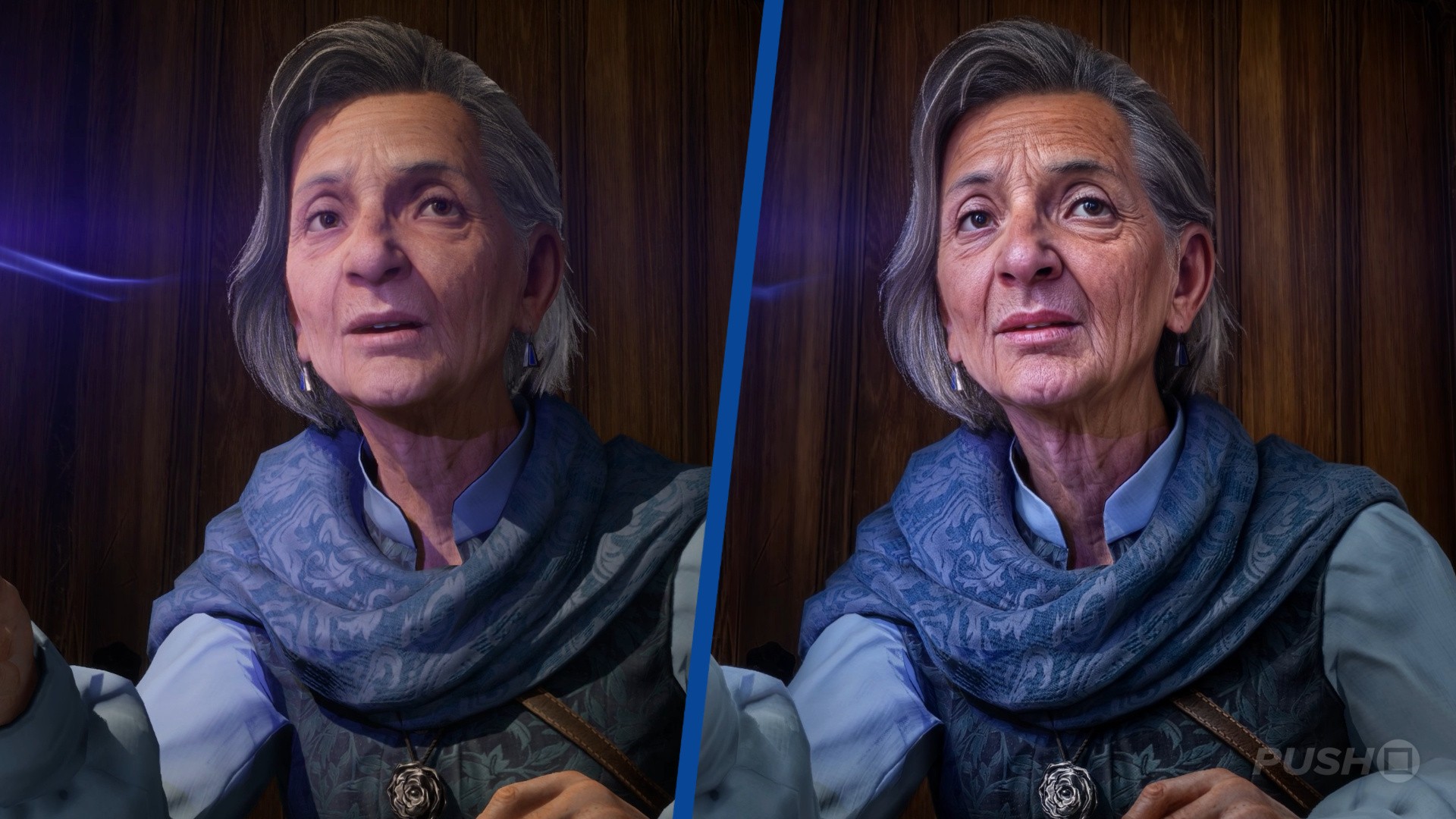
The hot topic this week is DLSS 5, a recently revealed AI upscaling technology from Nvidia.
The company has been one of the frontrunners for AI upscaling, but its upcoming iteration takes the whole thing a step further, and the reaction to early examples has been divisive to say the least.
Nvidia claims the tech implements "photorealistic" lighting to produce much improved visual quality in environments and characters, but its demonstration has caused widespread criticism, largely surrounding character faces; their physical appearance seems drastically altered with DLSS 5 enabled.
It's brought to light concerns about the tech's potential impact on artistic intent, and making games all look the same, but Nvidia is adamant that developers will have full control over its effect on their games.
Tech outlet Tom's Hardware has managed to speak to Nvidia's CEO, Jensen Huang, in the aftermath of the upscaler's announcement and the flood of negativity online.
"Well, first of all, they're completely wrong," he said when asked about the criticism.
"The reason for that is because, as I have explained very carefully, DLSS 5 fuses controllability of the geometry and textures and everything about the game with generative AI," he explained.
Huang assures that it "doesn't change the artistic control" developers will have, and that they will be able to "fine-tune the generative AI" to match specific art styles.
"It’s not post-processing, it’s not post-processing at the frame level, it’s generative control at the geometry level," he said. In other words, DLSS 5 isn't applying a filter, it comes into effect far earlier into the process.
Huang says developers have "direct control" and are free to experiment with the tool to see how it could be used for their projects.
"This is very different than generative AI; it’s content-control generative AI. That’s why we call it neural rendering."
DLSS 5 is due to launch later this year, and hopefully by that point, our understanding of the tech and how it can be used will be clearer. As it stands, we have some quite extreme examples that are leaving a bad taste in the mouth for may onlookers; there may be better results once developers have the final product in their hands.