
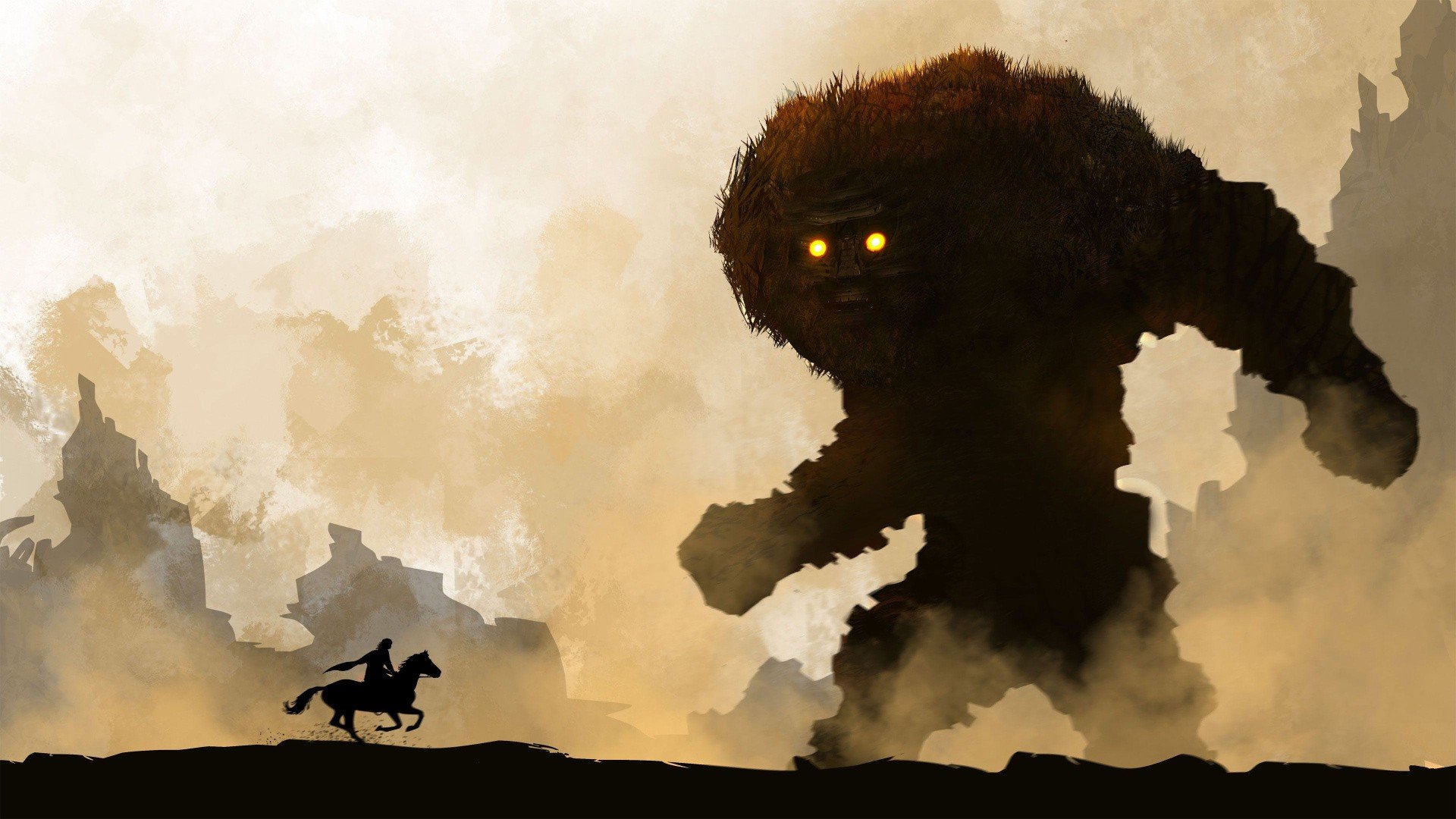
In this era of controversial Sony live service disasters, it seems almost sacrilege to suggest PS2 classic Shadow of the Colossus could have been an online game.
But that was what auteur Fumito Ueda originally had in mind.
An interview with the ex-Sony man on the 20th anniversary of the game’s release reminds us of the original pitch video for the game, included on a DVD alongside pre-orders of ICO in Japan.
The concept movie – used internally to help get the project funded – showed multiple players riding horseback through a vaguely Shadow of the Colossus-style sandbox, using arrows to distract a hulking beast while another player climbed upon it.
He told Denfaminicogamer, as spotted by Genki on X (or Twitter):
“Personally, I was interested in the experience of working together with other players online to accomplish something. However, as I have said in various places, the team at the time lacked the technical resources to make the game available online. After carefully examining what we could and could not do, we decided to go in a different direction and forgo the online element.”
Ueda admitted that he was obsessed with Battlefield 1942 at the time, a large-scale online multiplayer game that encouraged co-operation and collaboration.
However, the novelty eventually wore off, and he gravitated back towards single player experiences.
He said:
“Video games started out as entertainment where you played against a computer, but the idea of encountering a being that feels alive, even when you're alone became central to my interest.”
This is likely where the idea for The Last Guardian came from – a game where you’re uniquely alone but have to leverage your camaraderie with a virtual animal in order to progress.
It’s interesting to think what could have been, though – an online multiplayer Shadow of the Colossus doesn’t sound like the worst idea in the world, and would likely have served as a precursor to Monster Hunter.
Obviously, the final product became one of the most memorable in modern PlayStation history anyway, so we think Ueda steered the project in the right direction in the end. But it’s still fascinating to consider what we could have had instead.