 by

Ever since it was first announced, discussion around Phantom Blade Zero's difficulty has been rampant. Is it a Soulslike? Is it going to kick your arse over and over again? Are you going to be stuck on a specific boss for days on end?
Well, now that I've played through it myself, I thought it would be worth trying to clarify just how difficult Phantom Blade Zero really is.
The truth of the matter is that not everyone has the time or patience to tackle hard games. And so difficulty can be a make-or-break purchasing factor for some people.
Subscribe to Push Square on YouTube172k
If you fall into that category of potential buyer, then the good news is that Phantom Blade Zero has three pretty distinct difficulty modes right out of the gate.
I've listed the three difficulty settings below, along with brief descriptions of what they change.
- Wayfarer (easy) - Enemies are slightly less aggressive and deal less damage. Their guards are also easier to break.
- Pathbreaker (normal) - Enemies are fairly aggressive and deal moderate damage. Their guards take a little time to break.
- Hellwalker (hard) - Enemies are very aggressive and deal more damage. Proper use of parries is necessary to break guards in a timely manner.
- 66 Days (challenge mode) - Enemies seem to have the same stats as Hellwalker, but you only have 66 lives. Once you run out, it's a permanent game over. 66 Days is the only setting that must be unlocked, and it can't be switched to during gameplay; it must be selected at the start of a new game.

With that out of the way, I'll be straight with you: Phantom Blade Zero is not an easy game on any of these settings. It's designed to be a challenging action title, but at the same time, it's not what I'd call brutal.
On Wayfarer and Pathbreaker, I think the game's perfectly beatable even if you're not the most experienced player of action titles.
It's one of those games where things can start out pretty rough as you learn the mechanics, but after you get past the first few bosses or so, it's highly likely that things will start to click.
You quickly gain access to a wider range of weapons and accessories as you push beyond the game's opening chapter — and some of this equipment can make progression noticeably easier.
I actually found that, outside of some later boss battles, the game has a bit of a downward difficulty curve. By the middle of Soul's adventure, you can be kitted out with gear that really enhances your own style of play — whether it's focused on dealing huge damage, or maximising survivability.
Playing in a specific way, and catering to specific strengths, makes a big difference.
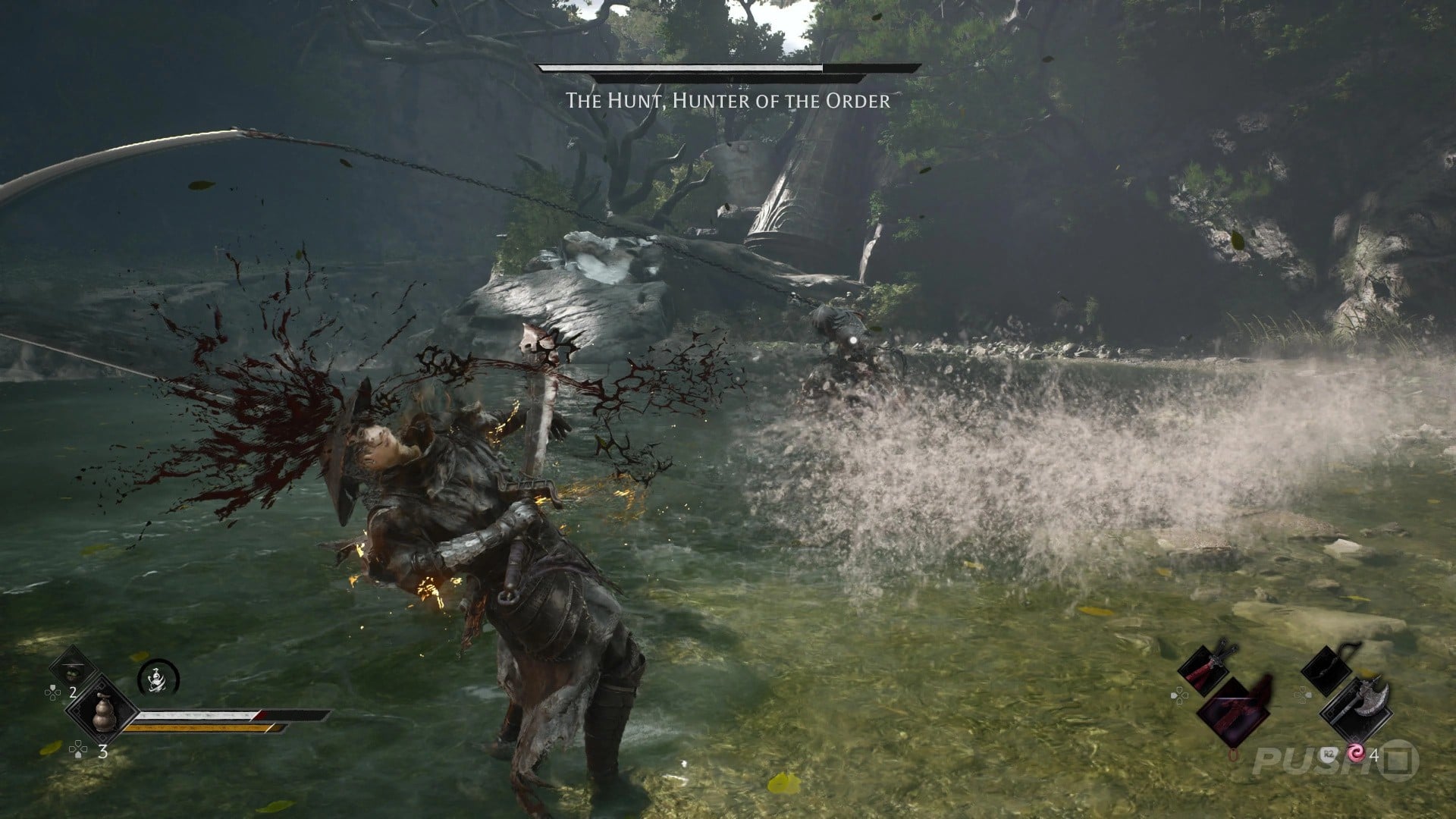
Having said that, you're still going to die every now and then — and there'll almost certainly be a handful of bosses that stop you in your tracks.
But like Liam wrote in his Phantom Blade Zero PS5 review, the key difference between this game and stuff like Elden Ring or Nioh 3 is that none of its challenges feel truly insurmountable.
Sure, you'll die to a boss, but within the fight itself, you'll catch on to what can be blocked, parried, dodged, and when. Typically, it only ever took me two or three tries to overcome a tricky boss — and I'd argue that's good design.
At no point did I ever fall back in my chair and think "I have no idea how to beat this thing". That kind of frustration never crept in.
And I think that's down to defensive options. Ultimately, a lot of the difficulty found in Soulslike titles stems from having a limited pool of defensive techniques. In most cases, a dodge roll is your go-to method of survival, and it needs to be well-timed every time.
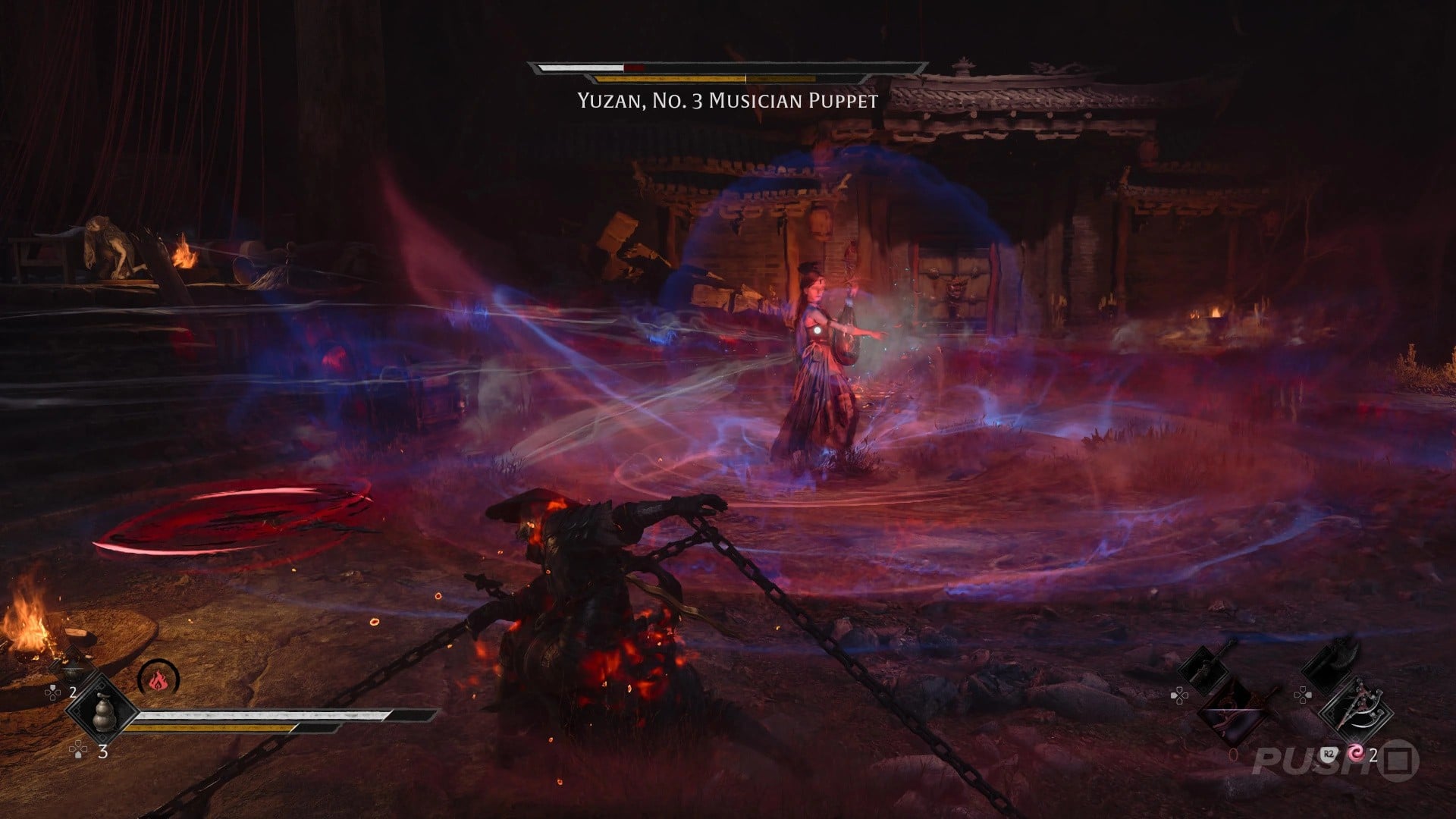
In Phantom Blade Zero, blocking is an ever-present option. It drains stamina, but it lets you observe the enemy's attack patterns in relative safety.
The only thing blocking can't do is defend you against strong attacks (which must be parried or dodged) and unblockable attacks (that must be dodged). And both of these strikes are signposted with either a blue or red flash — there's no guesswork to be done, you just need to be ready.
What's more, developer S-GAME has stressed that this is an action game and not a Soulslike on multiple occasions. And when you actually play the game and get a feel for it, you understand the approach.
Both parries and dodges are pretty generous in terms of timing — they're way easier to pull off than in your usual Soulslike experience, and they're far more in line with what you'd expect from a hack and slash or character-action title.
As a result, Phantom Blade Zero feels fast and fluid in a way that clearly separates it from its hard-by-design peers. Don't get me wrong, you can't just button mash your way to the credits, but stay on your toes and you'll be surprised by how long Soul can keep his enemies at bay.
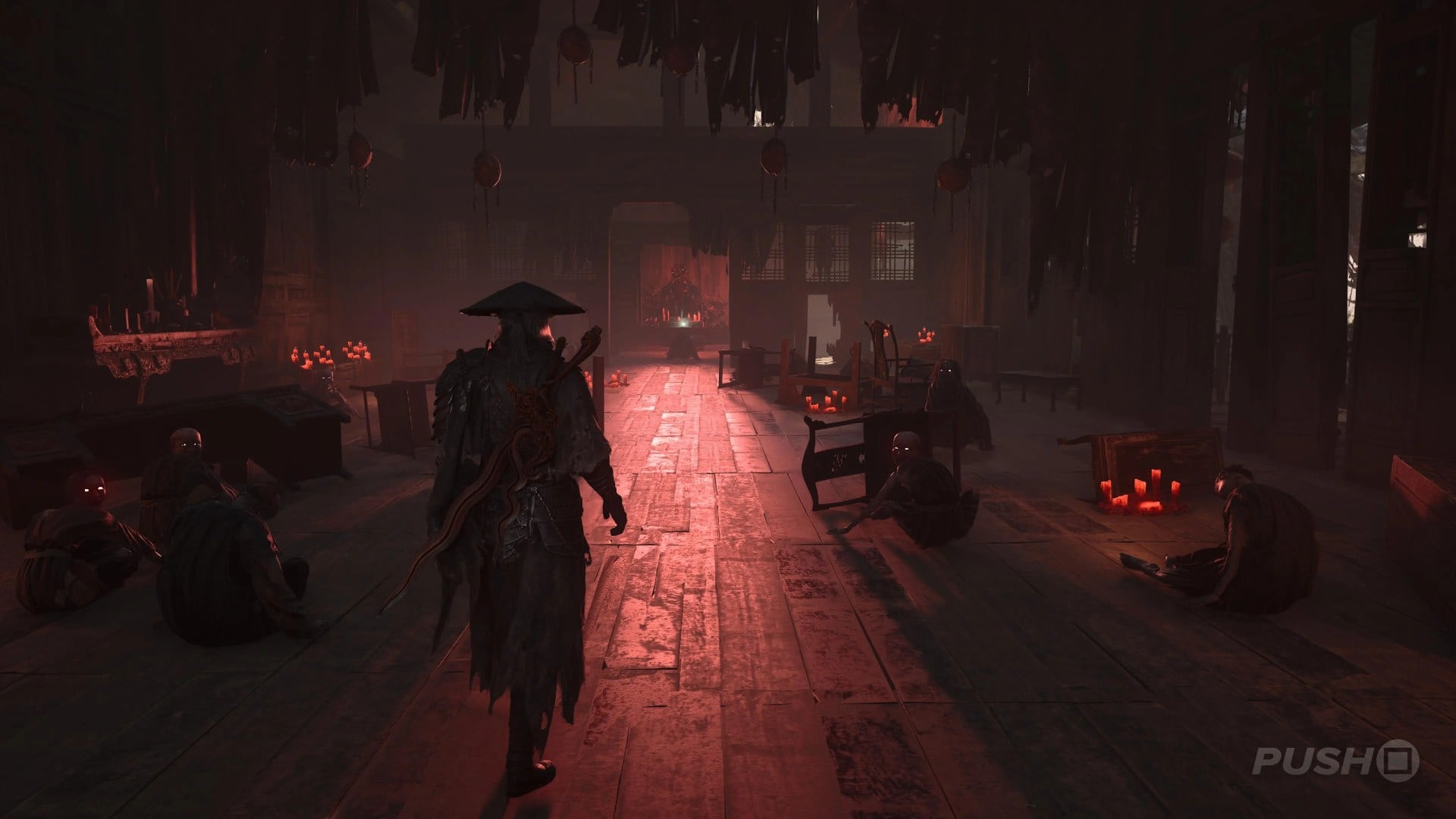
So, in conclusion, I wouldn't let Phantom Blade Zero's perceived difficulty put you off playing it. It can be a tricky game, for sure, but at least to me, it never felt even close to being unbeatable.
Defensive options are numerous and effective. Checkpoints are abundant and forgiving. On death, you don't lose any resources, and enemies never respawn once defeated.
Plus, the Wayfarer setting gives you additional breathing space, which can be great for just learning the game's ins and outs. You can always bump the difficulty up when you've got a better feel for it.
Are you at all worried about the difficulty of Phantom Blade Zero? Let me know if you're up to the challenge in the comments section below.
Which difficulty will you start with in Phantom Blade Zero? (884 votes)
- Wayfarer (easy)
- Pathbreaker (normal)
- Hellwalker (hard)


Comments 52
I thought this was a topic worth expanding on because I still see so many people sharing their concerns that the game will be too demanding for their tastes.
If anyone's got any specific questions about the difficulty let me know and I can try to answer them.
Removed - inappropriate
Im just glad its not like Elden ring because i cant stand playing a boss for 30-40 minutes learning their move set when i can only play for like an hour or two during the week
While I welcome the difficulty in Souls games due to them being challenges that you learn to overcome, I have no problem with a game having difficulty options that can scale things for different players.
@ShogunRok, did you play on hellwalker?
I relish whatever challenge its going to throw at me tomorrow. It sounds like it's an accessible game for people of all skill levels which isn't a bad thing in my book.
@jakeones The majority of my playthrough was on Pathbreaker but I tested Hellwalker (and Wayfarer) a few times both out of curiosity and for the purposes of this article.
The difficulty discourse has been so weird. All because one review from a hardcore Souls fan who does the Souls wiki's said it was easy for him. I shell play on normal
@Northern_munkey Its also a game that appears to prioritise fun and making you feel like a badass. After spending all month on Onimusha it will be nice to play something a bit more easier as those bosses in Onimusha are no joke.
@ShogunRok, thanks. And was it actually much harder than pathbreaker? Are the enemies more aggresive?
I feel like what makes this game not as "challenging" in some people's eyes is that you can't lose anything on death likes souls, the enemies stay dead once you beat them, and if you beat a first phase for a boss and die, you start at the second phase. It doesn't appear much of a stamina bar exists either? To be fair, if you removed all that from traditional souls games, they would be easy too. But I don't think it's a bad thing personally. They designed the game the way they want it to be played. Like all souls homers say, maybe Phantom Blade Zero just isn't for you if you're looking for a punishing game, lol.
S-GAME doesn’t want the game to be confused with a Souls-like, in fact have gone out of their way to stress that it’s not a Souls-like, and they name the protagonist Soul. Brilliant.
@Stevemalkpus, it's due to the director of the game (Soulframe) who came up with this name in 2008 before souls.
Yeeesh 900 p resolution on base ps5 performance mode though, no rt as well.
Ouch
@DennisReynolds indeed its a breath of fresh air. Don't get me wrong I like a challenge but some games just take it to another level I can't enjoy. I can't wait.
It's one of those games where things can start out pretty rough as you learn the mechanics, but after you get past the first few bosses are so, it's highly likely that things will start to click.
There is a typo in the sentence, @ShogunRok. I think you meant to type 'or' and not 'are'...
@helloim_anthony 100% agree. I don't want to get pushed out of a good game because I can't devote countless hours into mastering how to beat a boss. Like you, I don't have a lot of gaming time.
@KundaliniRising333 where did you get this info from?
I think it's safe to say no devs these days are brave enough to make action games as challenging as Ghost N' Goblins, Battletoads, and Ninja Gaiden at Master / Ultimate Ninja difficulty. Maybe Sekiro and Nioh would come close.
@jakeones Yeah I think the enemies are noticeably more aggressive on Hellwalker, to the point where being surrounded by groups of them can get you killed faster than you realise.
It's not like they never stop attacking, but on Wayfarer and Pathbreaker, you get obvious breaks in between their combos. The gaps aren't as pronounced on Hellwalker so you're pushed harder to parry and dodge with precise timing to make those gaps yourself.
@Fiendish-Beaver Thanks for pointing it out!
@Northern_munkey there's a digital foundry tech review up for ps5/pro
It's better on pro(likely due to pssr) for sure but base is pretty muddy/grainy/aliased in motion.
Balanced mode is busted on both.
@KundaliniRising333 aaahh digital foundry I see. Well I'll find out for myself tomorrow. From what I've seen of all the vids for the ps5/ps5 pro it looks very nice fidelity wise. Shouldn't be an issue for you as your PC will be significantly better I'd guess.
@ShogunRok can you confirm about @KundaliniRising333 's comments on whether or not the base ps5 is muddy etc,etc,etc?
Thanks for this write up! I love my games hard but not frustratingly so. I've finiished all the Dark Souls games and Elden Ring and I like having to learn mechanics and not deal with cheesy and unfair mechanics. Preordered PB0 and can't wait to play this. I always play on normal difficulty and learn the game and then go back and play through on the harder difficulties if the game is worth it. Sounds like this game is worthy for a replay on harder difficulties.
@KundaliniRising333
For the 1st time, I found the DF review pretty pointless.
They indicated PSSR for Pro with significant Image Quality gains, but then messed up big time on performance testing.
They warned that other reviewers had noted performance issues in mid to late game, but that they personally had only tested early game.
The big problem here is that some reviewers don't seem to see fps drops, so if it gets noted at all it is generally moving towards uncomfortable for me.
No Pre Order / purchase from me.
I’ll start on normal but have no qualms in dropping to easy if I have to.
@Northern_munkey yah I was curious to see how ps5 performed as the game based on pc tech reviews appears to be extremely heavy if trying to play at higher settings at 1440p/4k. Especially if you turn on rt and borderline unplayable with the needless path tracing bs.
It makes sense based on what I'm seeing on the pc side discussed that ps5 would have to have some significant cuts in some areas to get 60 fps. Looks like resolution and upscaler is where they likely did it. Luckily for pro users you have pssr to help add clarity in motion.
Just for context on the pc side to get 1440p native, 60 fps with raytracing on you basically need an rtx 5070ti/amd 9070xt or better gpu. I'll probably use fs4 quality to get a little better but yah heavy game for sure.
Fyi: It does sound like the day one patch includes performance focused changes so it could be better at launch.
Looking forward to giving it a go this evening though if I can get valor mortis buttoned up in a few👍
cheers
@Northern_munkey
It didn't look bad on base PS5 from what I saw (it did have that typical UE5 look) - but it did have a much cleaner image quality on Pro.
NB I wasn't watching through my main TV as I had already watched Pro footage and found it good enough visually.
This was not a good DF review though. They had only tested Framerates in early game, while noting other reviewers had noted performance issues in mid to late game (as they did here on Pushsquare).
Also, no confirmation either way of 120hz uncapping.
Too much of a risk that I will find this uncomfortable or unplayable, so I am not pre ordering and giving it a miss.
@Rich33 yah it is pretty bad that they didn't test in depth for sure it did feel like a pretty glossed over and half assed DF analysis. There are some far more in depth ones on the pc side though that may help shed some light on how console will look/perform.
Especially given its a fast paced action combat game. Framerate can be pretty crucial in terms of responsiveness and feel in motion.
@Rich33 Let's be honest DF are a shell of their former self. Rich does nothing but promote sponsors, Alex is gone because of health issues, John barely does anything except retro videos and moaning about things he doesn't understand on the podcast and Ollie is useless and always gives half ass videos where he glosses over lots or outright gets things wrong. Thomas is the only good member left who can put out a good video.
@KundaliniRising333 yeah I had an update earlier. I'll give the game a good playing tomorrow.
@DennisReynolds yah I. Miss Alex. Bummer
@DennisReynolds don't hold back 👍
@KundaliniRising333
I was quite disappointed to be honest- and I have often in the past been very complimentary to them, but this was a big mistake.
I can judge for myself based on footage if a game looks good enough, but framerates need analysis, or someone with the capability to see them, playing through the whole game.
@Northern_munkey yah it sounds like the dev is a very passionate game maker so I have no doubt they will continue to improve it. He released a lengthy post about his and the games development story yesterday that was a pretty cool read.
The dude calls himself soulframe though lmfao. A little too nerd for me but hey I used to pretend I was an anti hero ruining around as a masked vigilante to shakedown d dealers so I guess we all have our quirks. 🤣🤣🤣
@DennisReynolds
I'm not as disappointed in them as you are, but neither am I going to argue with you, as I have seen that they appear to be on a downward trend too, sadly.
This was a big miss for them in my opinion as they hadn't played the parts of the game they acknowledge others have complained about. These could be minor drops I would be fine with, or major drops.
@Northern_munkey Yeah i've grown tired of them this year. Like take Phantom Blade Ollie straight up admits he can't test later areas because he sucks at melee action games and has found the game too difficult. So why the hell isn't John or Thomas doing the video then? Ollie can't give a proper breakdown because to be blunt he sucks at the game. Its unprofessional and this is why i groan anytime Ollie does a video, he's not good at his job. I remember when he covered Cyberpunk on Pro earlier this year and completely missed various RT features in RT mode. Going indie was the worst thing to happen to DF.
@Rich33 I'm shocked we even got a video on the game this early to be honest from them.
@KundaliniRising333 while I can agree in some titles RT or PT can be BS or not worthy, on some titles it really makes a big difference, comes to mind Cyberpunk 2077, Indiana Jones, Doom and recent titles like RE9, 007, Pragmata, etc
In this particular game it seems there is a big leap compared to regular RT: https://x.com/BMKing23/status/2115146131109802449?a=xvxOY-fNCsRE1DQJSBI&s=20
unfortunately to enjoy Path tracing is much more viable for Nvidia users simply because they are significant ahead in terms of tech specially on PT performance, Denoiser, FG & MFG and neural rendering. AMD just close up the gap on the upscaling side of things
@DennisReynolds let it all out buddy.
@DennisReynolds
Totally agree with you on this - their Videos have seemed later, and the review for PB0 (or is it PBZ) was released today, whereas most reviews were Monday I believe.
Just to add to your conversation with @Northern_munkey , I believe he said something about difficulty in his review here as part of why he didn't cover the whole game.
(EDIT: sorry this may not have been clear - as in the DF reviewer, Not Pushsquare)
It annoys me when a game reviewer doesn't spot performance issues (as a professional they should be capable, or have backup who are), but I equally agree that a performance reviewer/analyst has to up to the job of completing the game - though I would say this is more the fault of the scheduling.
I think they need to pick and choose less, and offer a service more now.
Awesome game so far but finding Wayfarer way too easy and Pathbreaker too hard. Wish there was a difficulty between the two. Guess I just need to “git gud” for Pathbreaker!
Really good to see this as I thought this was yet another soulslike and I just find them frustrating now. Modern life is difficult and frustrating - I don't need that leaking into my leisure time as well.
I love how 'Soulslike' is such a cursed term now (and rightfully so) that entire articles need to explain that similar-looking games are not that way and actually fun. lol
But it's true. I wasn't going to buy this because it looked too Soulslike so now I might.
I also heard that you don't have to start a boss that has multiple phases from scratch if you go through the first phase?
I'm playing right now, and so far, it's been easy
I'm playing it on normal and I'm enjoying myself. I had the same issue with the camera as I did with lies of p where it felt quite floaty but upping the sensitivity a bit sorted that out. I'm enjoying not being handed my ass every 5 minutes but I really want to try the 66 days mode once I'm confident with how the combat works which is pretty wild and extensive.
@Northern_munkey Do you think the game, overall, is in a good technical state? I either did not see this in the review or it didn't register. I am trying to decide whether to wait for some patches.
@D6rkLordS6t6n personally I have had no issues so far. I'm playing on the ps5 Pro on performance mode with the RT turned on (yes I know its not real Ray tracing) and it looks quite stunning.
@Northern_munkey Thanks!! I think I better pick it up then. Appreciate the response.
I always play on normal but I love hard games I never let a computer best me there's always a strategy. Level up.gat stronger and more but phantom blade is not hard as dark souls. That's a fact black. Word up son
Show Comments
Leave A Comment
Hold on there, you need to login to post a comment...